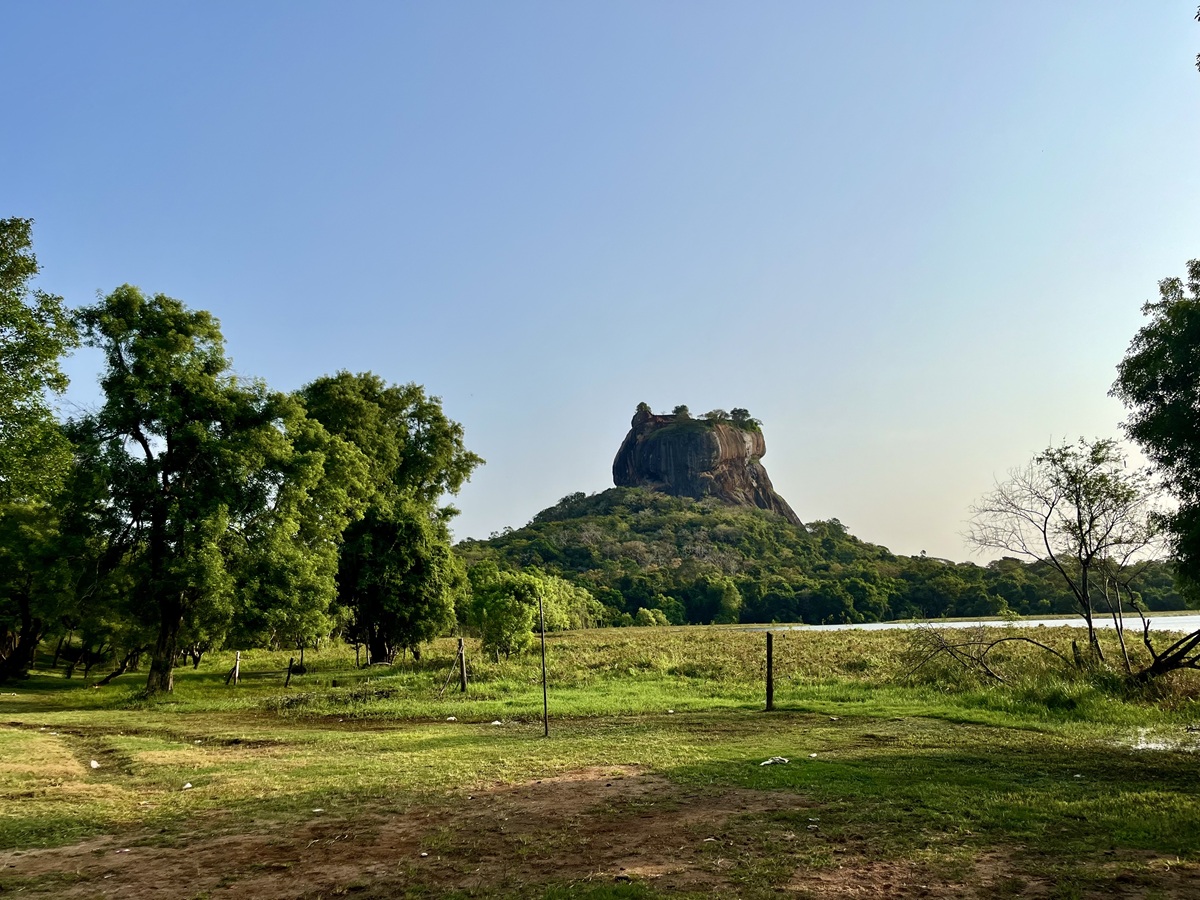
No visit to Sigiriya is complete without a hike to the iconic Sigiriya Rock and the ancient fortress perched at its summit. This was one of the highlights of our 8-day Sri Lanka itinerary. No doubt, it quickly became one of my favorite activities in Sri Lanka's Cultural Triangle.
💡 Want more inspiration in Sri Lanka? Click on these posts and start exploring!
- Sri Lanka Travel for 8 Days in May 2026
- Sri Lanka ETA Application Guide: How to Apply Online for a Tourist Visa (Step-by-Step)
- Pidurangala Rock Hiking Guide: Sunrise Hike for the Best Sigiriya Rock View
- Hurulu Eco Park Elephant Safari in Sri Lanka: Wild Asian Elephant Experience
- How to Travel from Sigiriya to Trincomalee by Public Bus (Sri Lanka)
If you're also planning to hike Sigiriya Lion Rock to visit the iconic ancient fortress, here's a short hiking guide for you. This guide includes entrance fees, logistics, trail sections, difficulty level, and a few tips based on our experience.
Sigiriya Lion Rock Hike Overview:
- Route: Out-and-back (same trail for ascent and descent)
- Distance: 2.53 km
- Elevation Gain: ±151 m
- Highest Point: 368 MASL
- Difficulty: Easy (1/5)
- Time Taken: 1.5-2 hours, including time spent for sunrise, photos, and enjoying the view
- Best Season: Year-round, but avoid hiking during midday due to the heat
- Highlights: Ancient palace complex, Lion Gate, Mirror Wall, Sigiriya frescoes (cave paintings), panoramic views of the surrounding Sigiriya area
How to Get There and How to Get Out:
Located in the heart of Sigiriya, the iconic Sigiriya Rock is one of the most visited attractions in Sri Lanka. As such, finding transportation to the entrance is generally easy. Most visitors arrive by tuk-tuk, private car, guided tour, or tour bus. Similar to our hike in Pidurangala Rock, hiring a tuk-tuk is still the easiest and most cost-effective way to reach the trailhead.
You can also arrange transportation through PickMe. However, based on our experience, finding an available tuk-tuk before sunrise was a bit challenging. So if you're planning to start early, I highly recommend arranging your transportation in advance.
Unlike Pidurangala Rock, walking to Sigiriya Rock is much more common, especially if you're staying nearby. However, locals generally do not recommend doing so, especially if you're planning a sunrise hike. The area is surrounded by dense forest, and wild animals such as elephants are known to roam freely.
Lastly, since the hike starts and ends at the same entrance and parking area, getting back to your hotel after the visit is fairly straightforward.
Hike Starting Point:
Before reaching the actual starting point, you must first secure your entry tickets at the ticket booth next to the newly opened Sigiriya Museum, located just a short walk from the main car park.
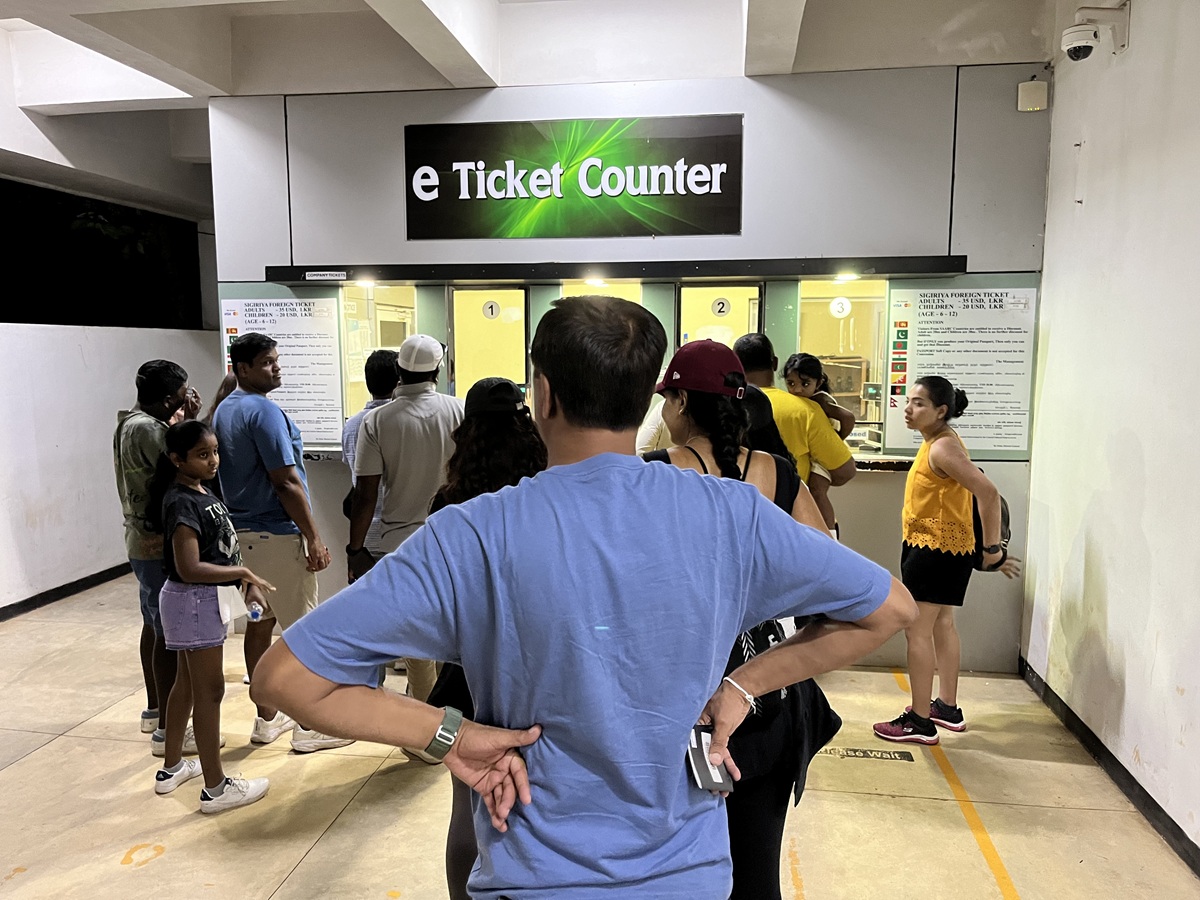
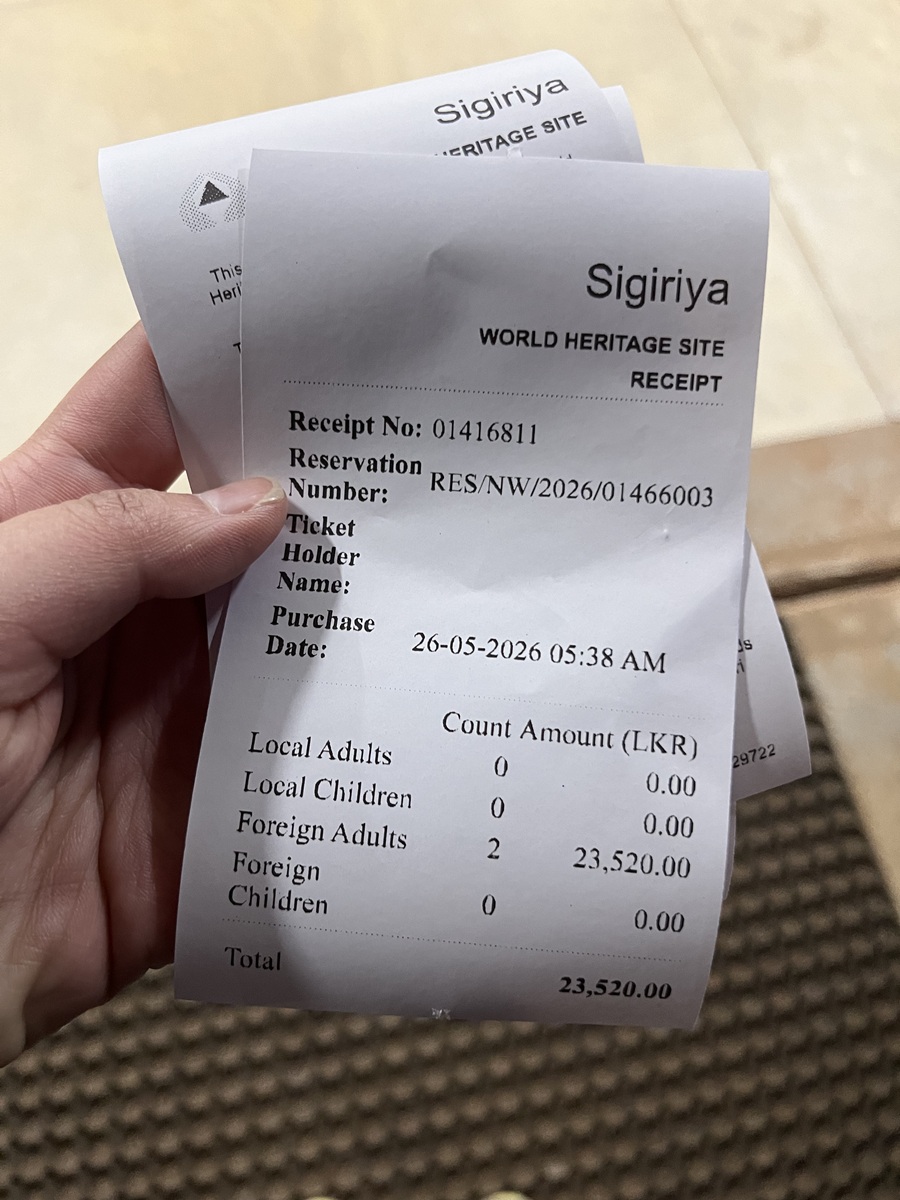
After getting your tickets, make your way to the Main Entrance (see photo below, taken from the Sigiriya side, not the outer entrance).
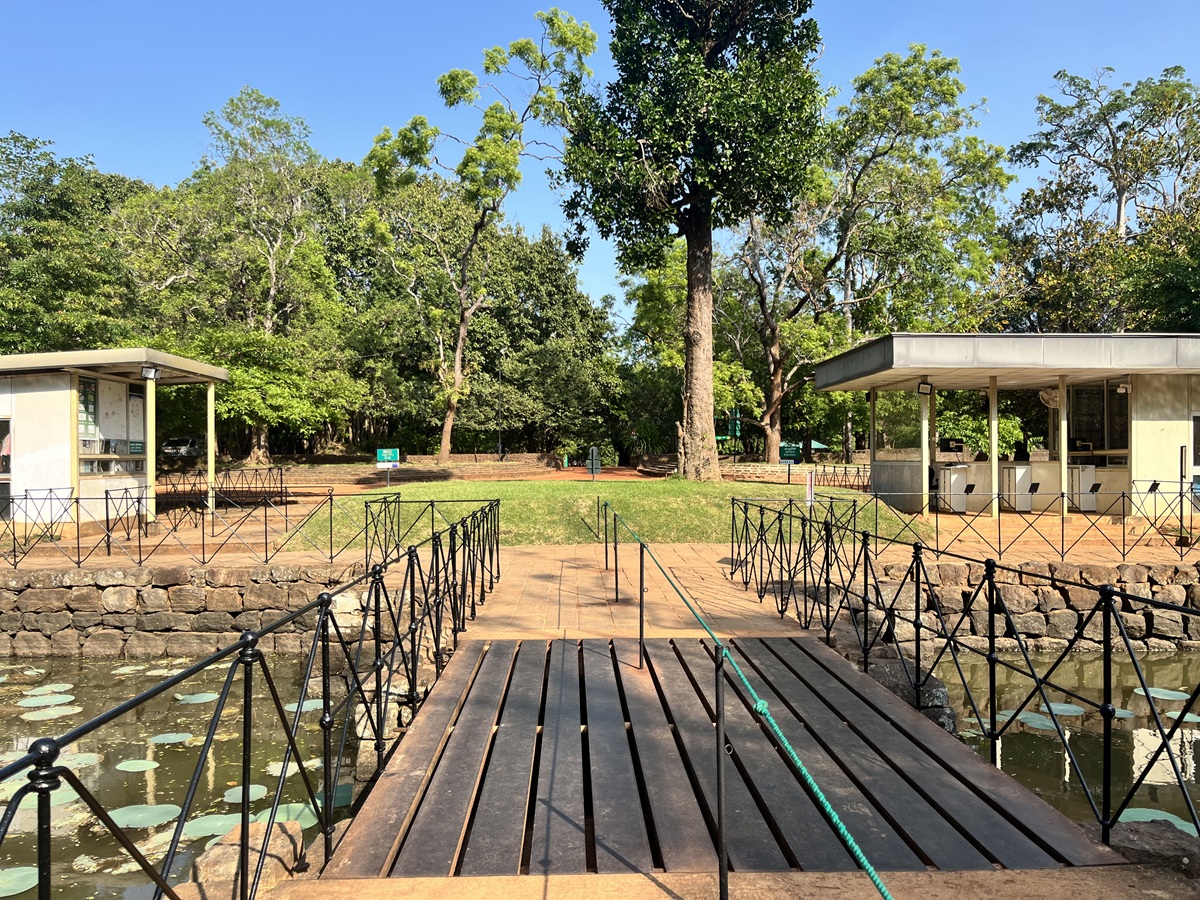
You'll need to scan your tickets at the turnstiles before crossing the bridge into the complex. The turnstiles are actually on the left-hand side when entering, although they appear on the right-hand side in the photo above because the photo was taken from the opposite direction. Along the way, feel free to admire the water-lily-like plants floating in the ponds.
Once across, you're officially inside the ancient city of Sigiriya and ready to begin your climb to the fortress above.
Sigiriya Rock Hike Sections & Highlights:
Even though the trail itself is relatively short, the visit to Sigiriya Rock is much more than simply climbing a staircase to a summit.
Along the way, you'll pass through gardens, ancient structures, viewing terraces, and several archaeological highlights before finally reaching the fortress complex at the top.
Sigiriya Gardens & Stone Stairs
Before the stairs begin, you'll walk through the beautifully landscaped gardens at the base of Sigiriya Rock. Divided into three sections — the Water Gardens, Boulder Gardens, and Terrace Gardens — the Sigiriya Gardens are said to be among the oldest surviving landscaped gardens in Asia.
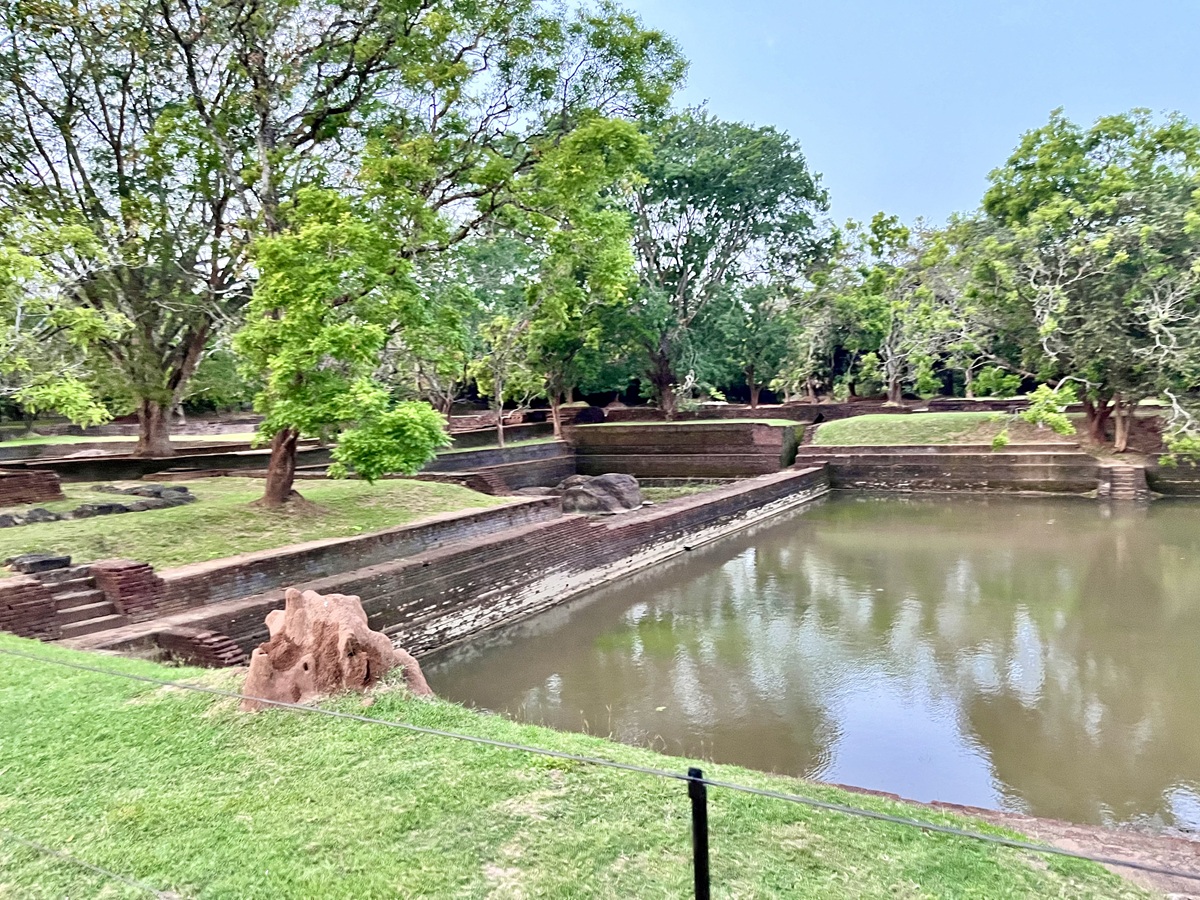
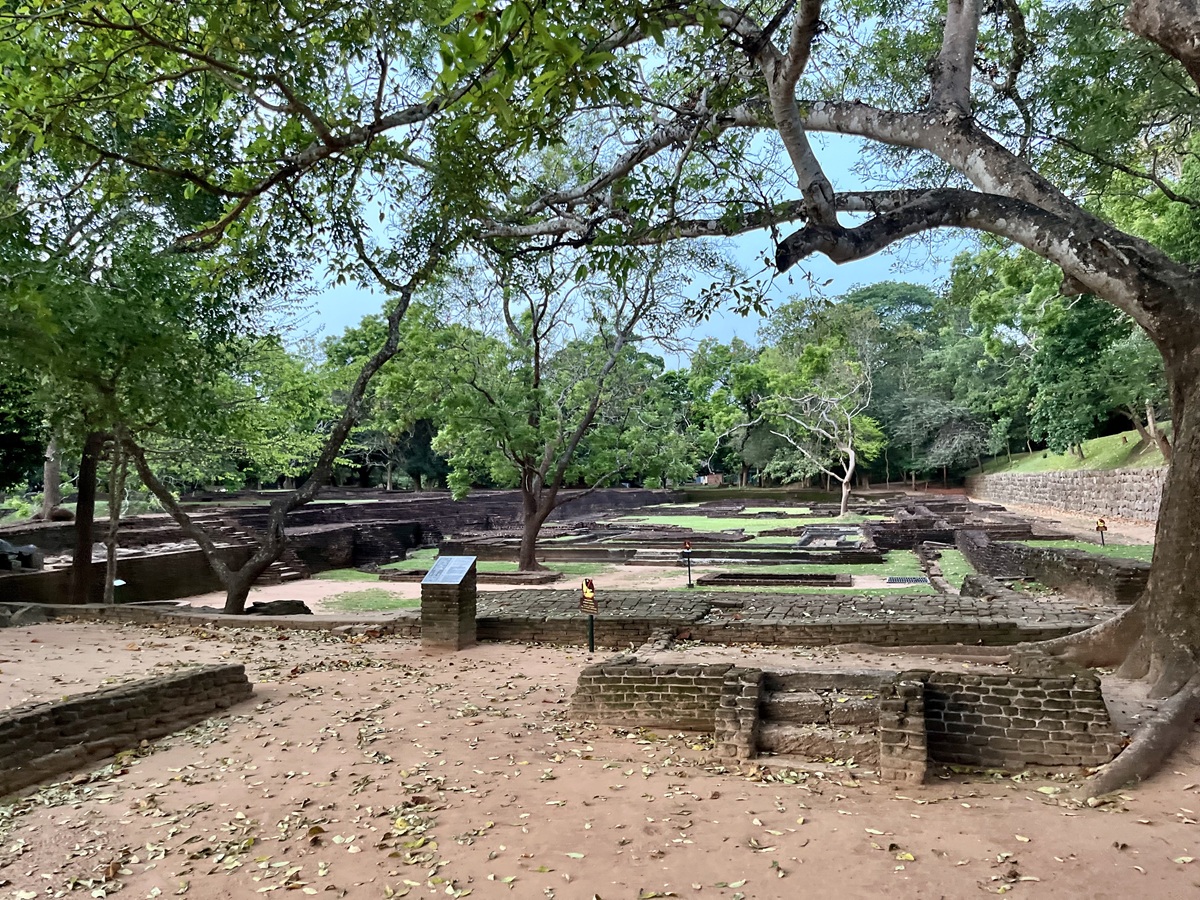
While here, stop for a minute and absorb this amazing view of the Sigiriya Rock in its full glory.
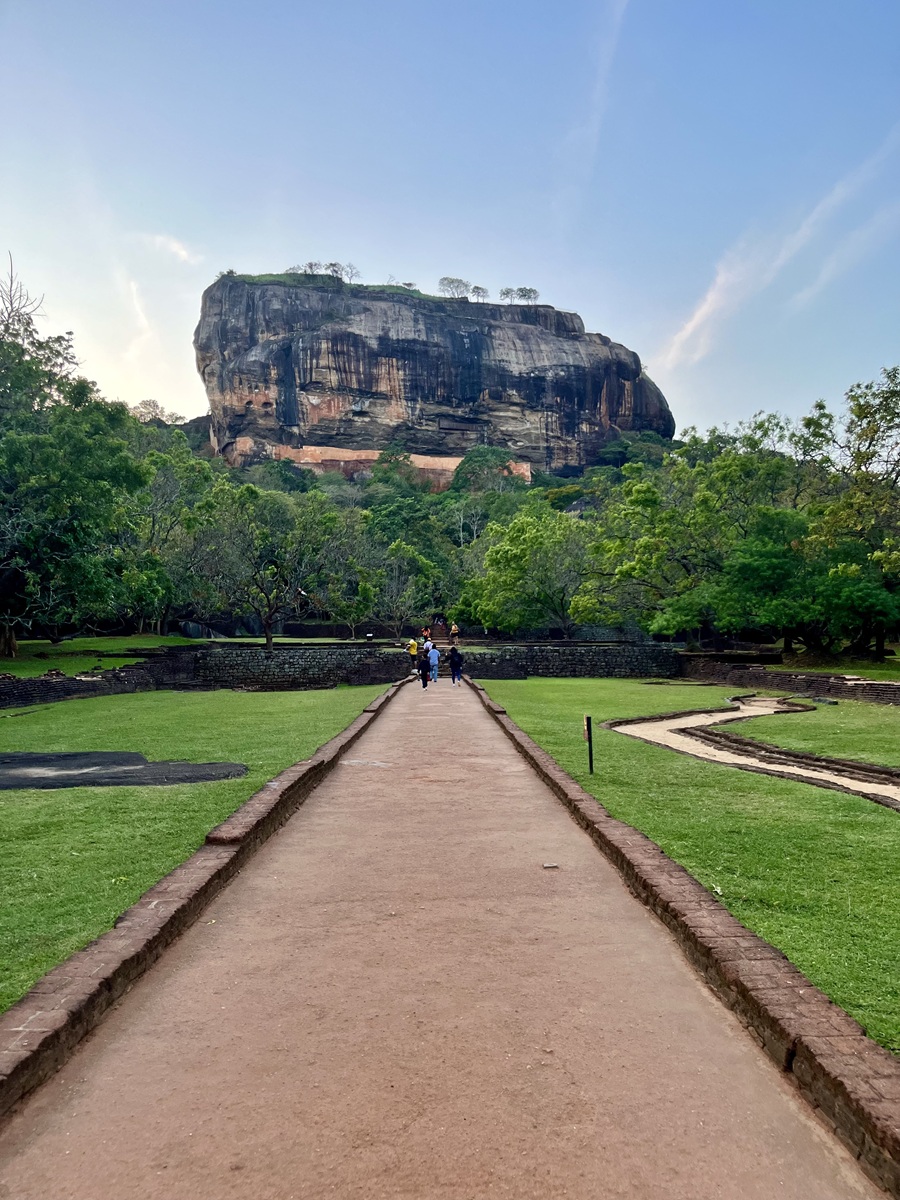
Unfortunately, we didn't get to explore the gardens as much as I would have liked. I was in a hurry to reach the summit before the heat became unbearable, so we only managed to catch a glimpse of them on our way up.
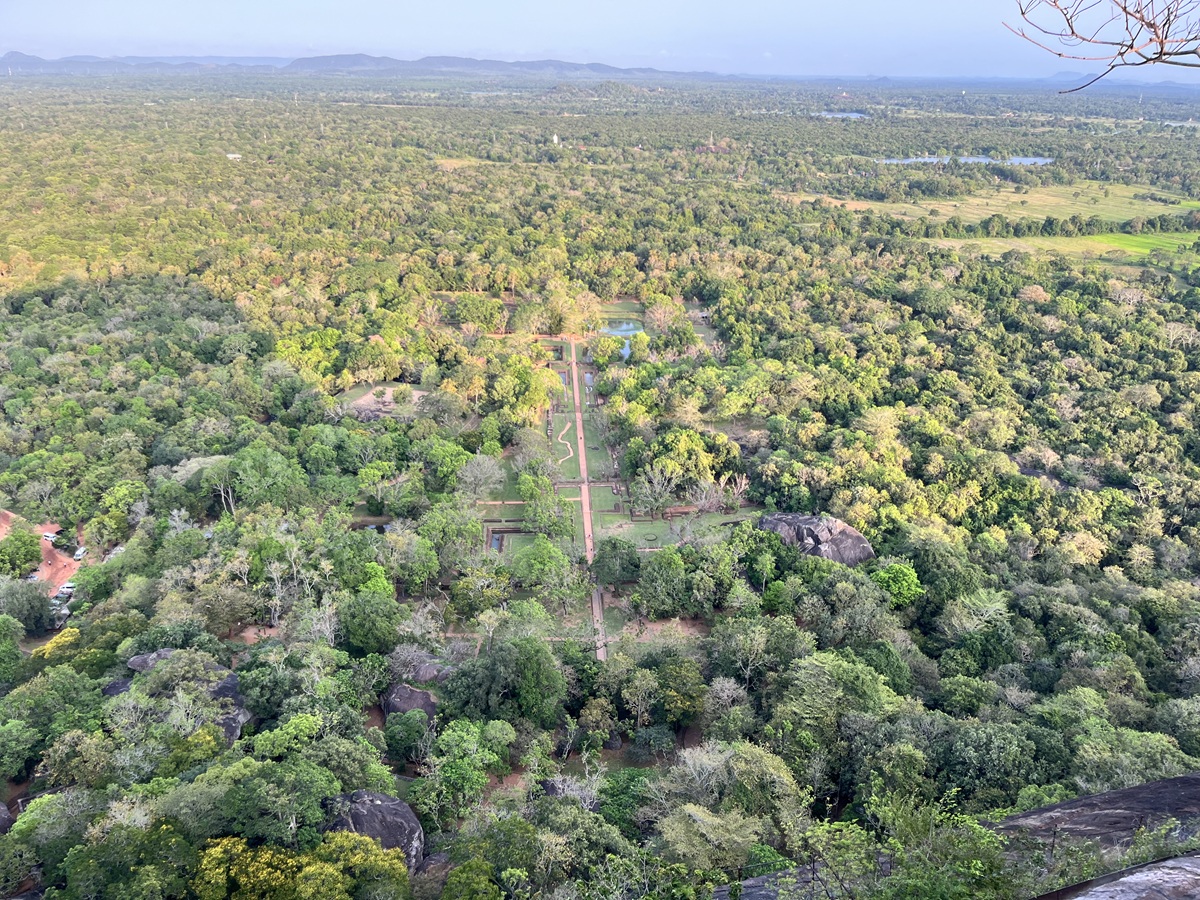
Fortunately, I was still able to feast my eyes on the gardens from above. From the summit, you can clearly appreciate the symmetry, landscaping, and natural boulders incorporated into the design. Looking down at it all made me realize how much more Sigiriya is than just a giant rock with an ancient fortress on top. It also made me regret rushing through the gardens in the first place.
Between the Boulder Gardens and Terrace Gardens, you'll also encounter the first set of stone staircases leading toward Sigiriya Rock.
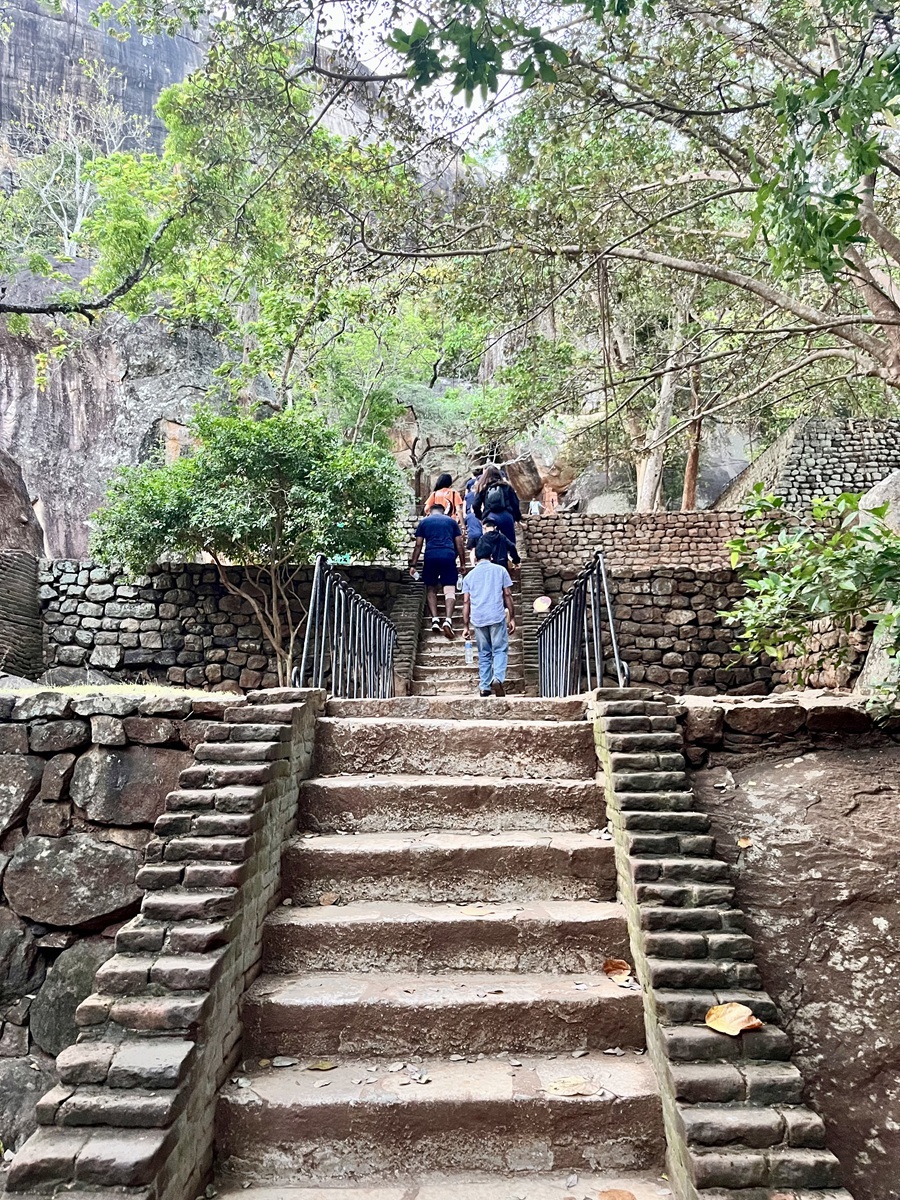
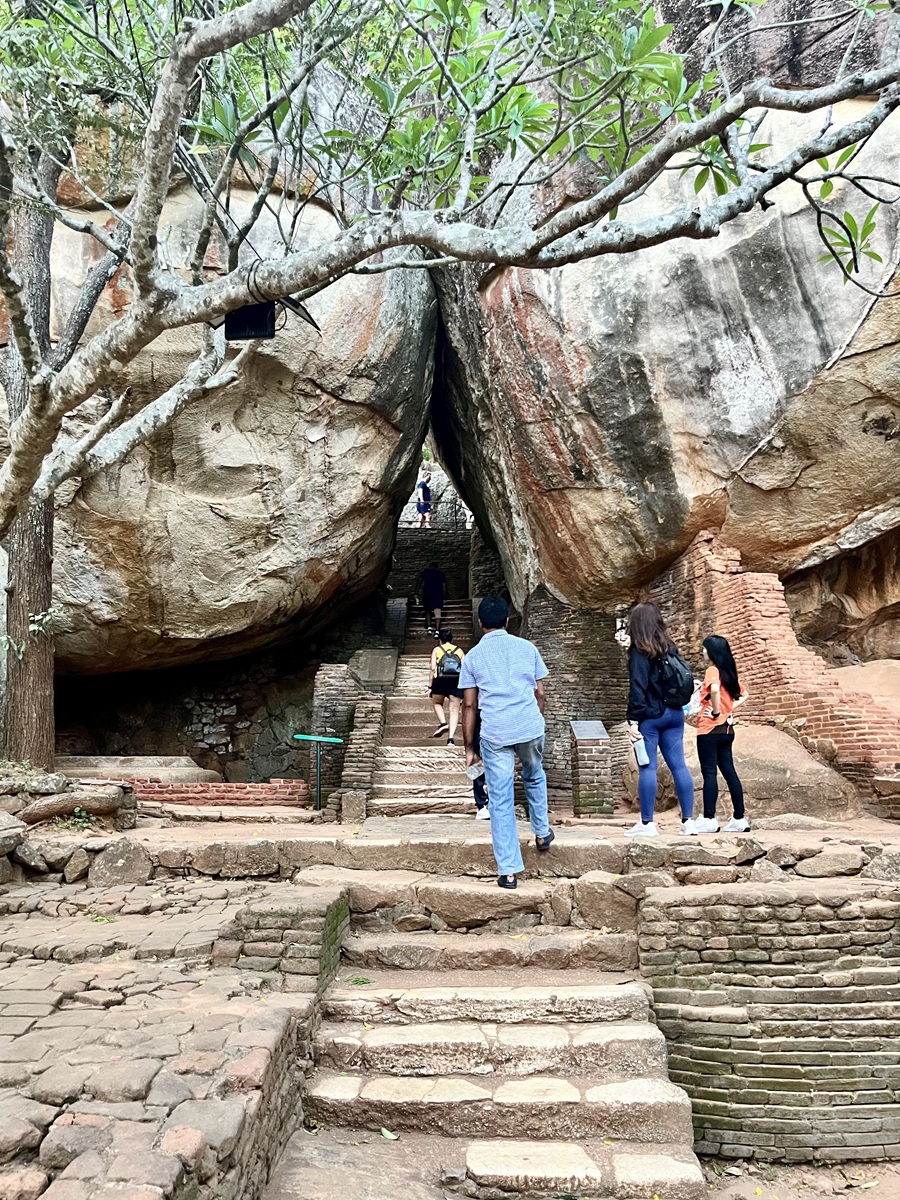
The steps are short, gradual, and evenly spaced, making this section fairly easy to navigate. Along the way, you'll also come across a small terrace with a few benches where you can take a short break before continuing the hike.
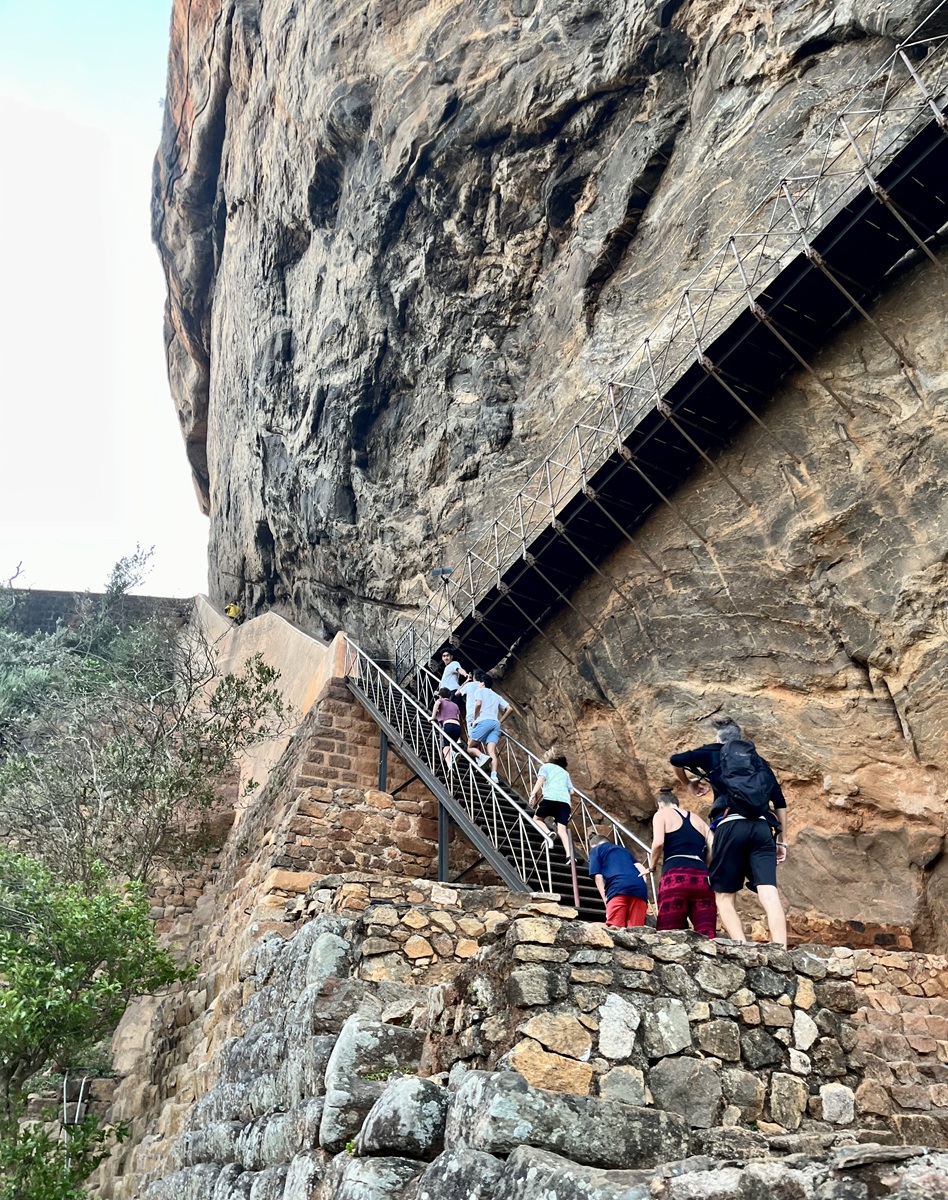
The stone staircases continue until the base of the rock, where they transition into a short set of metal stairs. This section eventually leads to a landing that serves as a junction between two routes: one path continues upward toward the summit, while the other leads to the Mirror Wall and Sigiriya Frescoes toward the exit area.
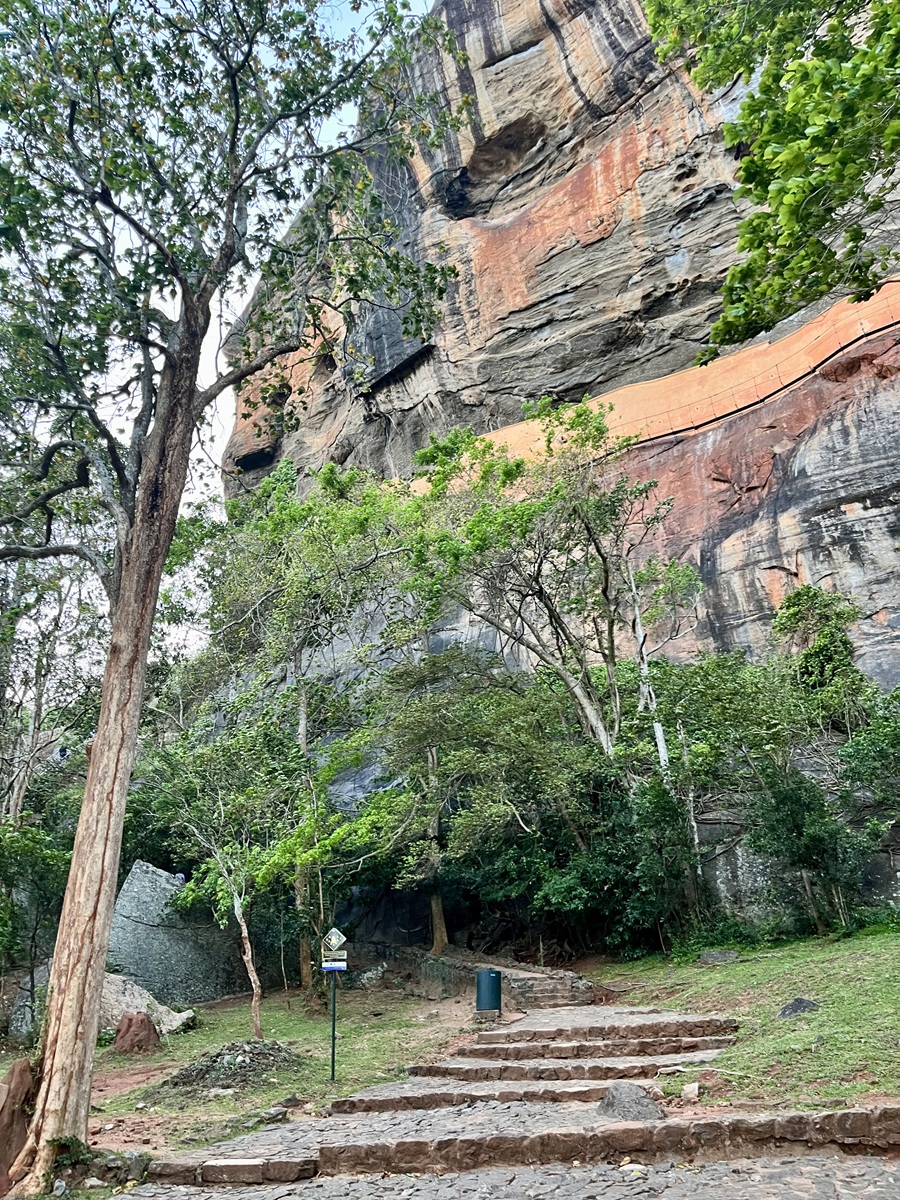
Lion's Paw Terrace
At the top of the first set of stairs, you'll arrive at a wide terrace where you'll find one of the most iconic sections of Sigiriya Rock — the Lion's Gate, also known as the Lion's Paw Terrace.
Today, only the massive lion paws remain, but they still offer a glimpse of the scale and grandeur of the original gatehouse centuries ago.
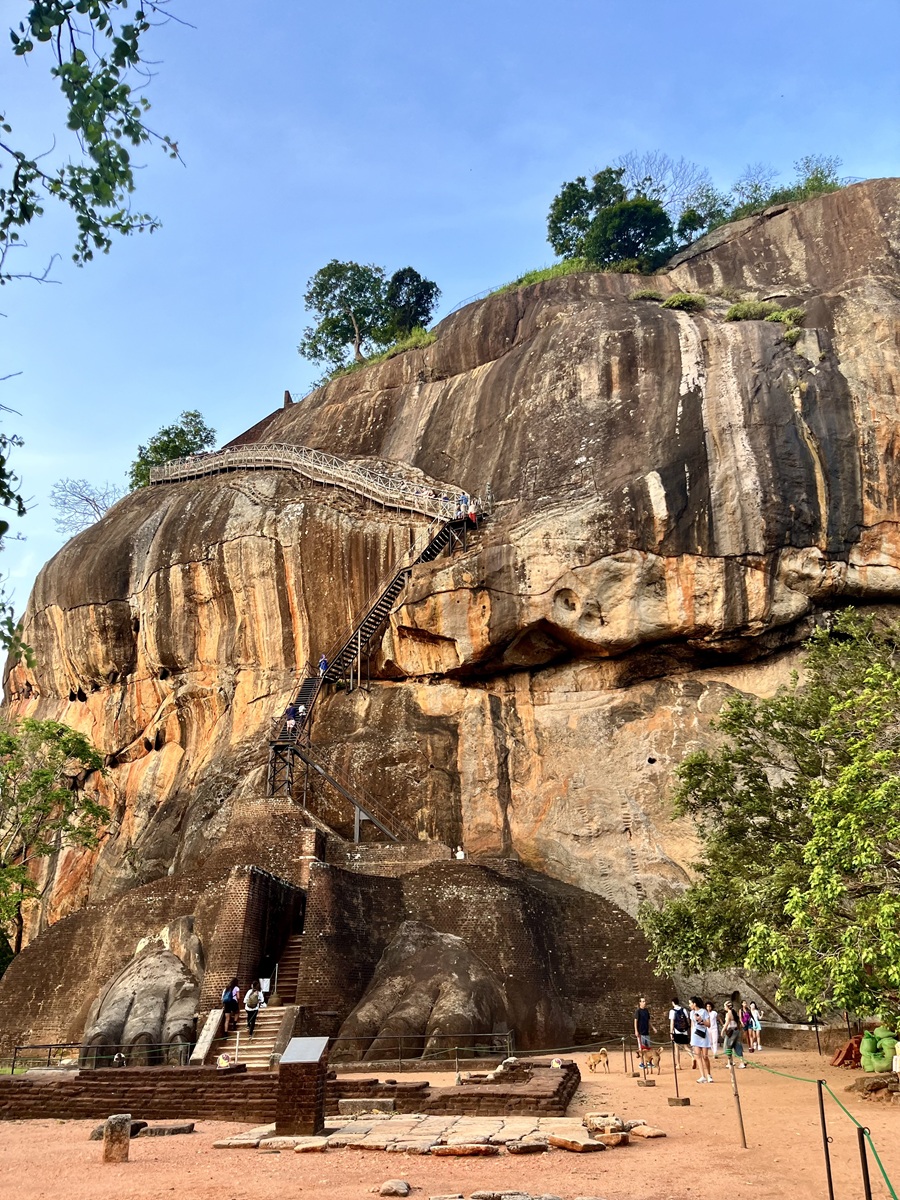
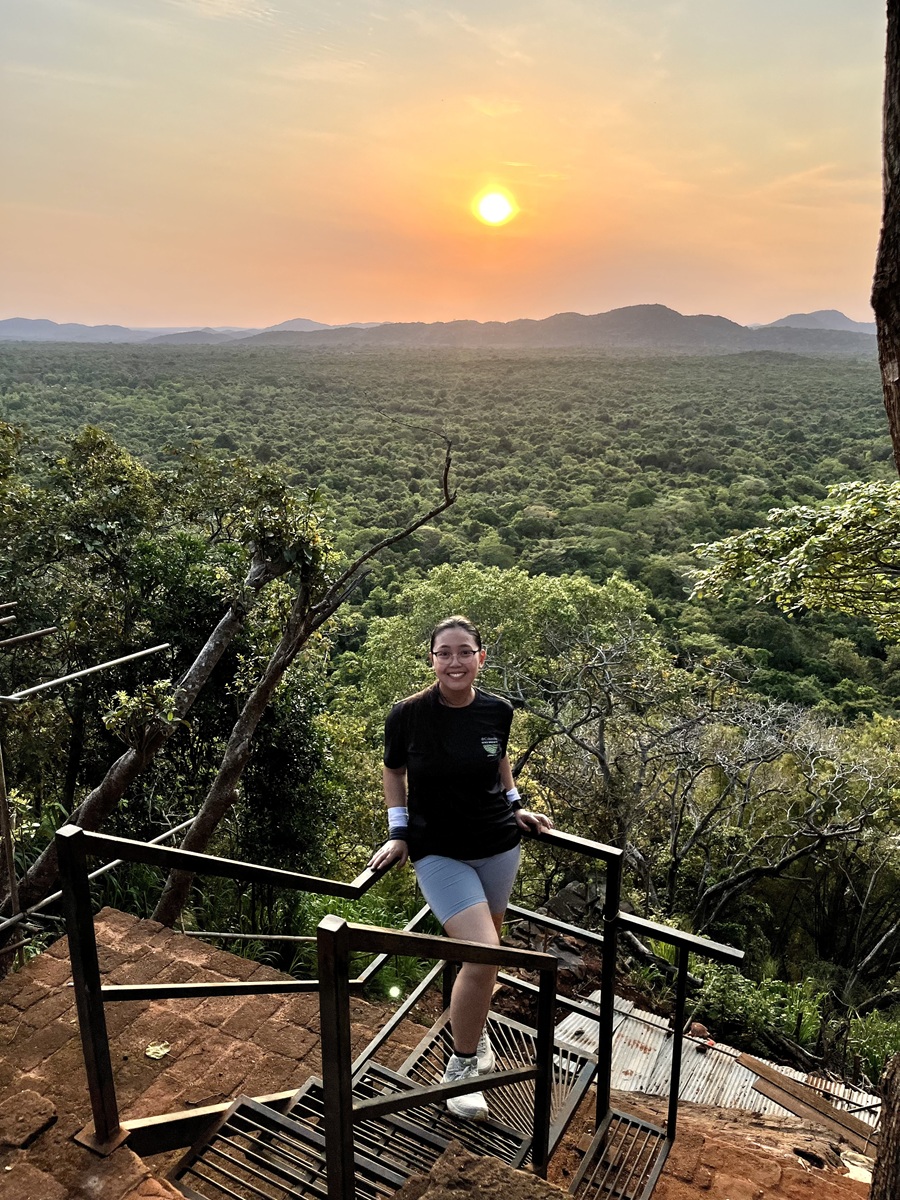
I also noticed a small viewing deck connected by metal stairs to the lower levels. Apart from being a nice spot to take photos, it made me curious about the original layout of the fortress and how people moved around the complex back then.
Metal Stairs
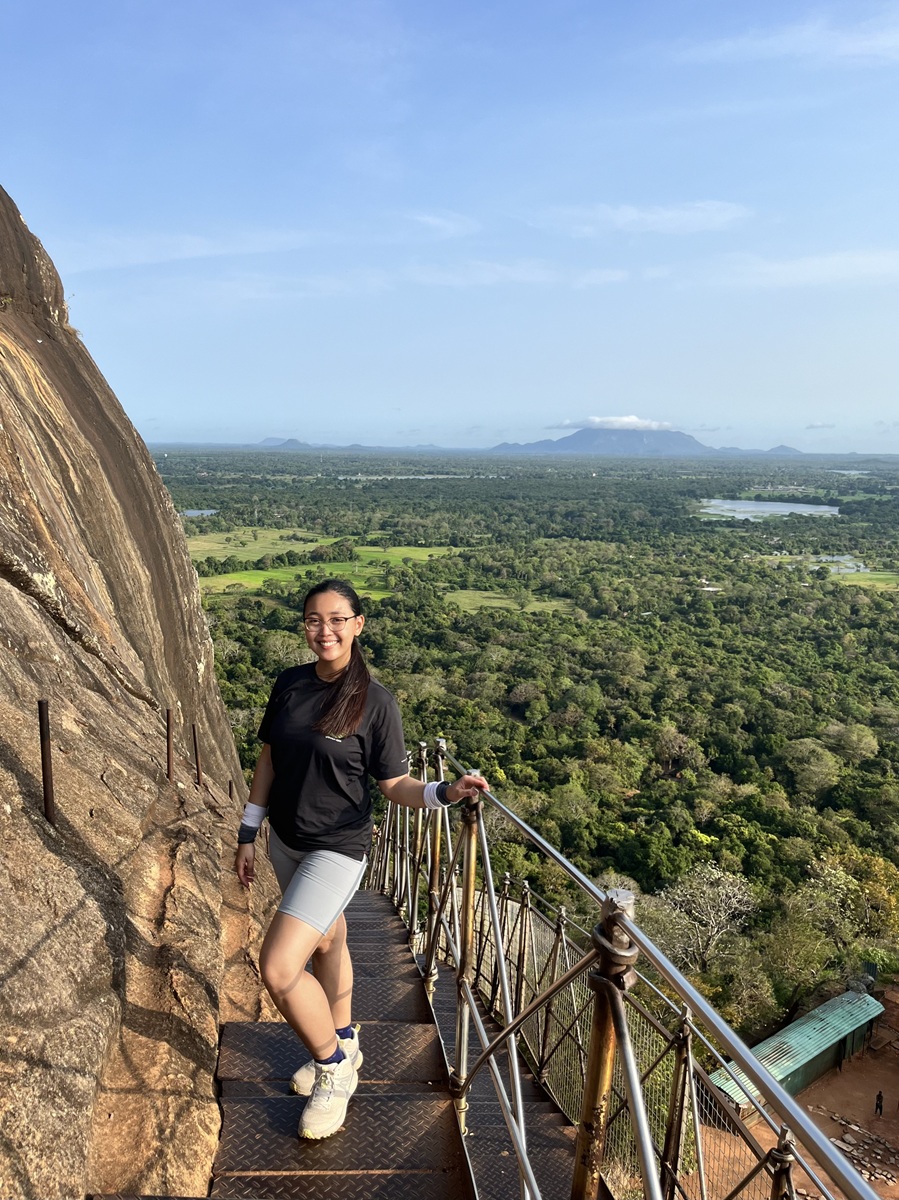
After the Lion Gate comes the section that many visitors remember most — the metal staircases attached to the side of the rock.
At first glance, they didn't look intimidating at all. However, the higher I climbed, the more I started feeling a little nervous. The staircases are sturdy and well-maintained, but my tiny fear of heights slowly began to wake up.
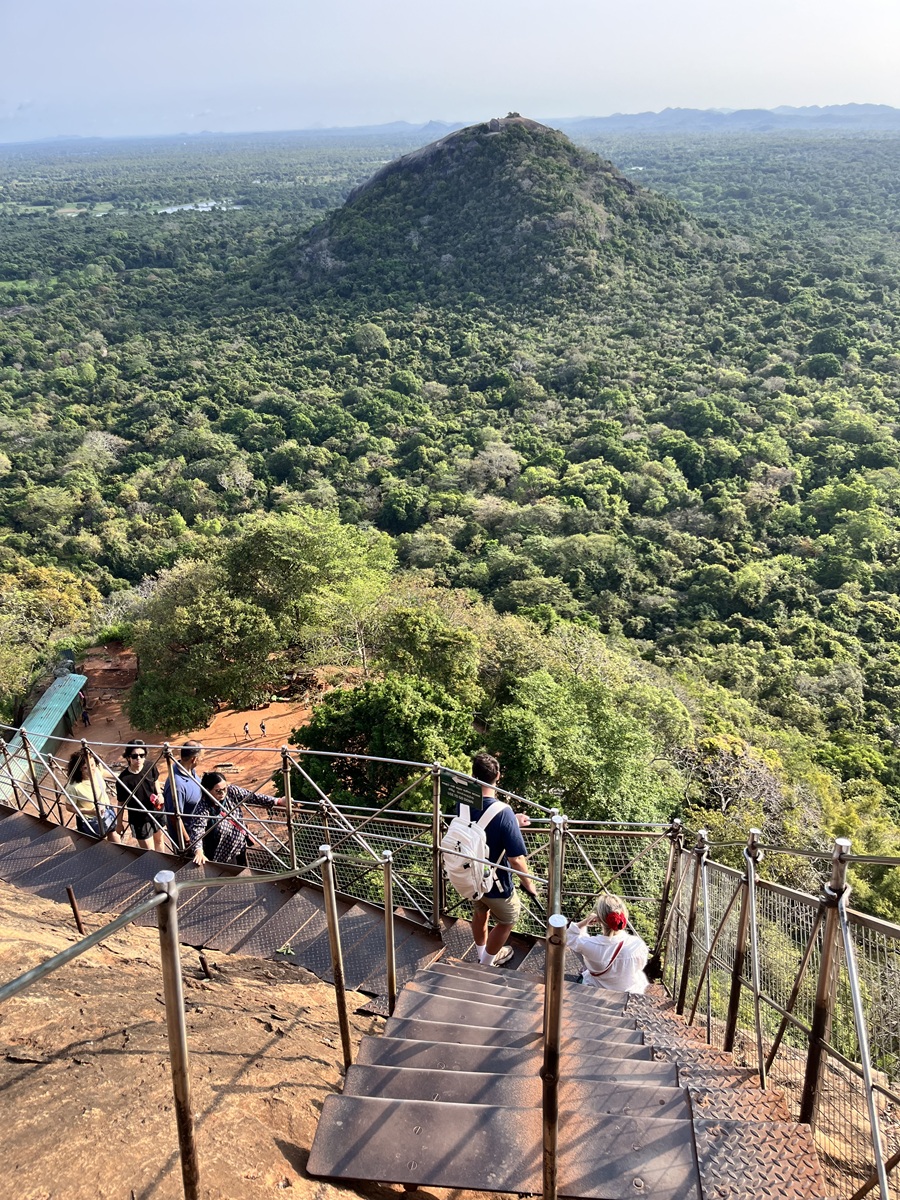
Fortunately, there is a separate staircase for ascending and descending, which helps avoid traffic and makes the experience much more comfortable. The staircase going up is positioned farther away from the rock face, while the one going down sits much closer to it.
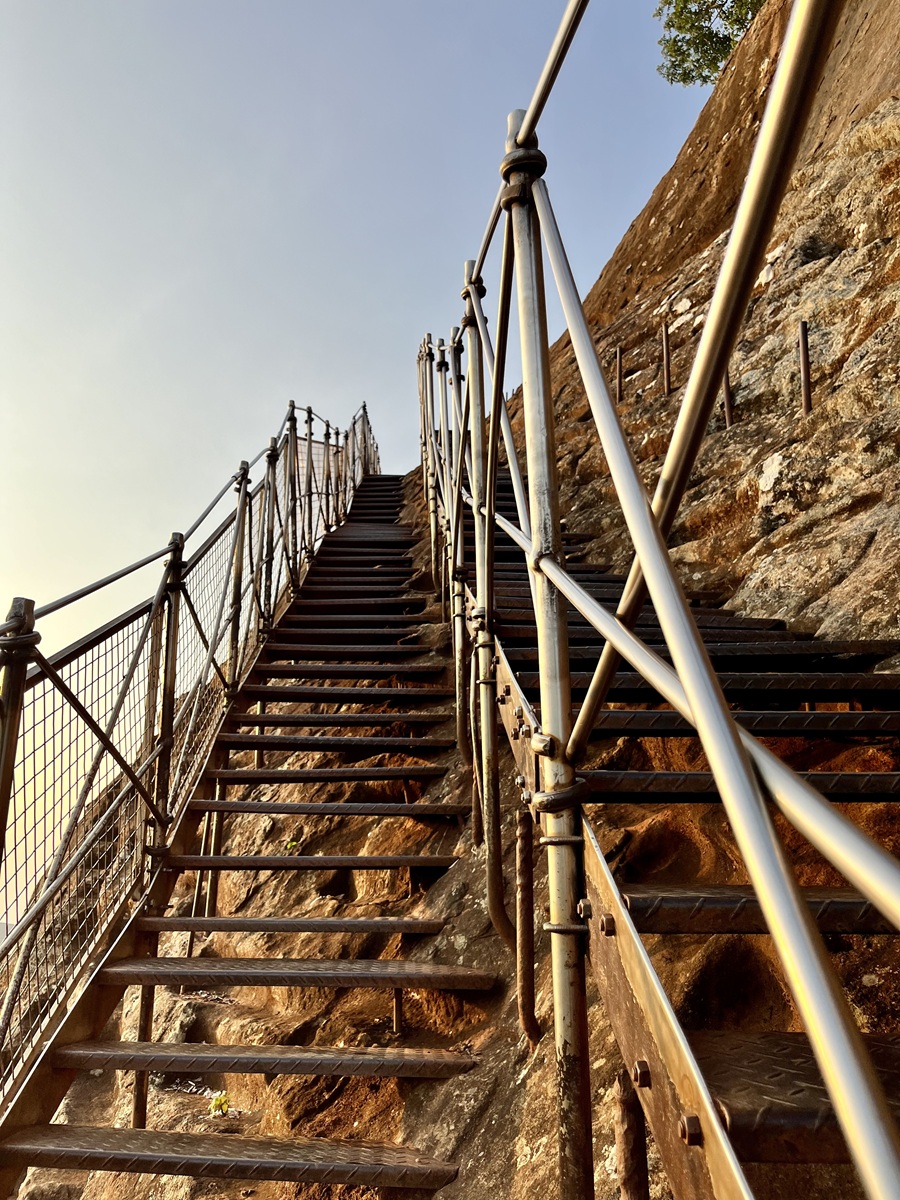
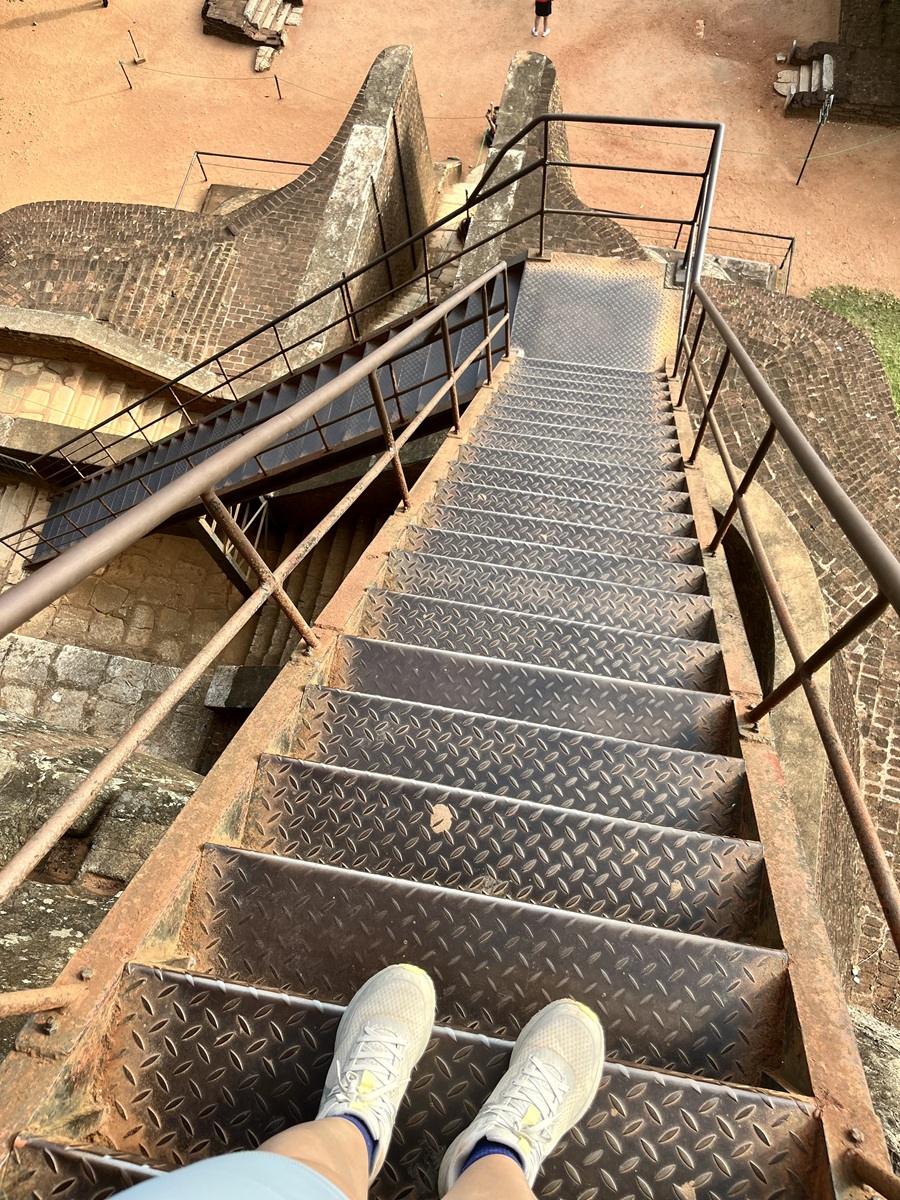
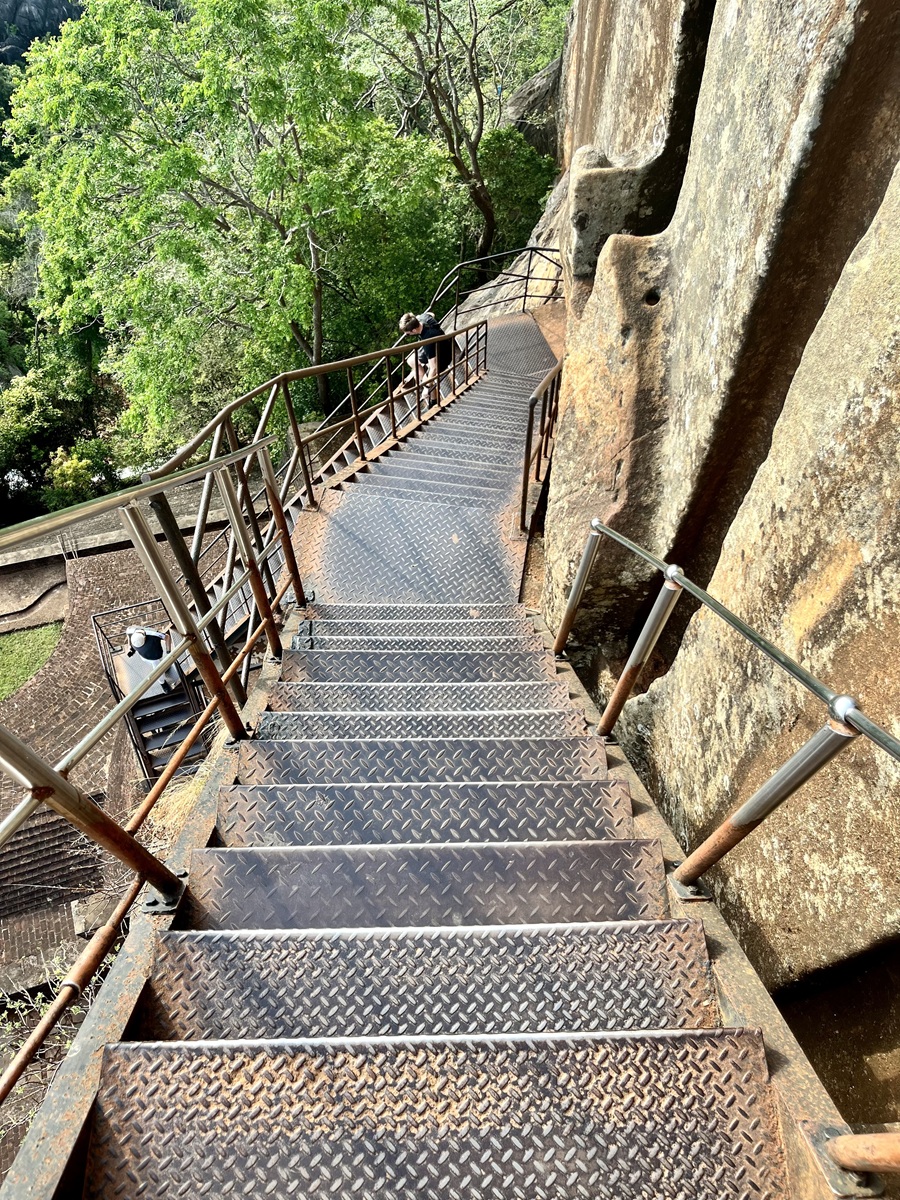
As someone with a small but existing fear of heights (yes, I have one too — it's just not very obvious), I definitely felt more at ease on the way down.
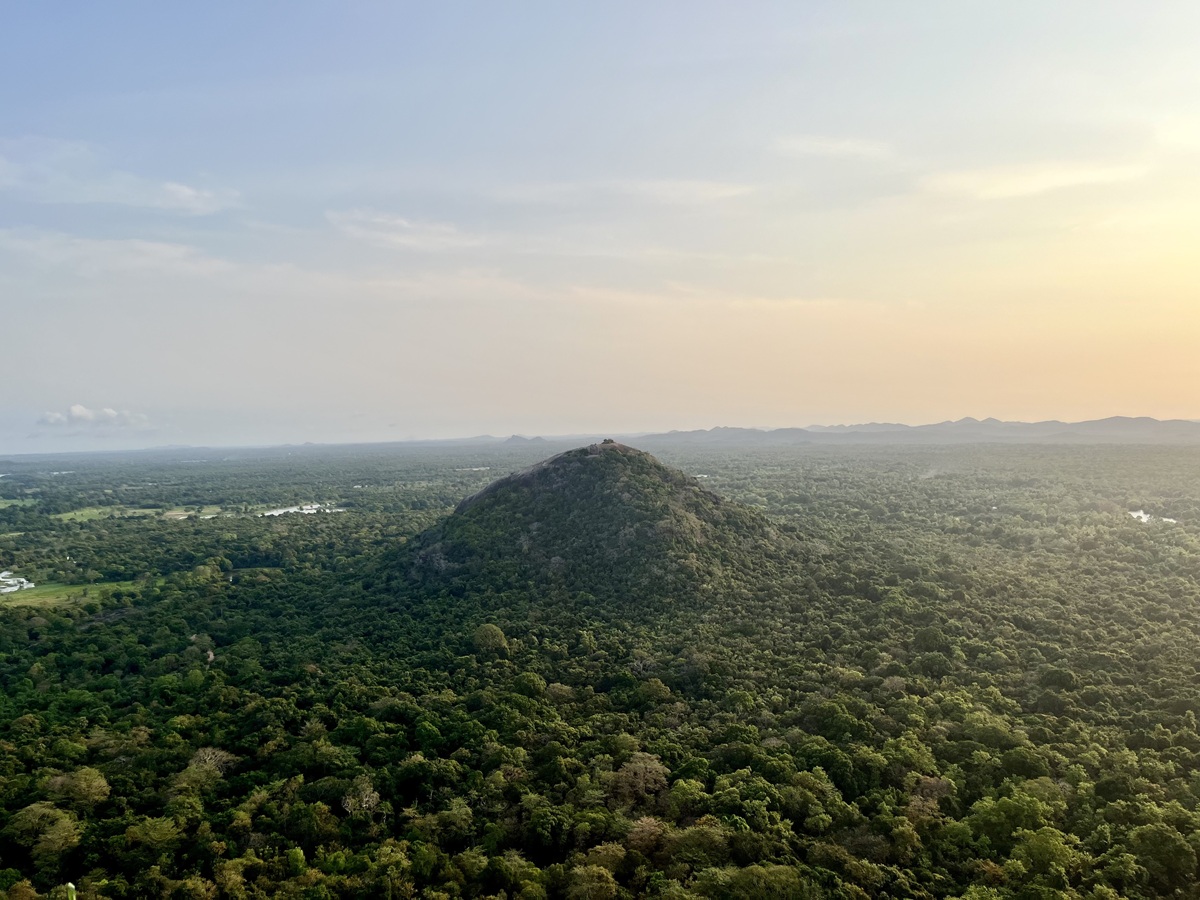
Naturally, I enjoyed the descent much more. I was a lot more relaxed and had time to appreciate the views, especially the nearby Pidurangala Rock. It was a great opportunity to absorb everything before continuing the rest of the visit.
Sigiriya Rock Palace Complex
At the summit, you'll find the remains of the ancient fortress and palace complex spread across different levels of the rock.
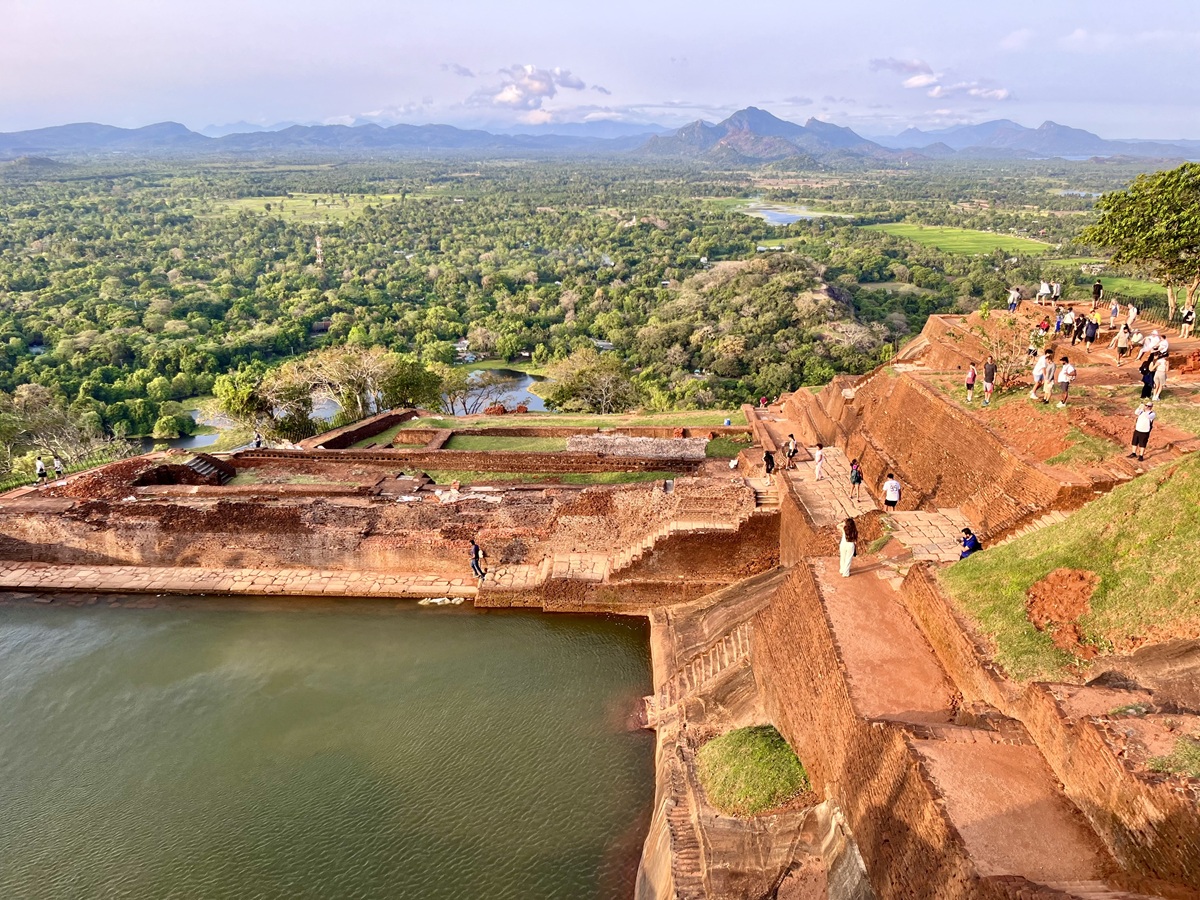
Despite the ruins, it is still possible to imagine how impressive the complex must have been during the reign of King Kashyapa. There are remnants of pools, gardens, staircases, and sophisticated water management systems, all sitting hundreds of meters above the surrounding landscape.
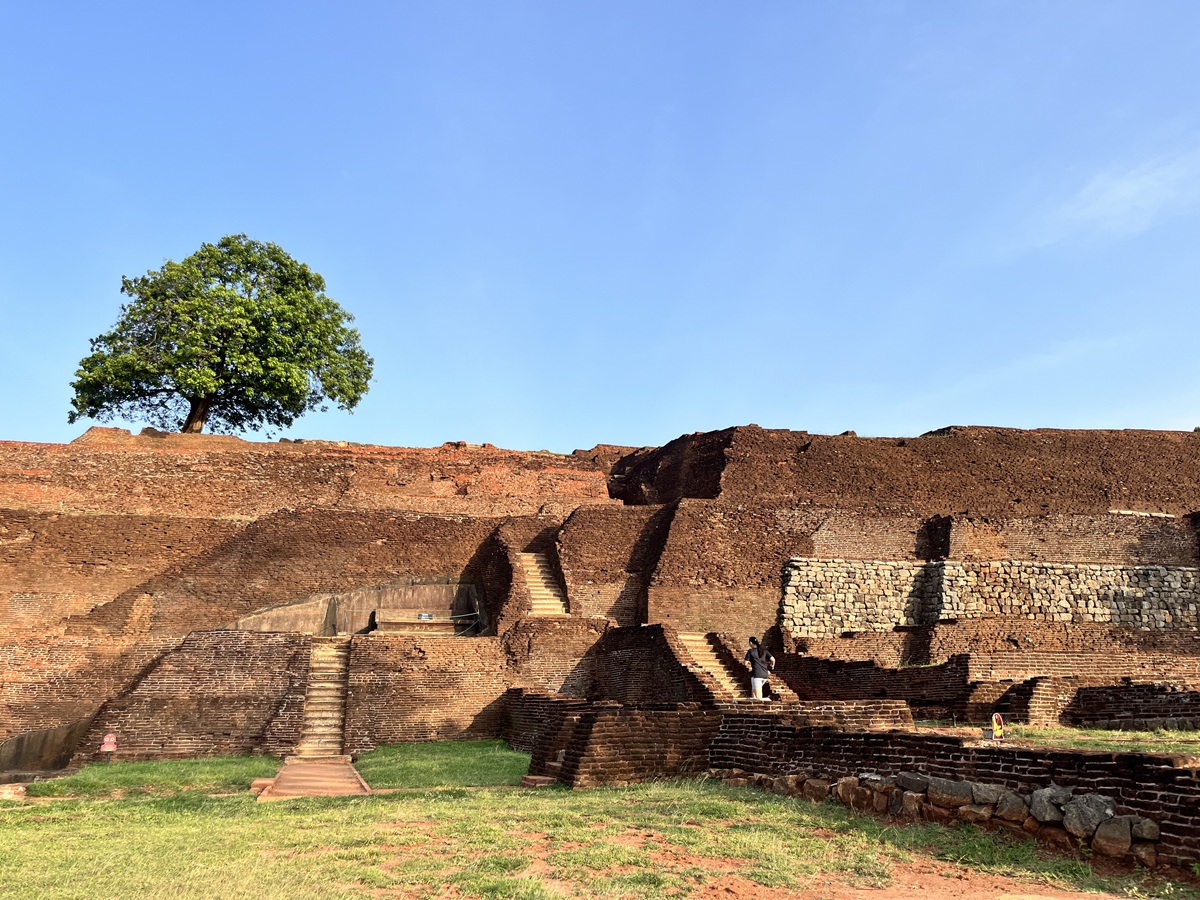
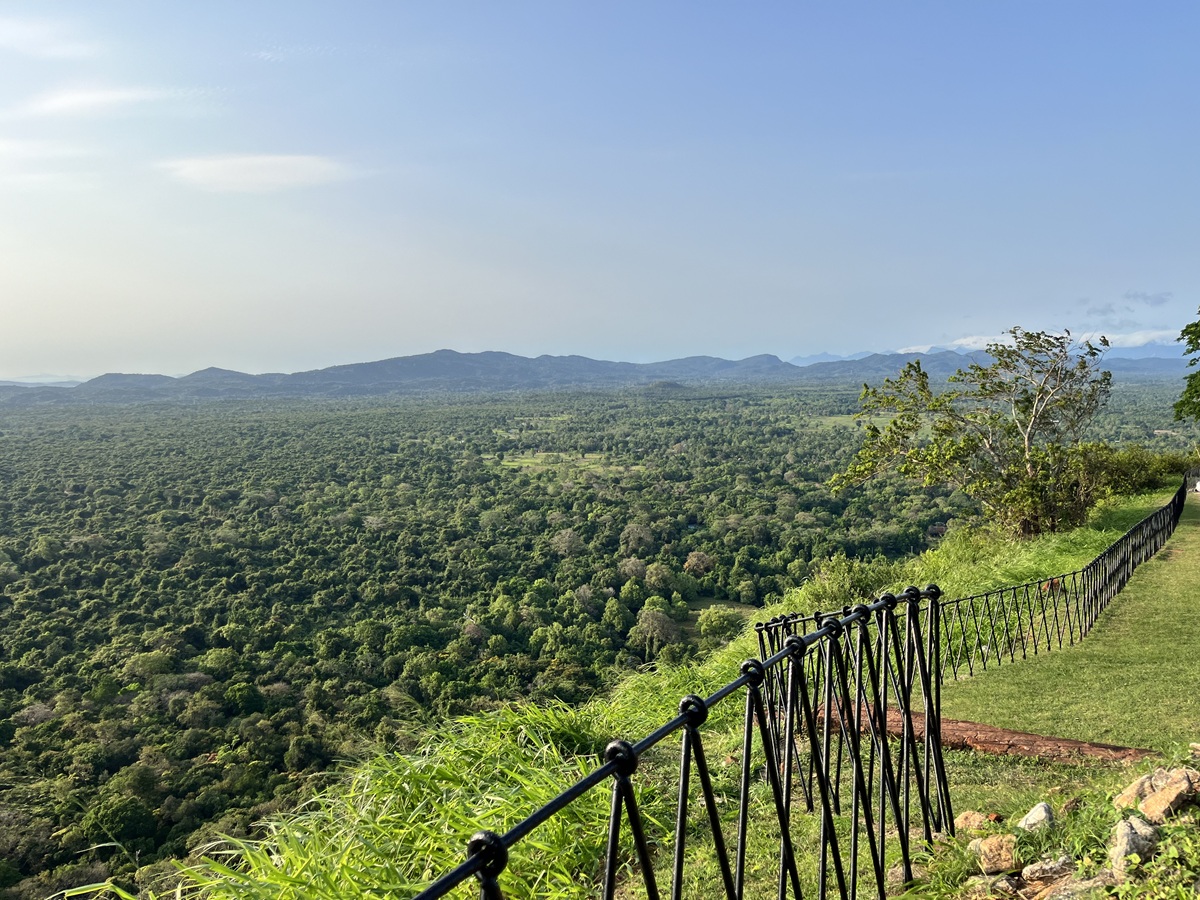
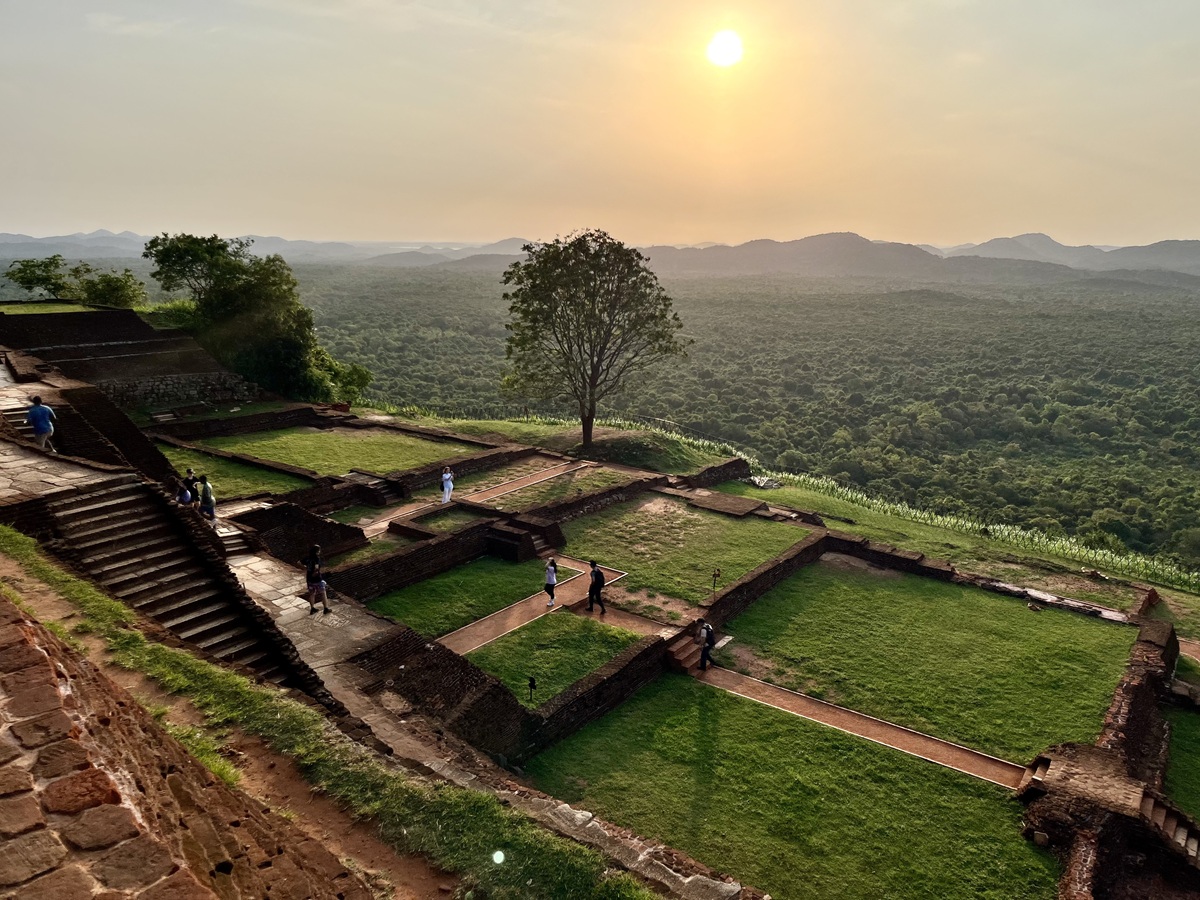
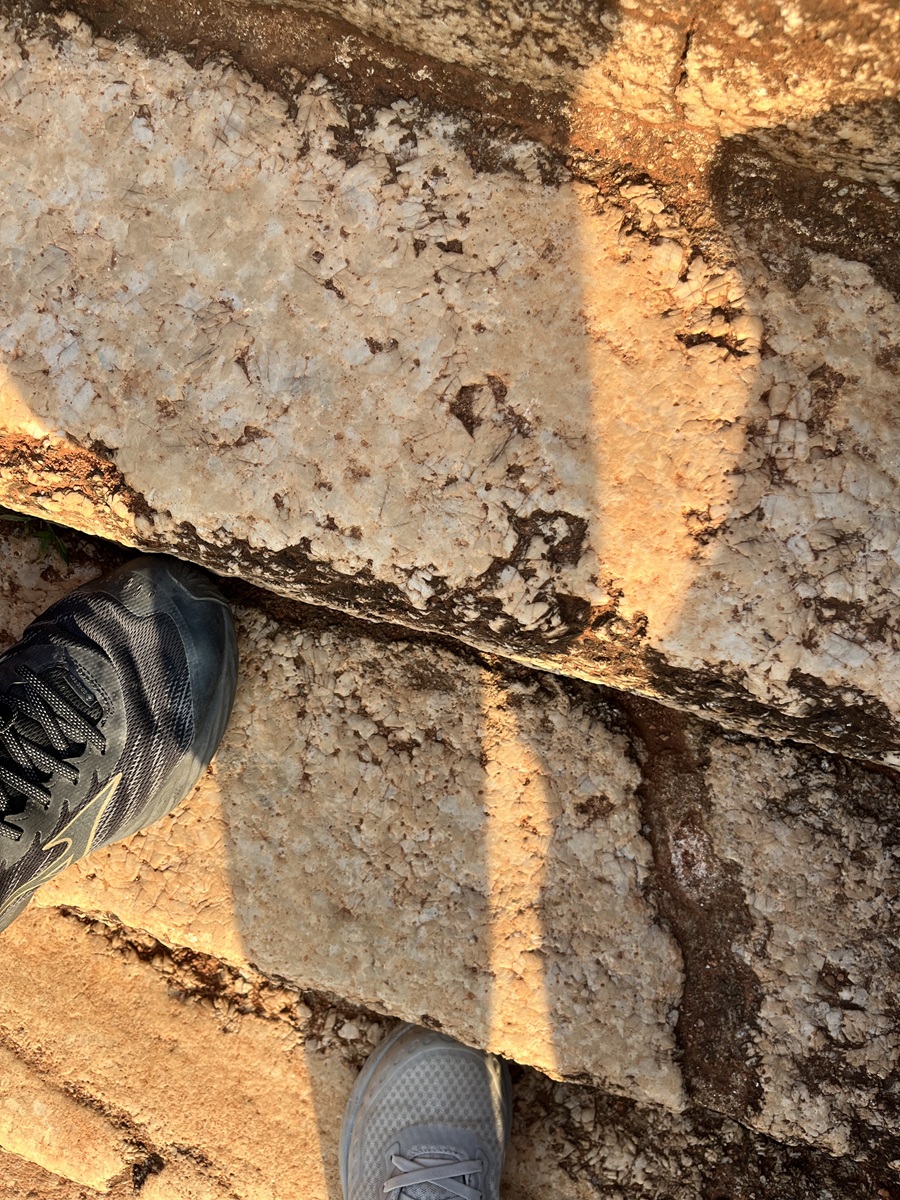
The summit also offers panoramic views in every direction. From up here, you can admire the Sigiriya Gardens below, nearby villages, forests, lakes, and even distant mountain ranges on a clear day.
One thing that also caught my attention was the texture of some of the rock-cut staircases. The coarse crystalline minerals gave the stone a rugged appearance when viewed up close, which made me stop for a few photos before continuing my exploration.
While wandering around the palace complex, I couldn't help but wonder what Sigiriya looked like at its peak under King Kashyapa's rule. We have countless films and television series reimagining ancient kingdoms, emperors, and even Vikings. Wouldn't it be interesting to see a historical drama dedicated to Sigiriya and the people who once lived here? I'd definitely watch that!
Mirror Wall, Frescoes & Other Archaeological Highlights
From the Lion's Paw Terrace, you'll come across a junction where you need to take the left-hand path towards the exit route.
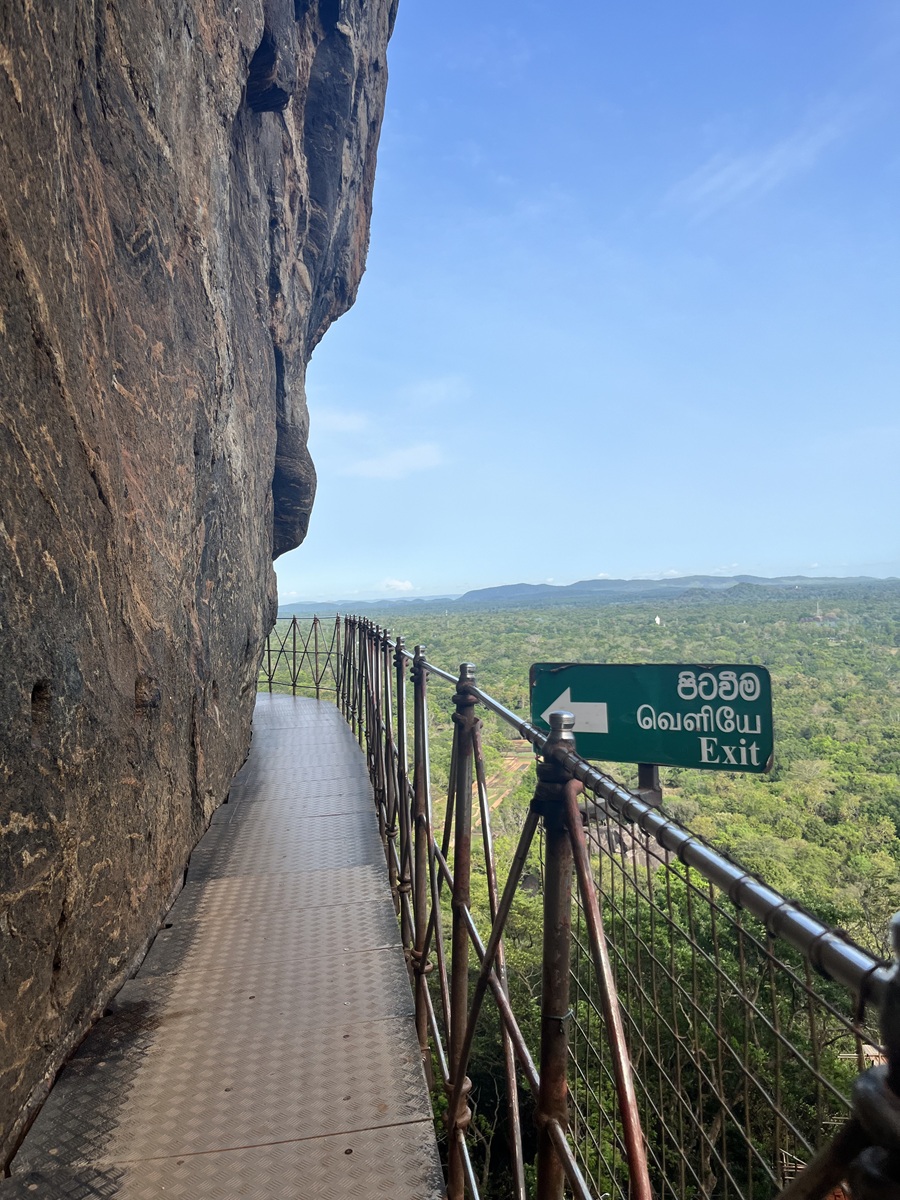
Almost immediately, you'll reach the famous Mirror Wall. During its time, the wall was polished to such a high degree that it supposedly reflected the image of those walking beside it. Today, it remains an important part of Sigiriya's history because of the inscriptions and poems left behind by ancient visitors, collectively known as the Sigiriya Graffiti.
To be honest, I didn't notice any visible inscriptions during our visit. Looking back, this was one of the sections where having a guide would have been quite helpful.
Next comes one of Sigiriya's most famous attractions — the frescoes, which are accessed via a spiral staircase.
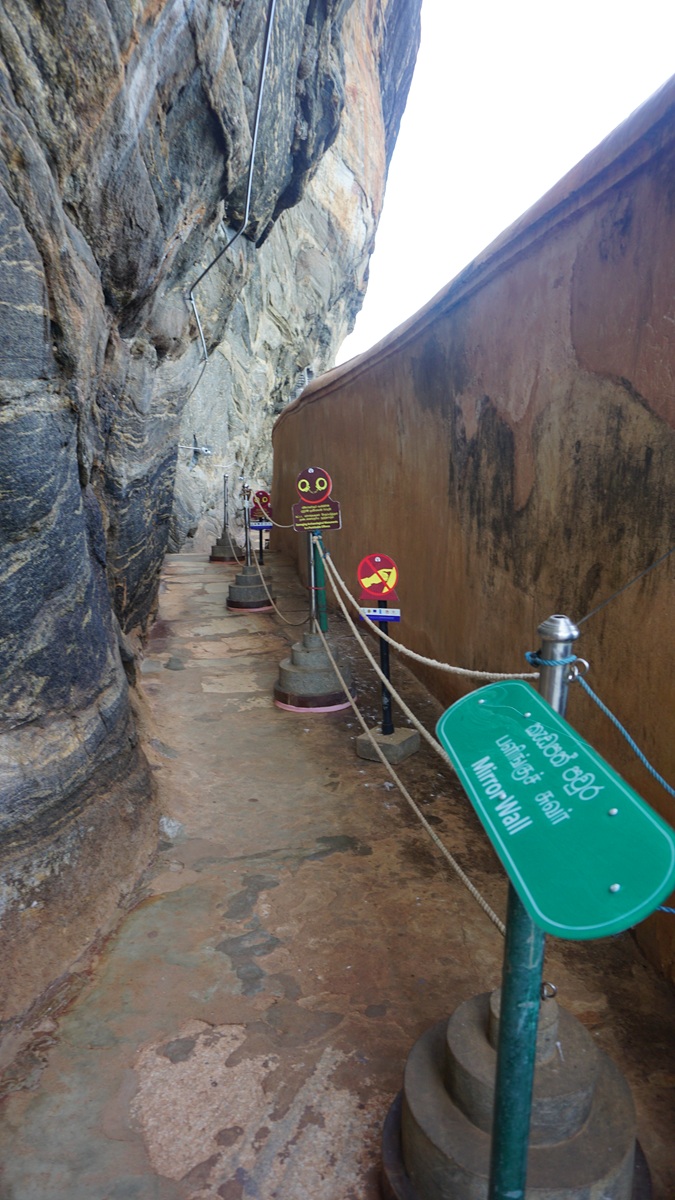
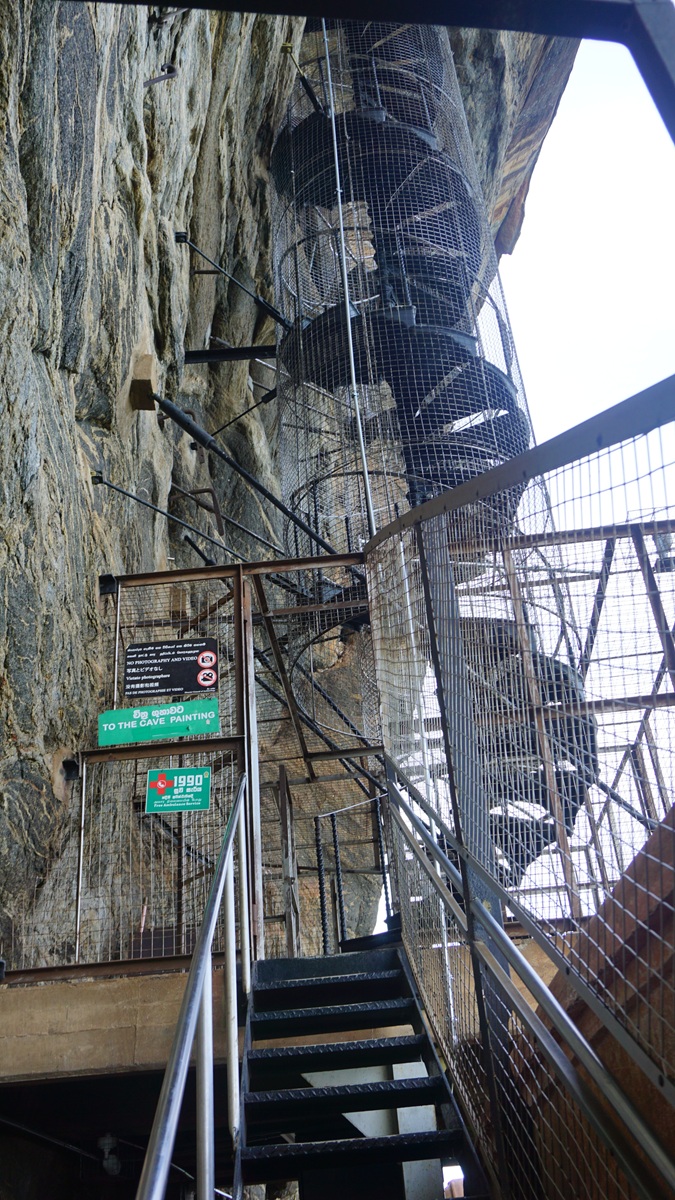
Photography and videography are strictly prohibited inside the frescoes chamber, and a security guard keeps a close eye on visitors, so don't even think about testing your luck.
While I don't have any photos to show, we saw around ten murals depicting graceful women adorned with crowns, jewelry, flowers, and intricate garments. The paintings still looked vibrant despite their age, and their artistic style also felt quite unique and unlike anything I had seen so far.
The cave itself is relatively small, and the visit doesn't take very long. However, seeing the frescoes was just as enjoyable as exploring the palace complex at the summit and added another layer to the overall Sigiriya experience.
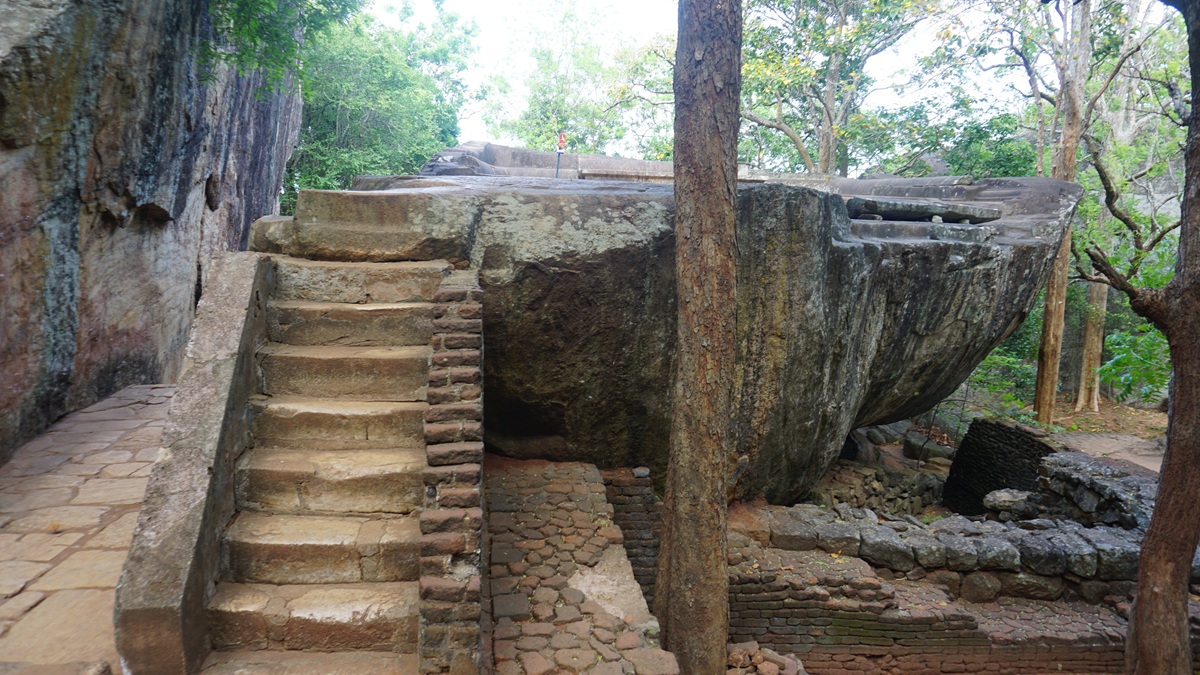
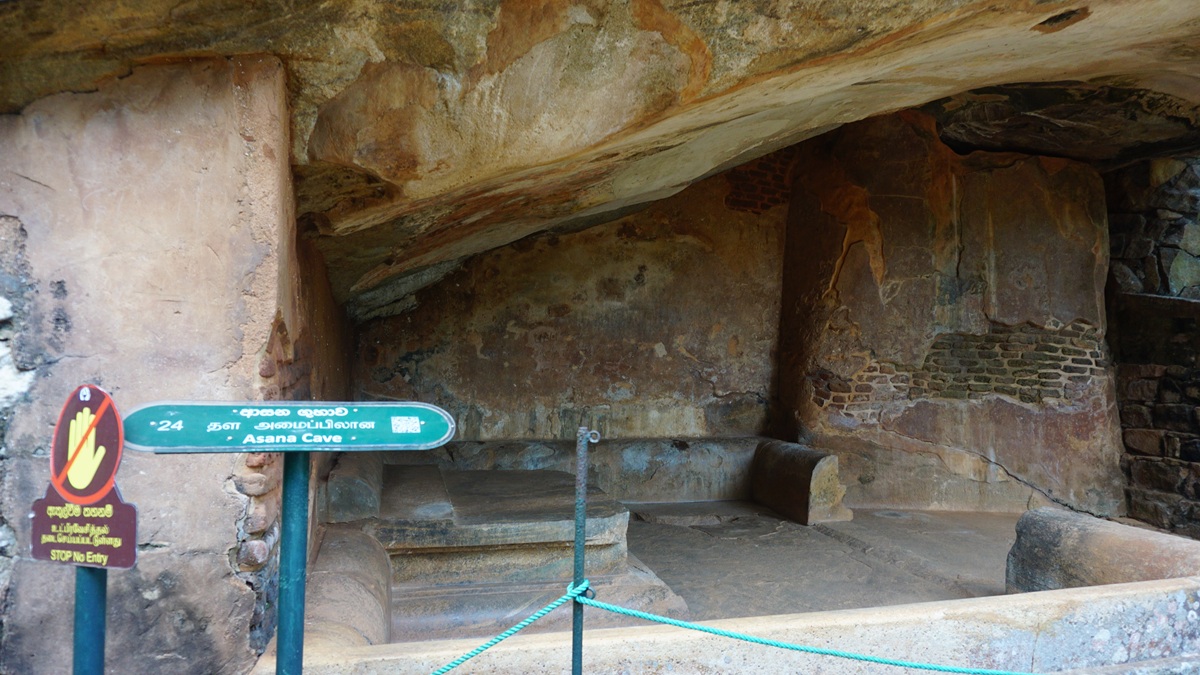
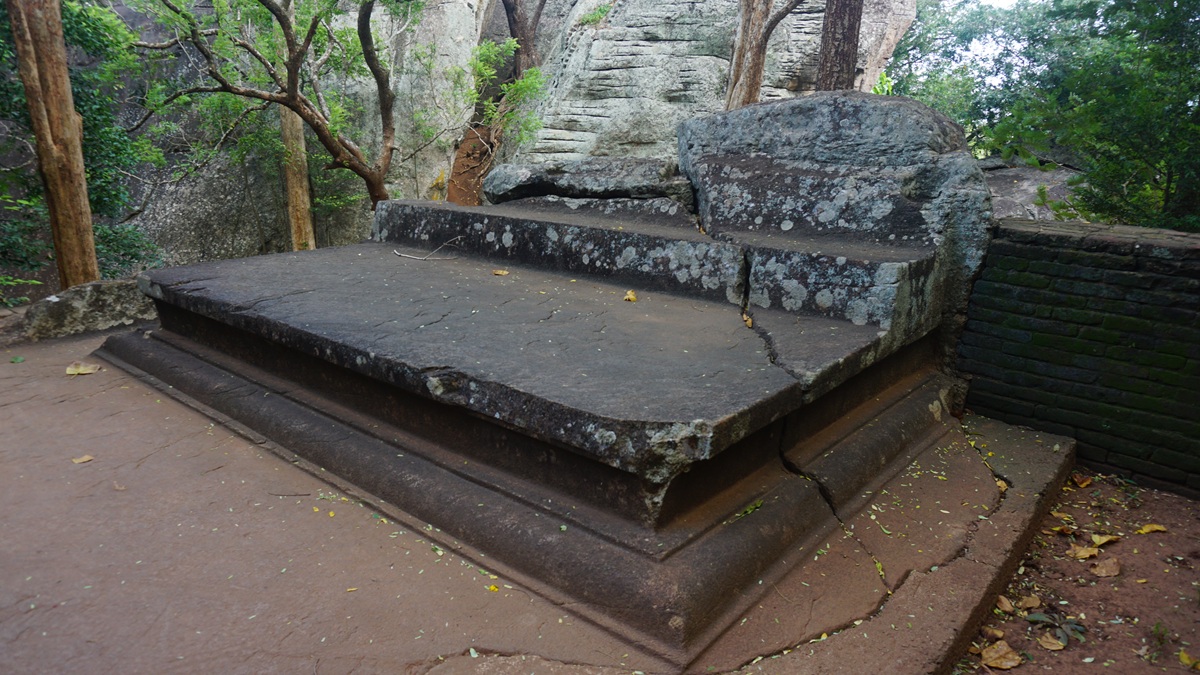
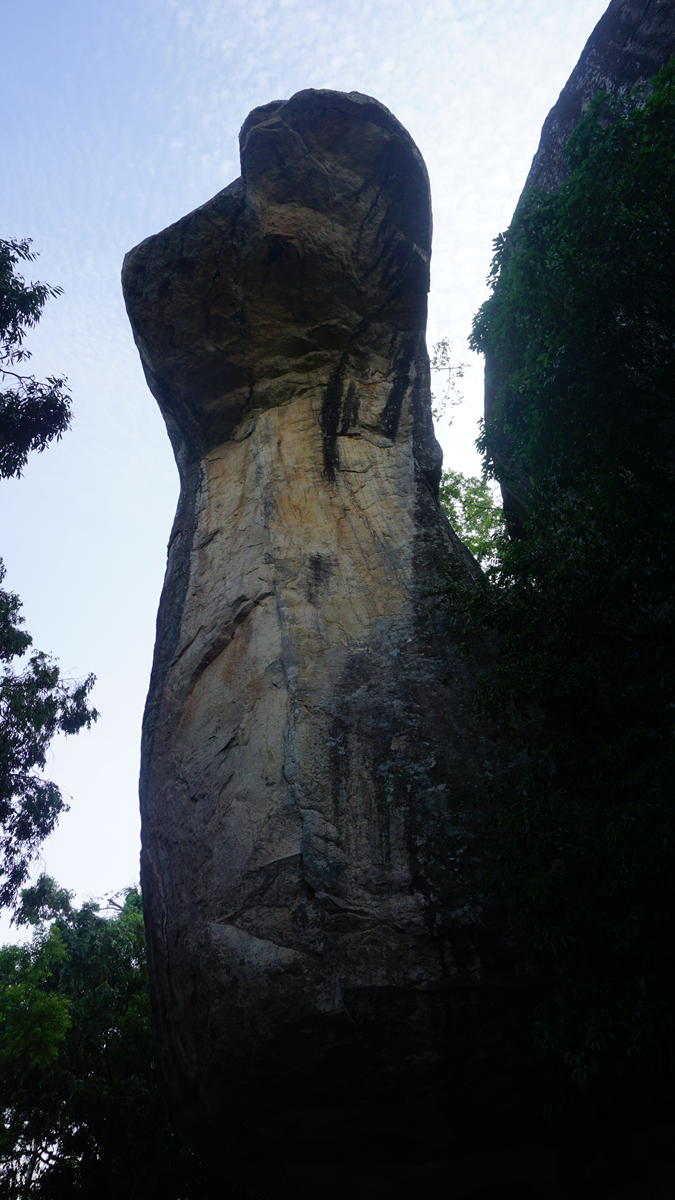
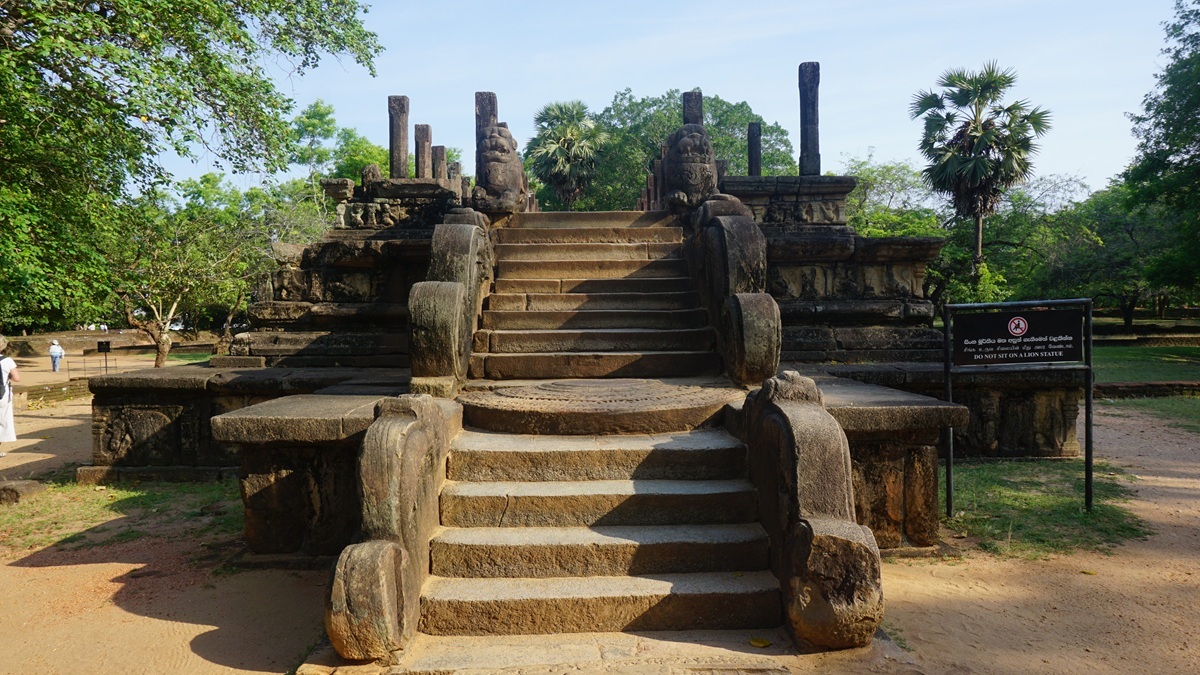
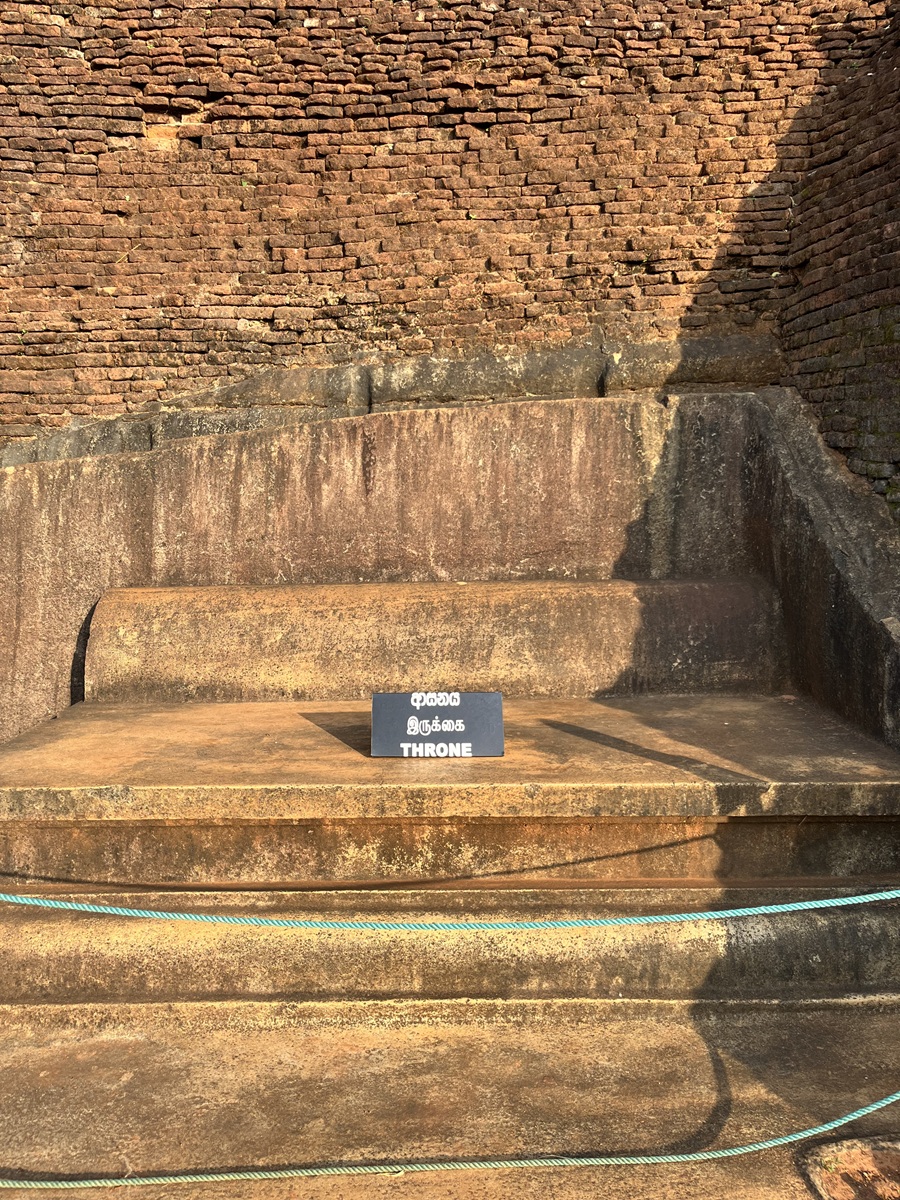
Before reaching the exit, we also passed several other archaeological remains, including the Audience Hall, the Throne, the Asana Cave, and the Cobra Hood Cave. While they may not be as famous as the frescoes or the summit fortress, they offer another glimpse into the scale and complexity of ancient Sigiriya.
Hike Arrangement & Cost(s):
Since we completed the hike independently, we didn't hire a guide and only paid the following expenses:
- Entry Fee: USD 35.00 or LKR 11,760 per person
- PickMe Car Fare: LKR 2,000
- Tuk-Tuk Fare (Return Journey): LKR 500
Unlike our experience during the Pidurangala Rock hike, transportation to Sigiriya Rock was a bit of a mess.
The tuk-tuk arranged through our hotel didn't show up, and there were no available tuk-tuks on PickMe at 5 AM. We eventually booked a car through the app and somehow ended up paying LKR 2,000 for a very short ride due to some miscommunication and a GPS issue. To this day, I'm still not sure whether it was an absolute misunderstanding or a PickMe issue. Either way, lesson learned.
Fortunately, finding a ride back was much easier. We found a tuk-tuk driver in Sigiriya who charged LKR 500 to take us back to our hotel.
If you'd rather avoid transportation mishaps and prefer to join a tour or hire a guide, you can also check the options below.
Personal Thoughts on Sigiriya Rock Hike:
As I always say, we all have different adventure appetite or what I call #hikeppetite to begin with. So, a good trail for me might not be a good trail for you, and vice versa. And that’s completely okay — we don’t need to agree with anyone or everyone all the time. Anyhow, here’s what I think about our hike in Sigiriya Lion Rock:
Pros:
- The trail is well-established and easy to follow.
- Short and manageable, making it suitable for visitors of different fitness levels.
- Amazing panoramic views of the surrounding jungle, lakes, villages, and the greater Sigiriya area.
- Exploring the ancient rock fortress at the summit adds a unique historical and cultural element to the experience.
- The iconic Lion Gate, fortress ruins, and archaeological remains make the visit more than just a hike.
- A chance to visit one of Sri Lanka's most famous UNESCO World Heritage Sites.
Cons:
- More of a sightseeing activity with lots of stairs than a proper hike (based on my #hikeppetite).
- The entrance fee is quite expensive and can take a significant chunk out of a budget traveler's budget.
- It can get very hot, especially on the stair sections and at the summit, where there is little shade.
- If you're looking for a physically challenging hike, you will find the trail too easy.
Despite the steep entrance fee for foreigners and the hike itself is relatively short and straightforward, I genuinely enjoyed visiting Sigiriya Rock. Exploring the ancient rock fortress at the summit made the experience worthwhile. Walking through the ruins and imagining how people once lived on top of this massive rock was something I truly appreciated.
For some reason, the fortress ruins reminded me of the photos I've seen of Machu Picchu in Peru. Not the same, of course, but it makes me wonder if this is my sign to finally travel to South America. Let's see!
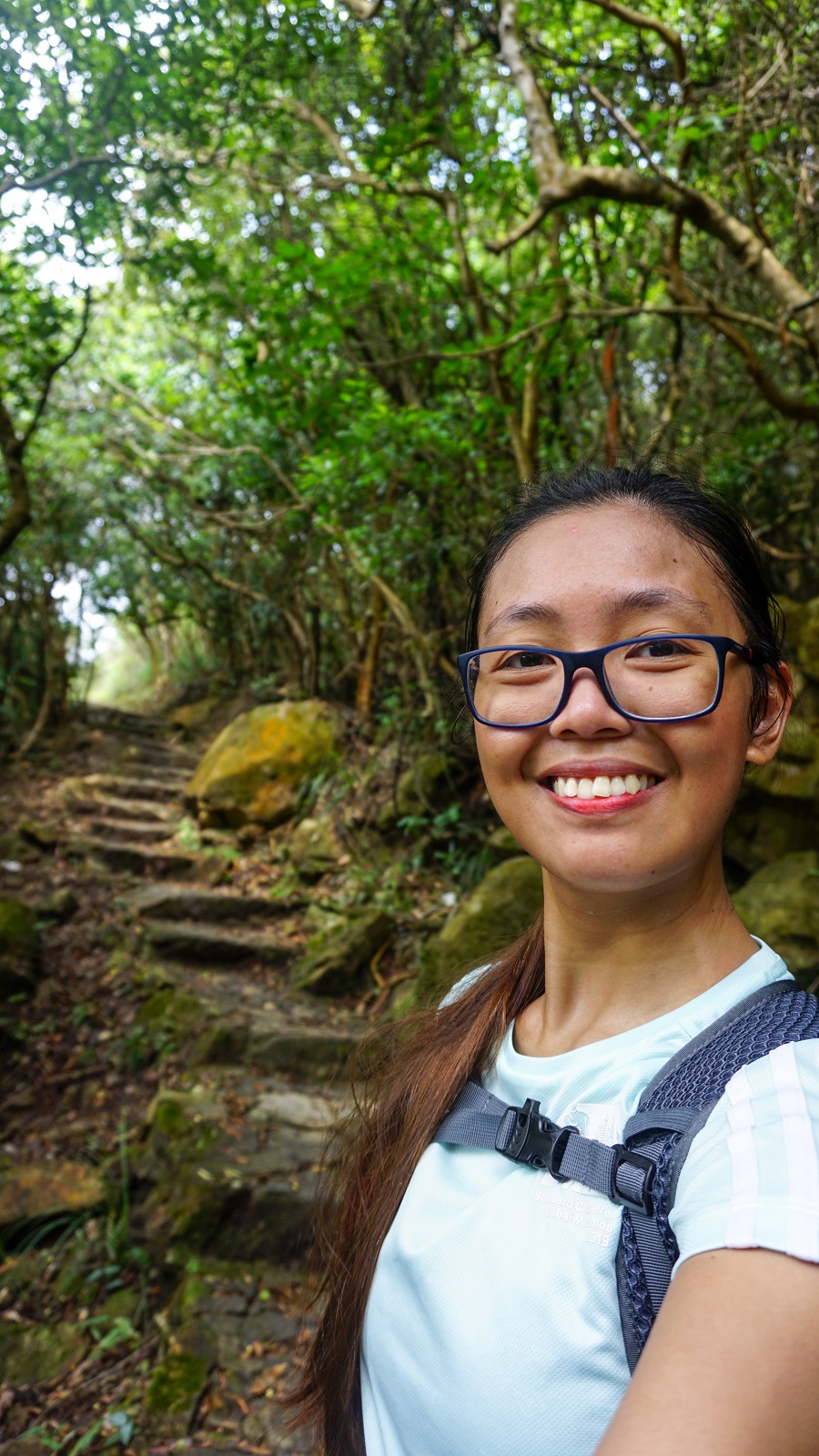
Whatever decision you make, always remember to prepare beforehand, stay safe, and last but not least, enjoy the outdoors!! #happyhiking!
With lots of love,
PINAYHAKAWATI 💗
AND AS A GENTLE OUTDOOR ETHICS REMINDER:
LEAVE NO TRACE!