After our fair share of (short) hiking adventures in Sigiriya and an unforgettable elephant safari in Hurulu Eco Park, we were ready for another adventure.
This time, we visited the Ancient City of Polonnaruwa, one of Sri Lanka's UNESCO World Heritage Sites and former royal capitals. Instead of exploring the vast archaeological complex on foot, we rented bicycles and spent the afternoon cycling between ancient temples, stupas, Buddha statues, and centuries-old ruins.
In this guide, I'll share our experience cycling around Polonnaruwa, including the entrance fees, bicycle rental costs, what we saw, and whether I think it's worth adding to your Sri Lanka itinerary.
💡 Exploring Sigiriya and beyond? Read these guides!
- Sri Lanka Travel for 8 Days in May 2026
- Sri Lanka ETA Application Guide: How to Apply Online for a Tourist Visa (Step-by-Step)
- Pidurangala Rock Hiking Guide: Sunrise Hike for the Best Sigiriya Rock View
- Sigiriya Rock Hiking Guide: Hike Sri Lanka's Ancient Rock Fortress
- How to Travel from Sigiriya to Trincomalee by Public Bus (Sri Lanka)
Cycling in Ancient City of Polonnaruwa (Quick Guide)
- Location: Polonnaruwa, Sri Lanka
- Tour Duration: 2-3 hours
- Cost: ~USD 30 per person for the entrance fee (transfers not included)
- Difficulty of Activity: Easy
- Best Time to Visit: Dry season (January to September), preferably early morning or late afternoon
- Highlights: Centuries-old ruins, Buddha statues, ancient temples, stupas, and royal palaces
What's in Polonnaruwa & When is the best time to visit?
Located in Sri Lanka's North Central Province, Polonnaruwa is an ancient city and the second capital of Sri Lanka after Anuradhapura. Today, it is recognized as a UNESCO World Heritage Site and is home to numerous ruins of temples, stupas, palaces (or at least what's left of them), Buddha statues, and remnants of ancient infrastructure from the Chola and Sinhalese kingdoms.
We visited in May and found the weather generally pleasant, although it could get quite dry and humid during the middle of the day. Based on my research, the best time to visit Polonnaruwa is during the dry season from January to September. If possible, plan your visit early in the morning or later in the afternoon to avoid the intense midday heat.
How to visit Polonnaruwa from Sigiriya?
Since we only had a few days in Sigiriya, we didn't have enough time to properly research the public transportation options. However, I came across a post by Laura from Laura Wanders where she mentioned taking a local bus between Sigiriya and Polonnaruwa, so it is definitely possible to visit independently using public transportation.
Most Straightforward Option: Private Transfer
This is the option we chose.
For convenience, we booked the same driver who picked us up from Colombo Airport and dropped us off at our hotel in Sigiriya (Lion Gate Hotel). To be completely honest, it was expensive for our budget, but it was also the most comfortable and hassle-free option. Since we already knew the driver, we didn't have to worry about his service or navigating unfamiliar routes by ourselves.
If you're short on time and prefer convenience over budget, a private transfer is probably the easiest way to visit Polonnaruwa from Sigiriya.
Cheapest Option: Tuk-tuk
After our trip, I discovered that many travelers actually hire a tuk-tuk from Sigiriya all the way to Polonnaruwa.
While it may not be as comfortable as a private car, it is significantly cheaper and honestly sounds like a fun adventure. If I were traveling solo or on a tighter budget, this is probably something I would consider trying!
Easiest Option: Book a Guided Polonnaruwa Tour
If you'd rather not worry about transportation, entrance fees, or planning the route yourself, there are also guided tours available that combine Polonnaruwa with other attractions around Sigiriya. Check these options from GetYourGuide:
- Polonnaruwa City Expert Guided Bike or Tuk-Tuk Tour & Lunch
- Polonnaruwa Ancient City Private Day Tour (Hidden Gems)
- Polonnaruwa Ancient Kingdom & Minneriya Elephant Safari
Disclosure: This section contains affiliate links. If you book through them, I may earn a small commission at no extra cost to you. Thanks for supporting Pinay Hakawati!
Why We Chose to Cycle Around Polonnaruwa
Instead of exploring the archaeological site by private car, which seems to be the most common option, we decided to rent bicycles and explore it on our own.
Cycling is something we already enjoy back in Dubai. We've spent plenty of weekends cycling to Kite Beach, and recently, we managed to cycle around Al Qudra. So, the idea of exploring an ancient city on two wheels sounded much more exciting than simply driving from one ruin to another.
We also quickly realized that Polonnaruwa is huge.
While it is technically possible to explore the entire site on foot, you would spend a significant amount of time simply walking between attractions. Under the Sri Lankan heat, that can become exhausting quite quickly.
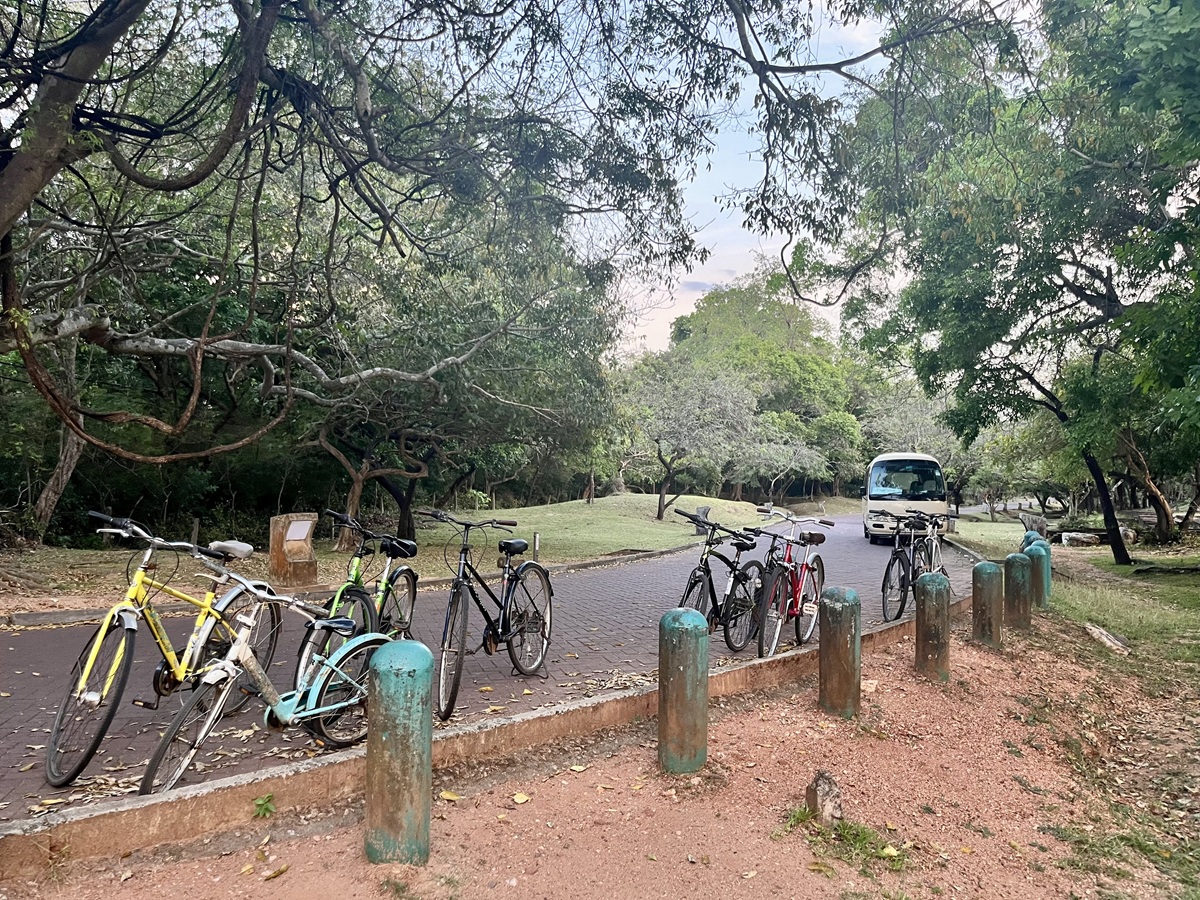
For us, cycling felt like the perfect middle ground. It allowed us to cover a large area efficiently while still enjoying the freedom to stop whenever something caught our attention. More importantly, it made the experience feel like an adventure rather than just another sightseeing trip.
Our Cycling Experience & What to Expect in the Ancient City of Polonnaruwa:
After buying our tickets from the Tourist Ticket Counter, we explored the Archaeological Museum Complex first so that we wouldn't need to come back later.
Archaeological Museum Complex
Inside the museum, we saw several miniature reconstructions of the ancient city, including the impressive Parakrama Samudraya Reservoir. There were also scale models showing how some of the temples, palaces, and religious structures may have looked during their peak.
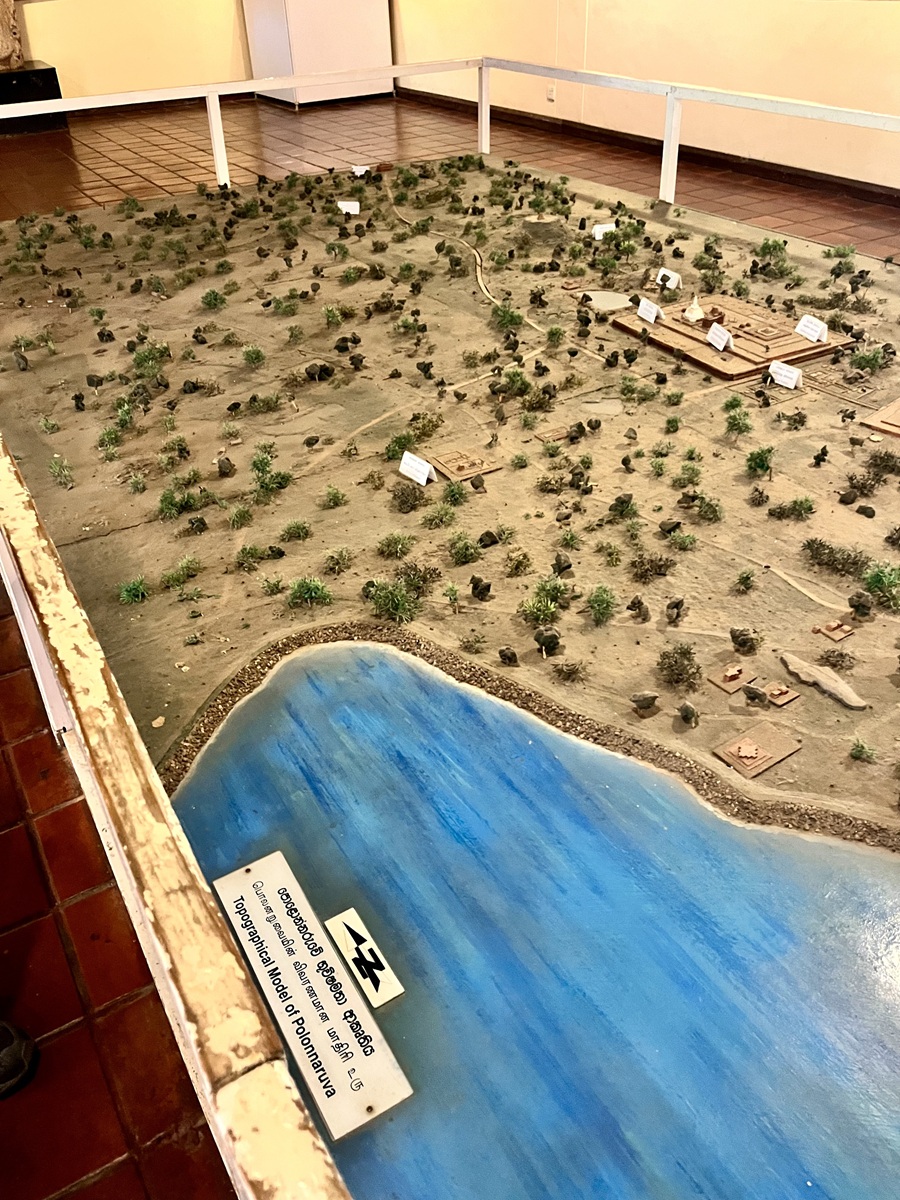
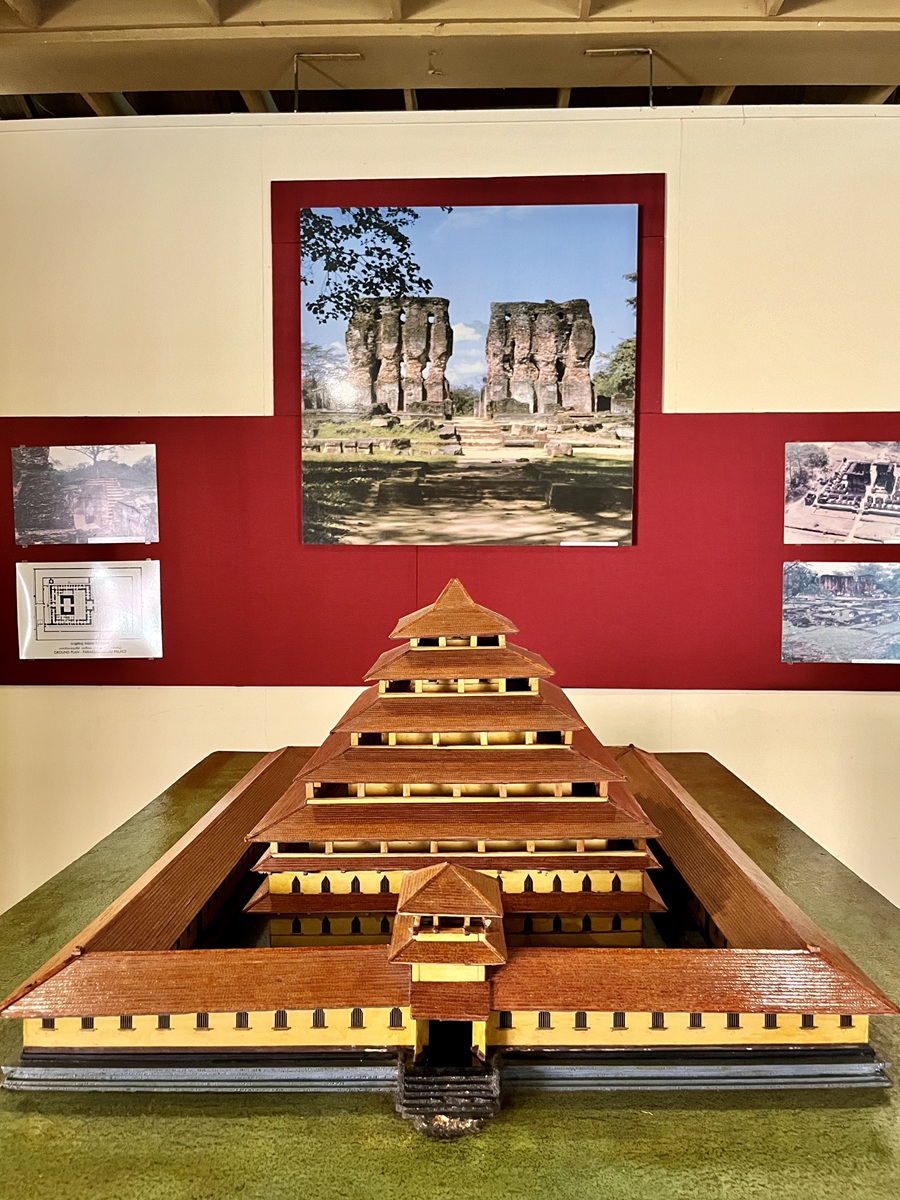
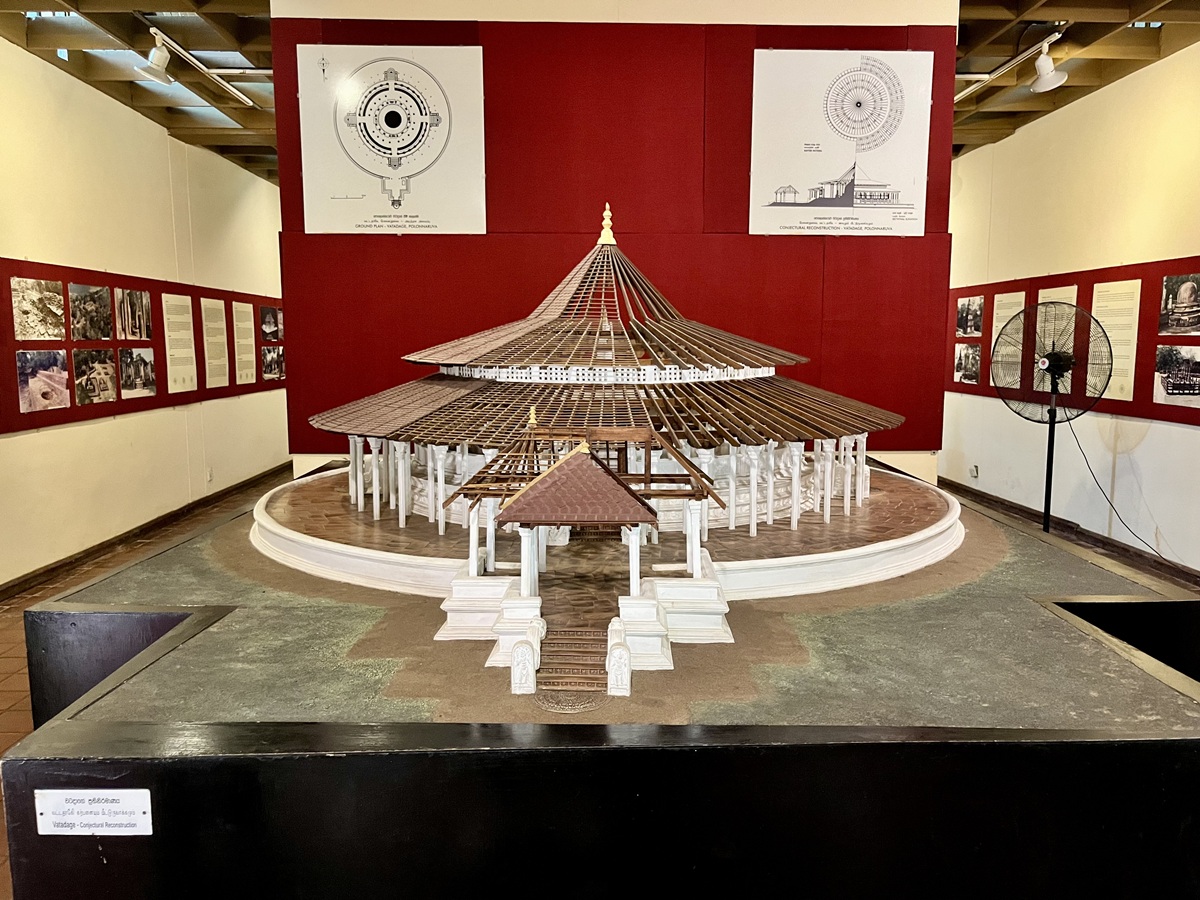
Looking back, I was glad we visited the museum first. At that point, Polonnaruwa was still just a name on the map for me. Seeing the models helped me visualize how vast the ancient city actually was before we started cycling around the archaeological site.
Bicycle Rental
After the museum visit, we first looked for the bicycle rental shop we originally planned to use, but it seemed to have closed down. Eventually, our driver brought us to a small bicycle stand just across the road where we rented our bikes instead. They had several bicycles available, and we paid LKR 1,000.00 per person for the rental.
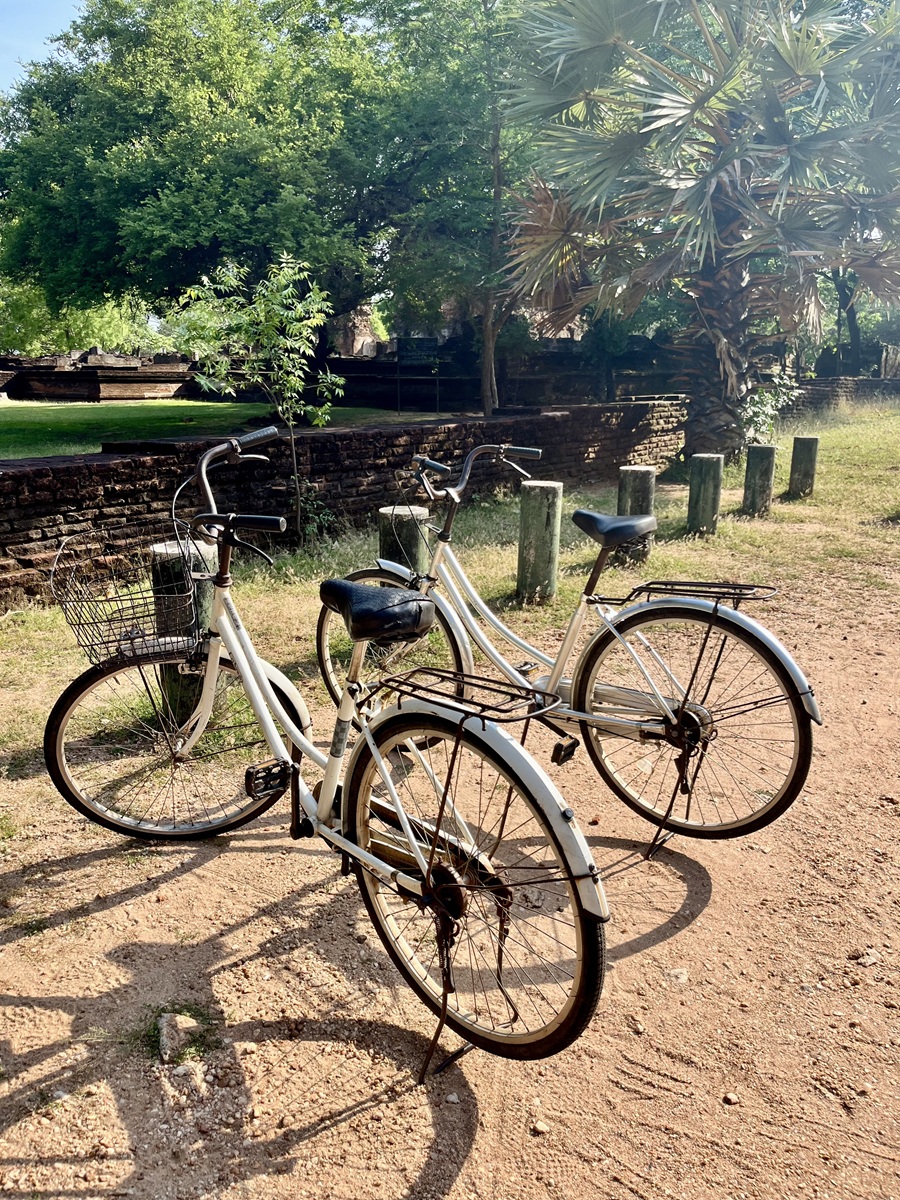
After choosing our bikes and making the payment, we were finally off to start exploring.
Southern Section: Royal Palace Complex
Following our driver's recommendation, we headed south from the main entrance and visited several of the ancient city's royal structures first, including:
- Royal Palace of King Parakramabahu
- Vijayabhahu Palace
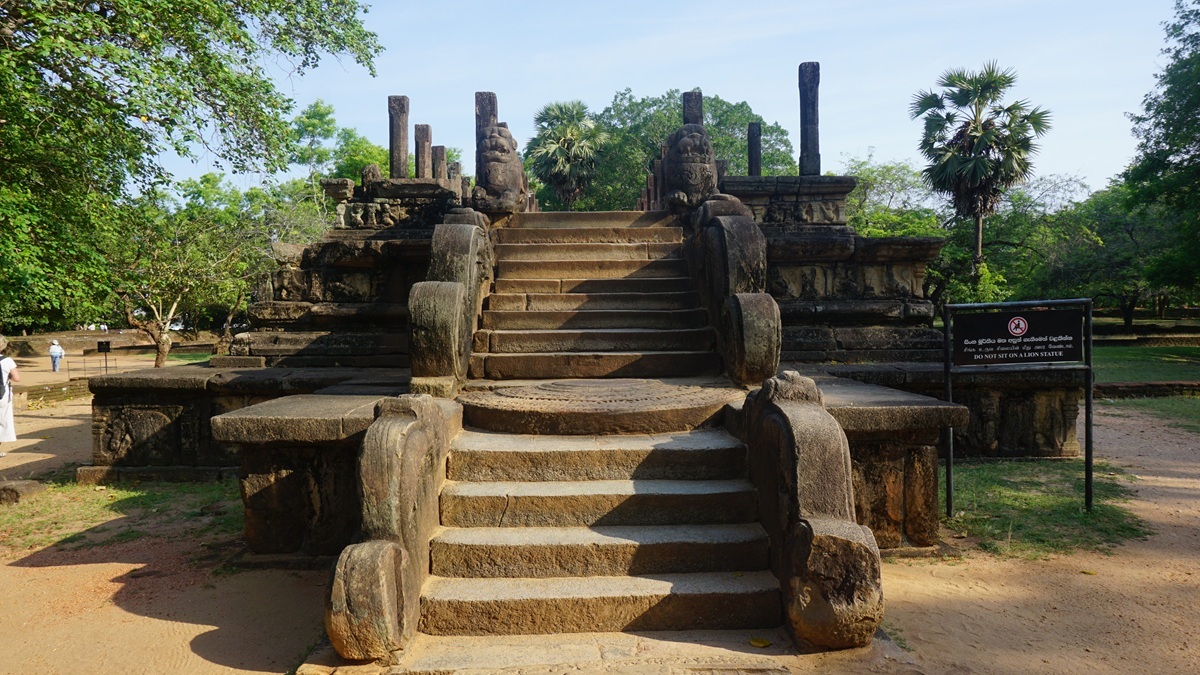
- Council Chamber
- Kumara Pokuna (Royal Bath)
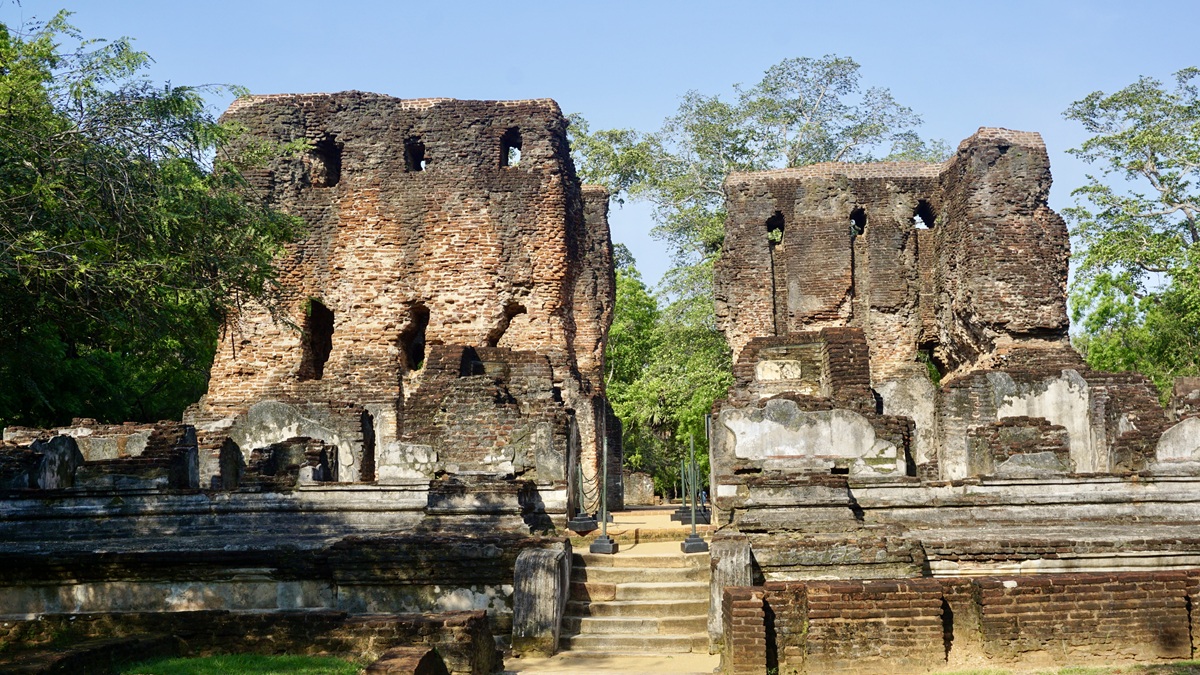
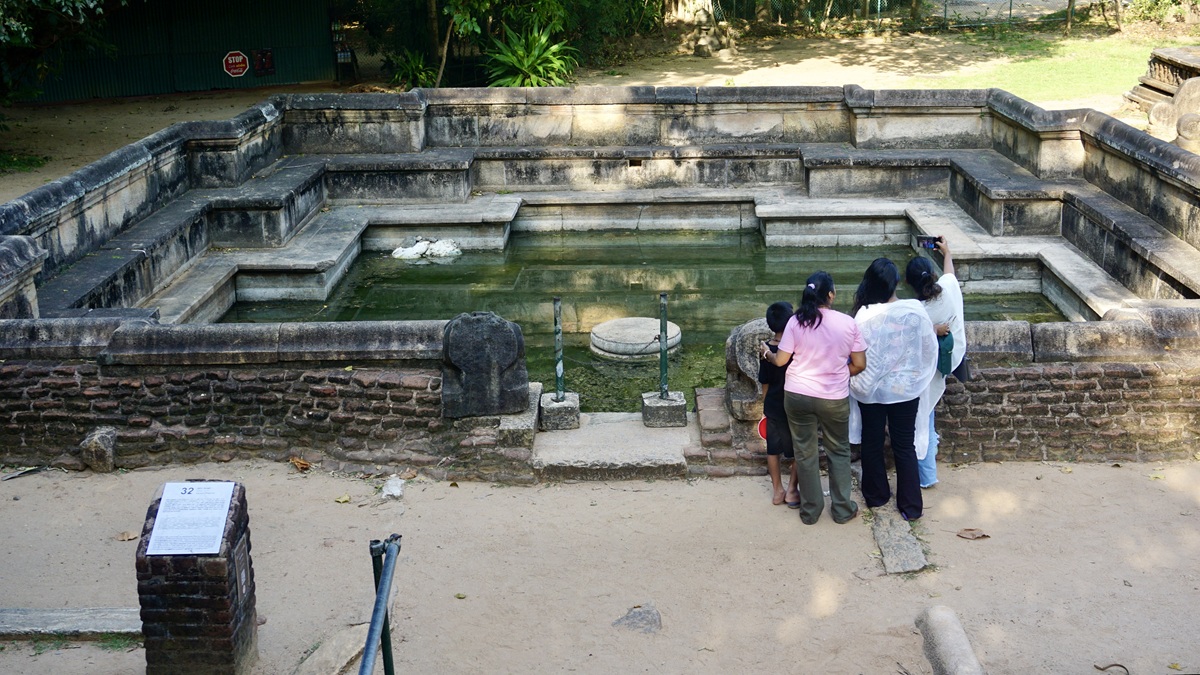
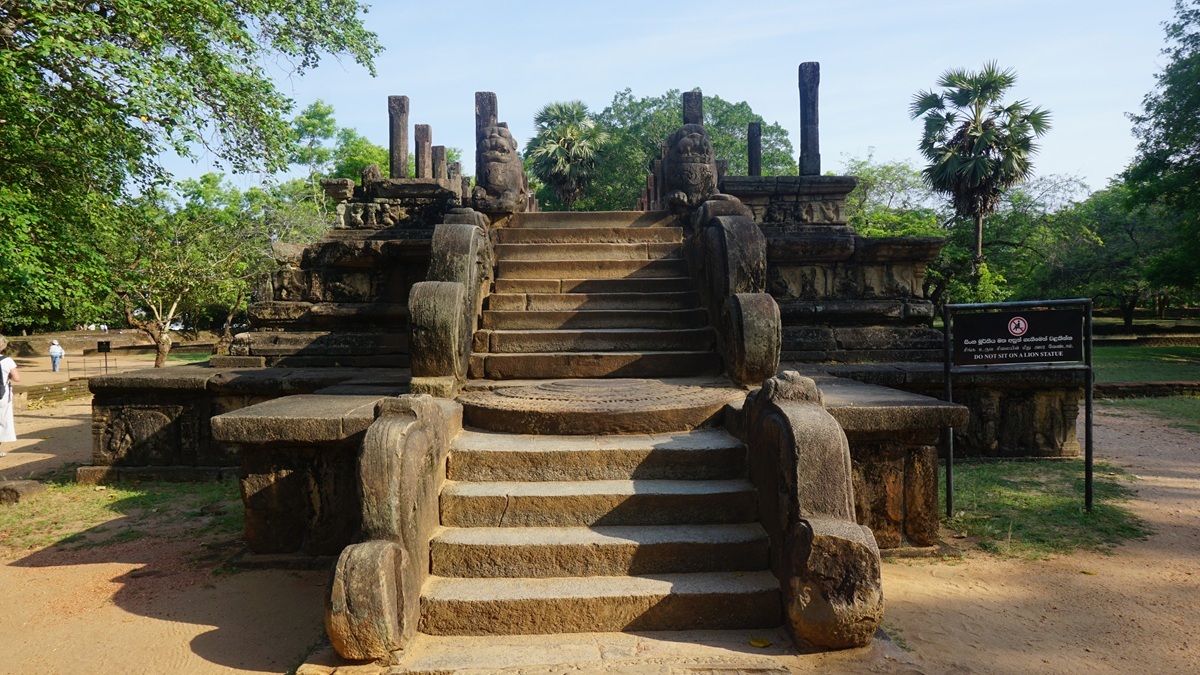
The ruins were much larger than I expected. While only parts of the original structures remain today, it wasn't difficult to imagine how impressive they must have looked centuries ago.
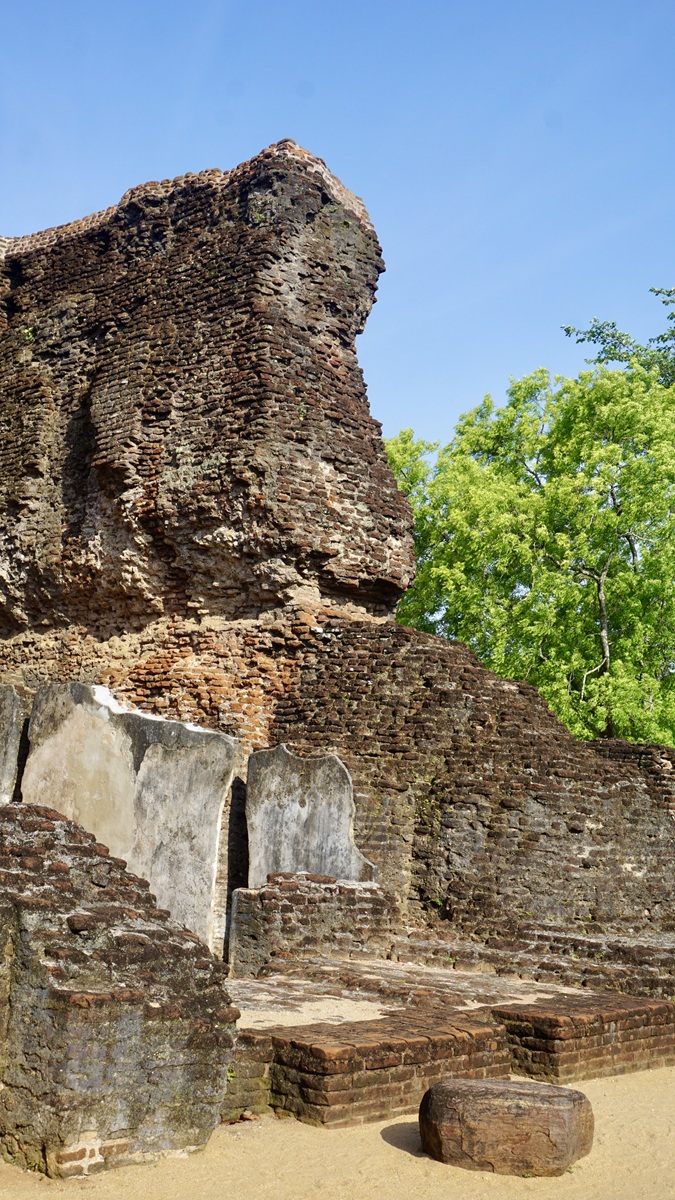
I found myself stopping often to look at the details rather than the buildings as a whole. Even after hundreds of years, you can still see the texture of the bricks, the craftsmanship, and the scale of the construction. Just look at this close-up section of the Royal Palace of King Parakramabahu.
Dalada-Maluva or the Sacred Quadrangle
From here, we cycled back toward the main gate before continuing north. One of our memorable stops was the Dalada-Maluva or the Sacred Quadrangle, a compact area where several of Polonnaruwa's most important monuments are located side by side.
I can't remember all their names, but the most memorable—and arguably the most beautiful—were the Vatadage and Hattadage.
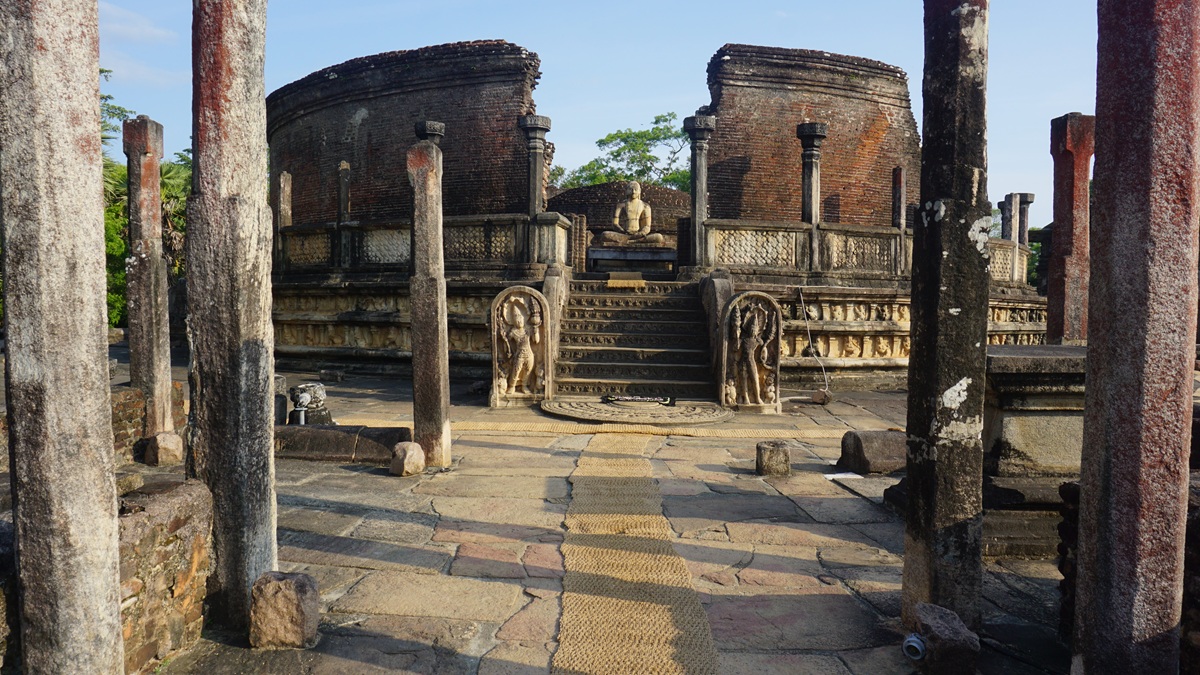
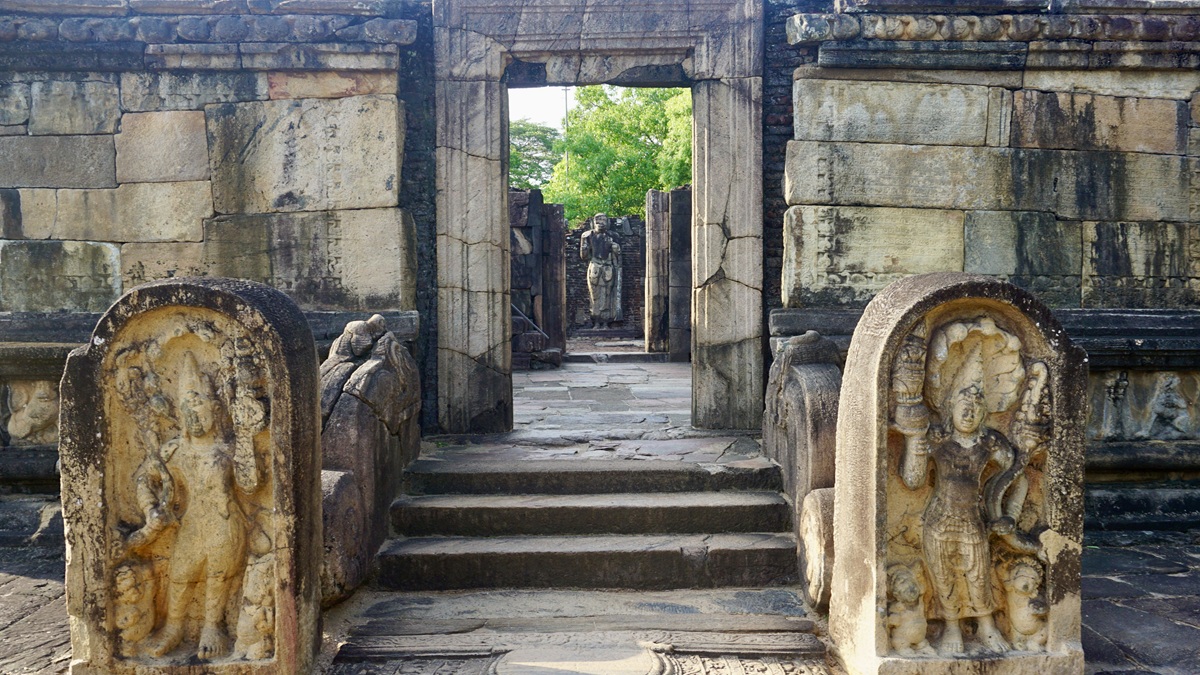
We spent quite a bit of time here moving from one structure to another, reading the signboards, admiring the intricate stone carvings, and photographing the Buddha statues from every angle.
At some of the religious sites, visitors are required to remove their shoes before entering, so I recommend wearing sandals or footwear that's easy to slip on and off.
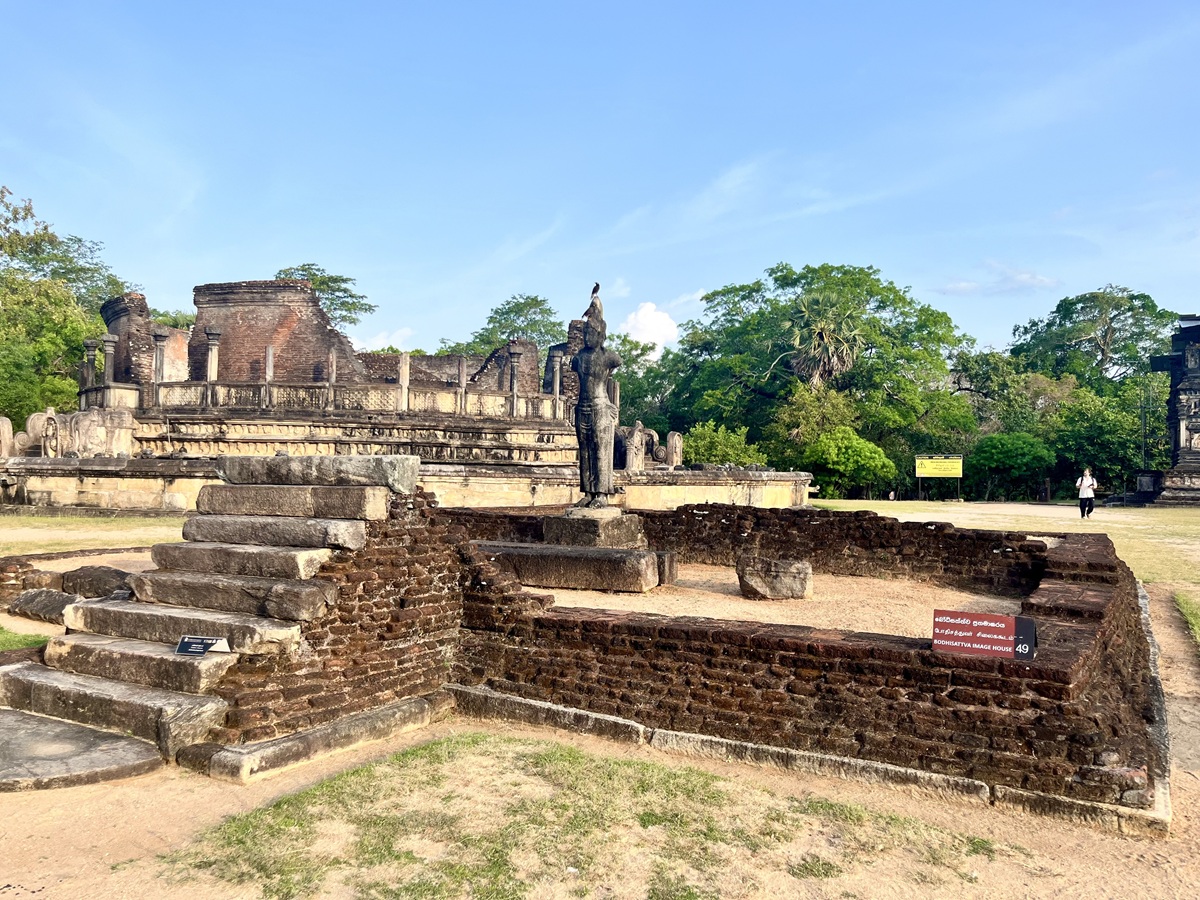
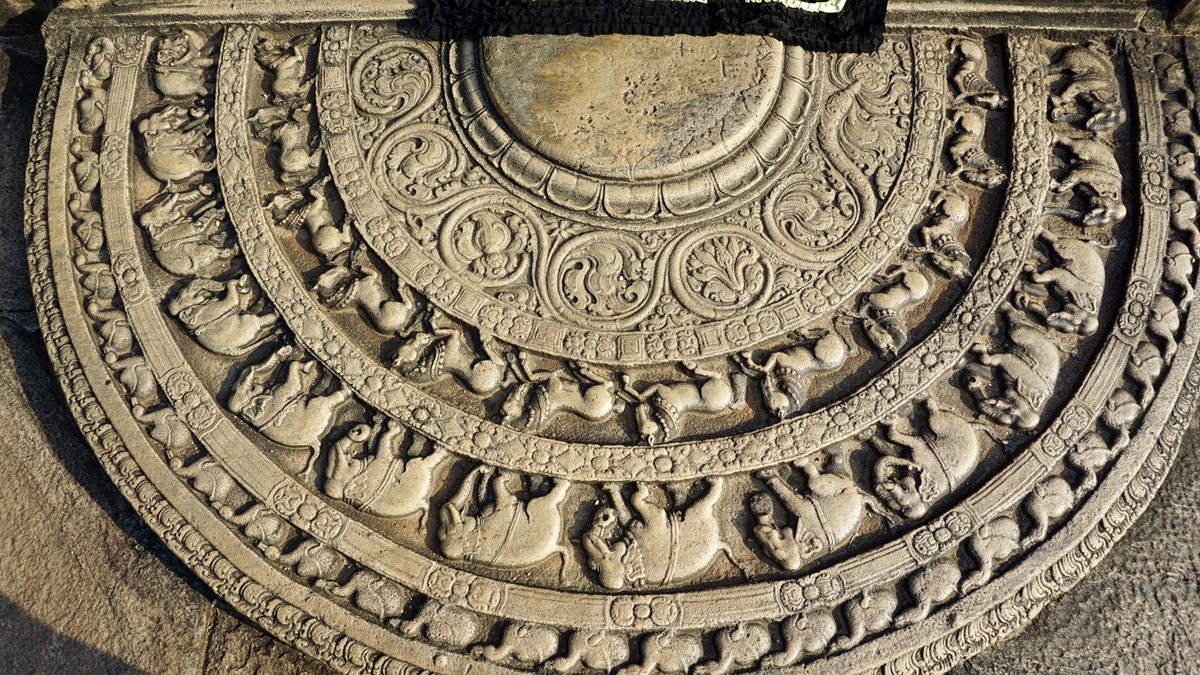
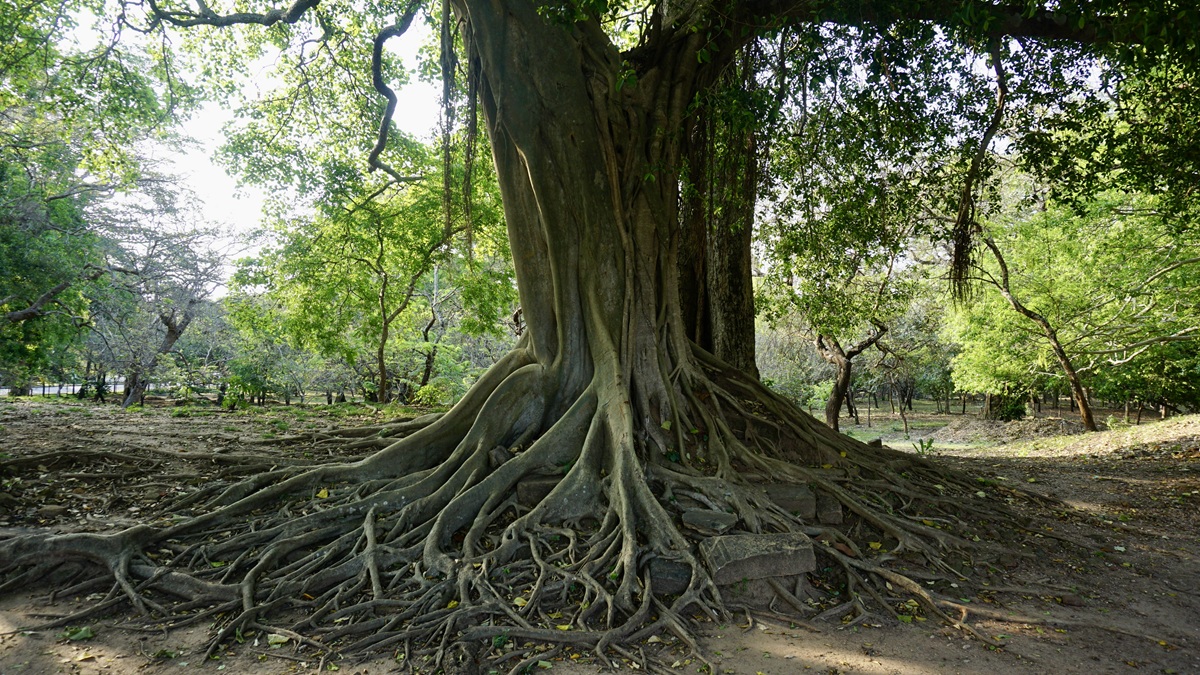
We also took a short break beneath a huge Banyan tree and enjoyed some snacks before continuing our cycling tour. Seeing its massive roots instantly reminded me of the enormous Banyan tree during our 4 Days in Trincomalee, which left a similar impression on me.
Back on the main road, there are a few small shops opposite the Quadrangle selling snacks and cold drinks. Public toilets are also available here. I recommend taking advantage of these facilities because the next shops and restrooms are located much farther into the complex.
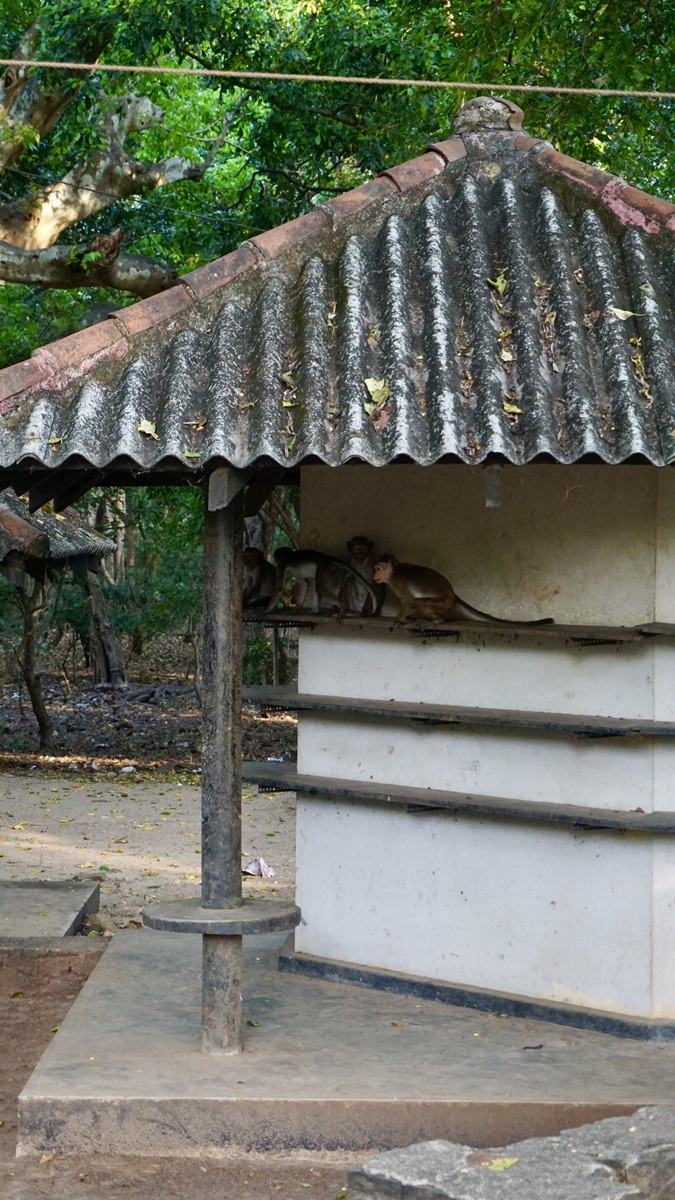
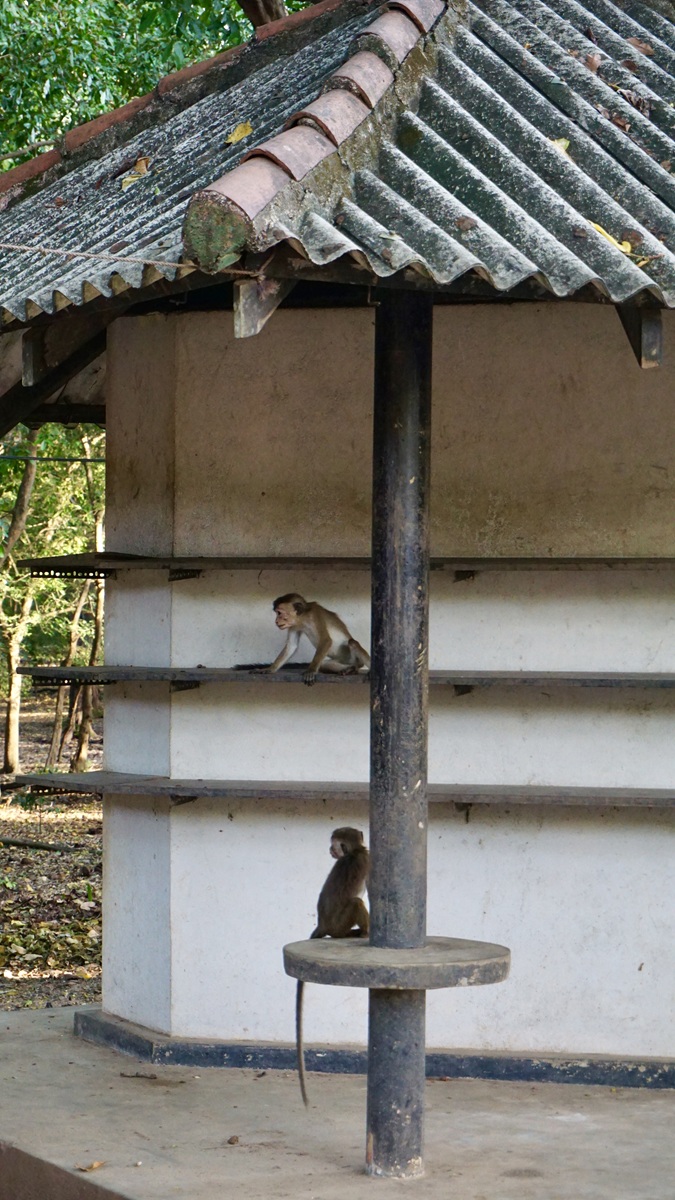
However, keep an eye on your food because of the cheeky monkeys here hoping to steal snacks from unsuspecting visitors!
Polonnaruwa Sivan Temple No.2
From the Sacred Quadrangle, we continued cycling and turned right towards Polonnaruwa Sivan Temple No. 2. Along the way, we encountered dozens of monkeys roaming freely along Gal Vihare Road.
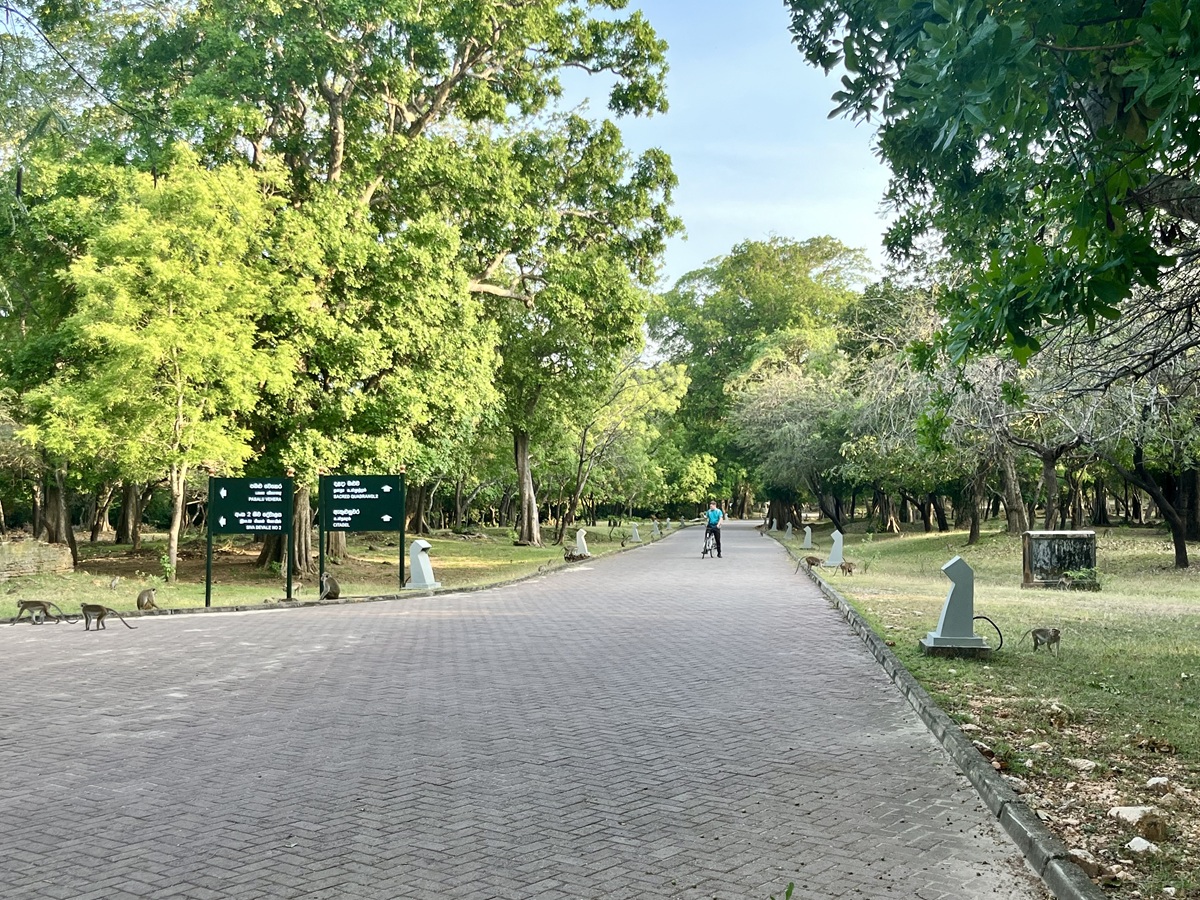
After we made the right turn, the paved road ended and we cycled along a dirt path leading to the temple.
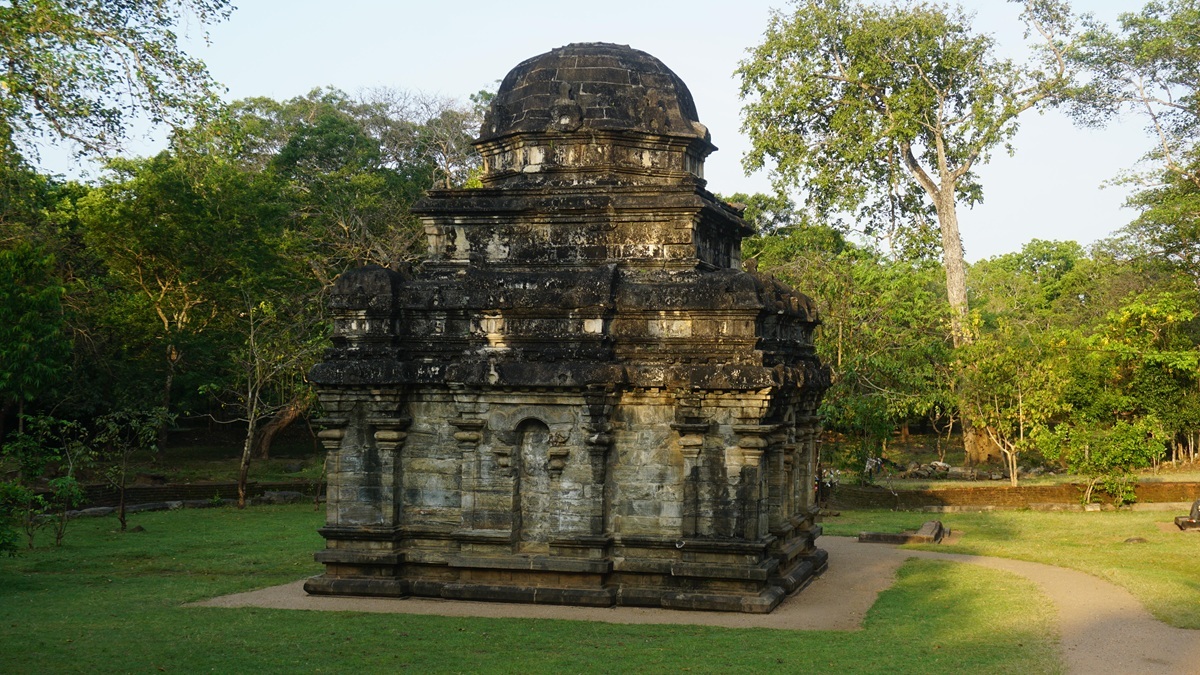
When we arrived, we noticed a small group of locals performing what appeared to be a religious ritual. Out of respect, I chose not to photograph the ceremony itself, but we quietly observed from a distance.
One part of the ritual involved reciting prayers before smashing a coconut against the stone slab. Within seconds, the monkeys would dart in to steal the freshly broken pieces.
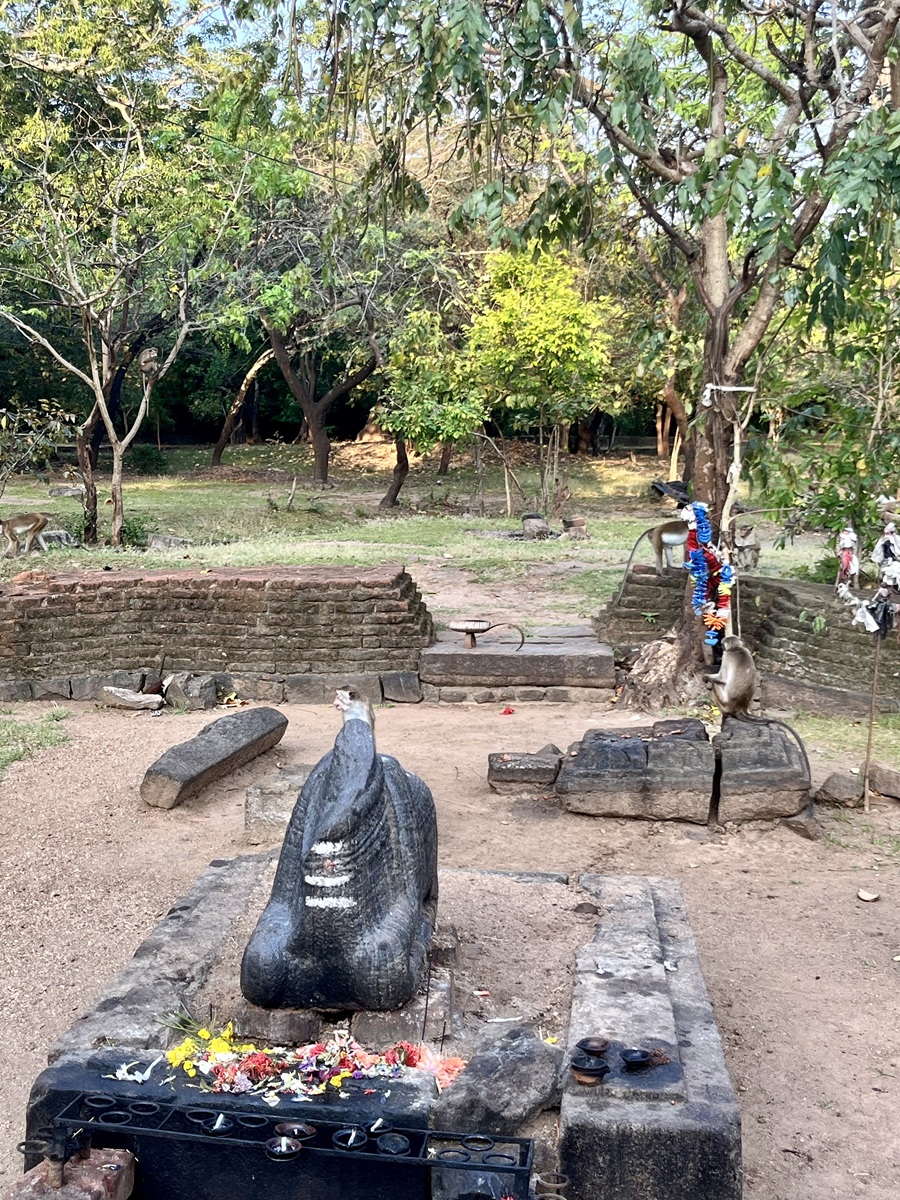
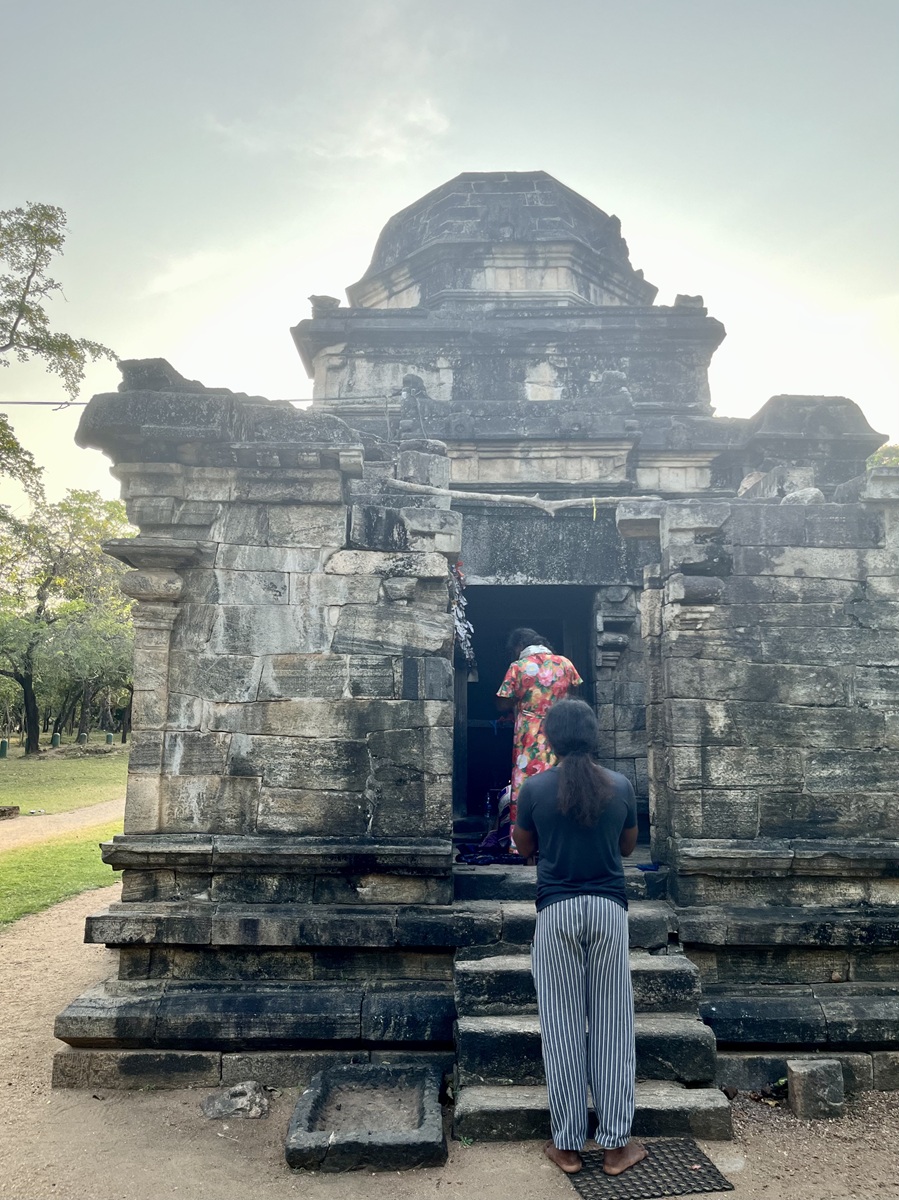
After the ceremony, the worshippers continued their prayers inside the temple. They kindly gestured for us to enter if we wished, but we decided to remain outside and observe from a respectful distance.
Rankoth Vehera
By this point, we were already starting to feel tired. We had been cycling around the ancient city for over two hours, and the late afternoon sun was beginning to set. Because of this, we skipped several sites that required longer walks from the road and focused on the landmarks that interested us most.
Our next stop was Rankoth Vehera, one of the largest stupas in Sri Lanka.
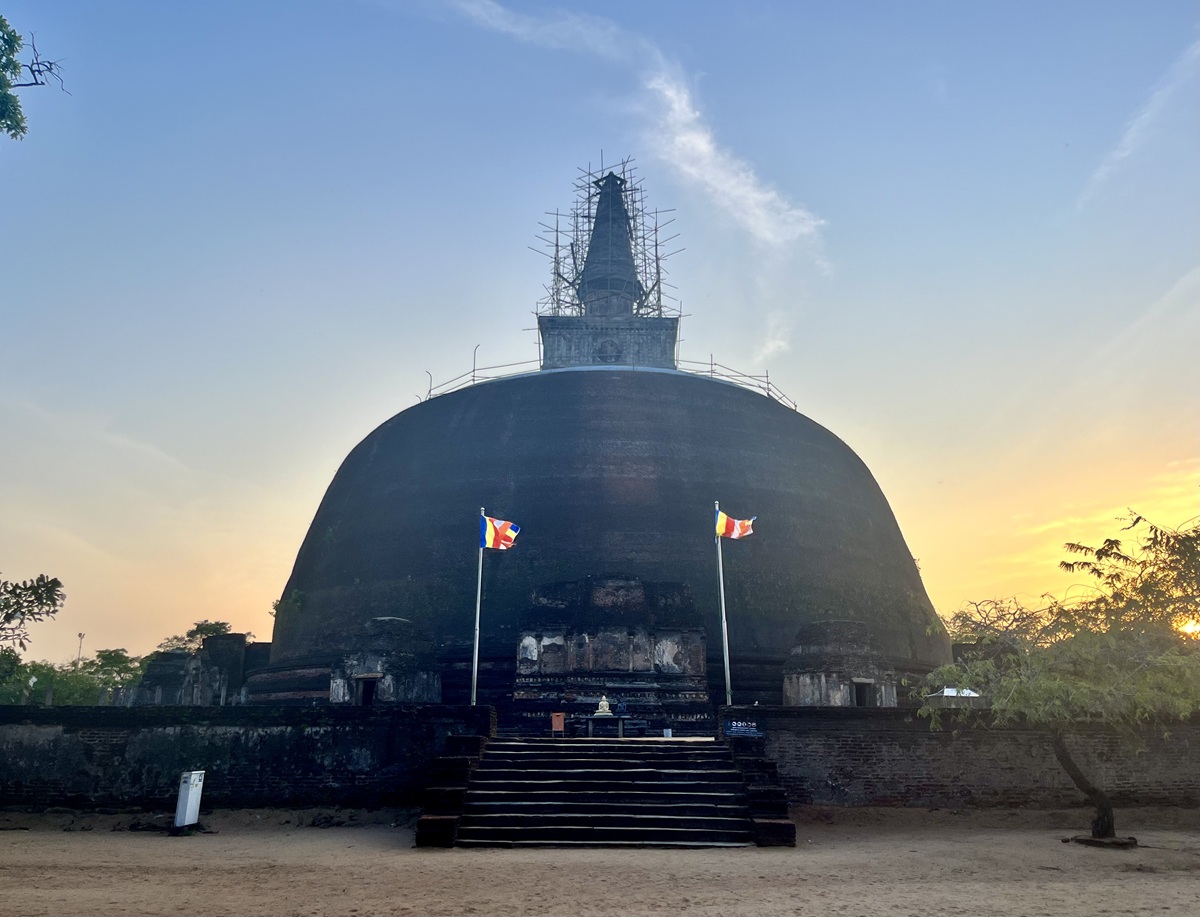
Even from a distance, its massive size was impossible to miss. We spent a few minutes walking around the stupa, taking photos, and appreciating how enormous the structure looked against the evening sky. The area was peaceful, with only a handful of other visitors around.
At this stage, we were saving our remaining energy for our final stop of the day, Gal Vihara.
Gal Vihara
Before reaching Gal Vihara, we arrived at the bicycle return area near Kiri Vehera. We returned our bikes there and continued on foot, passing a pond and several smaller ruins along the way.
We actually skipped Kiri Vehera itself and headed straight for Gal Vihara as it was the site I was most excited to see.
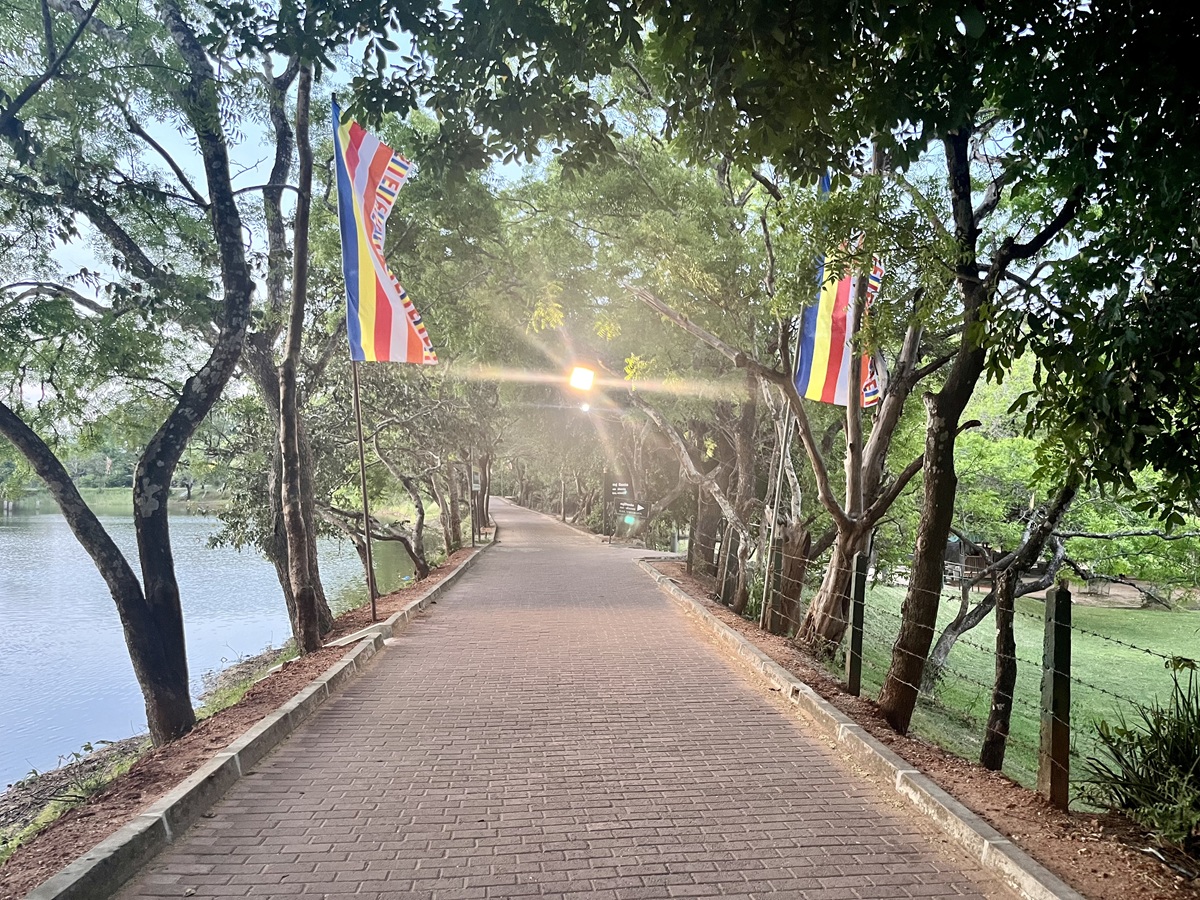
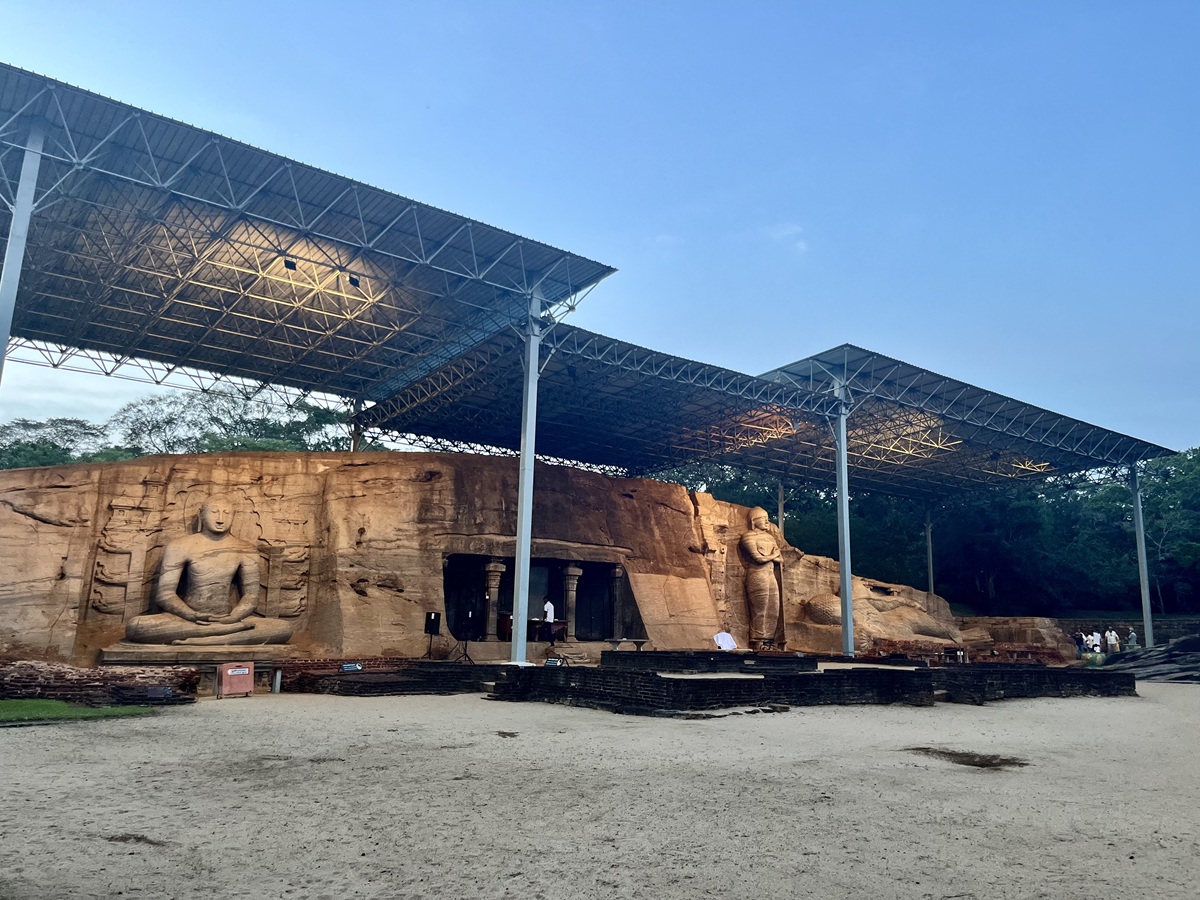
Gal Vihara is famous for its magnificent rock-cut Buddha statues carved into a single granite rock face. By the time we arrived, a religious ceremony was taking place. So, we chose to stay at a respectful distance rather than walk closer.
Even from afar, the statues were incredibly impressive. Watching the ceremony while admiring the ancient carvings created a peaceful atmosphere and felt like a fitting way to end our visit to Polonnaruwa.
As the daylight slowly faded, we made our way back to our private transfer after an afternoon of cycling through centuries of Sri Lankan history.
Our Polonnaruwa Cycling Route at a Glance
- 🚲 Distance Cycled: 5.02 km
- ⏰ Start Time: 3:44 PM
- ⏰ Finish Time: 6:17 PM
- 🕒 Total Time: Approximately 2.5 hours
During our cycling, we explored both the southern section of the archaeological park, including the Royal Palace Complex, and the northern section, where we visited the Sacred Quadrangle, Polonnaruwa Sivan Temple No. 2, Rankoth Vehera, and Gal Vihara. We skipped several smaller ruins and monuments as we started running out of time and energy toward sunset.
Tour Cost & Logistics:
For this experience, we paid the following:
| Item | Cost |
|---|---|
| Private Transfer (for two) | LKR 15,000.00 |
| Bike Rental (for two) | LKR 2,000.00 |
| Entrance Fee (per person) | USD 30.00 |
In total, we spent approximately USD 110.00 (around AED 400+) for two people, excluding meals and other personal expenses.
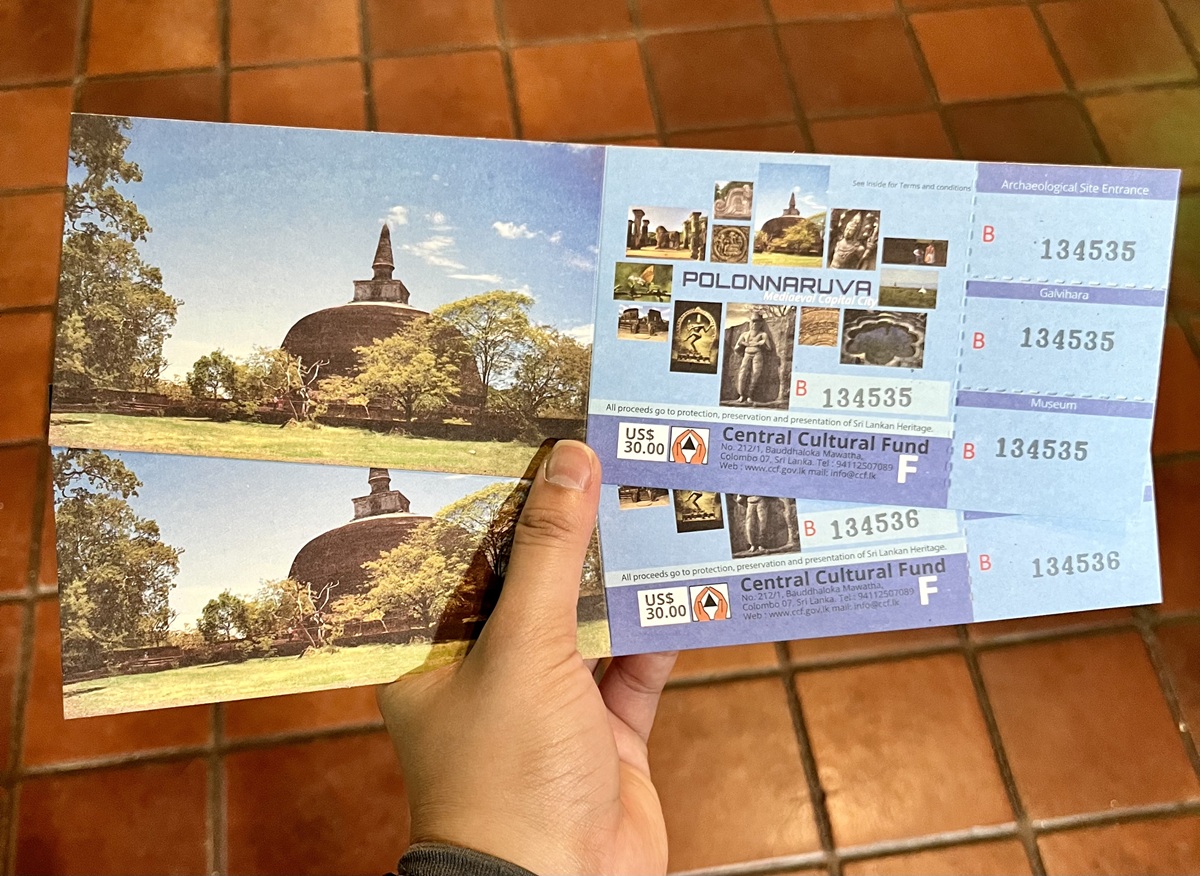
The biggest expense was the entrance fee, while the bicycle rental was surprisingly affordable and, in my opinion, one of the best ways to explore the ancient city. If you're traveling on a tighter budget, you could potentially reduce the transportation cost by taking public transportation or hiring a tuk-tuk instead of arranging a private transfer.
If you're curious about how much we spent throughout our entire Sri Lanka trip—from flights and accommodation to food, transportation, and activities—I've shared the complete breakdown in a separate post:
🔗 Related Post: Sri Lanka Travel Cost Breakdown: How Much We Spent for 8 Days in 2026
Personal Thoughts on Cycling in the Ancient City of Polonnaruwa:
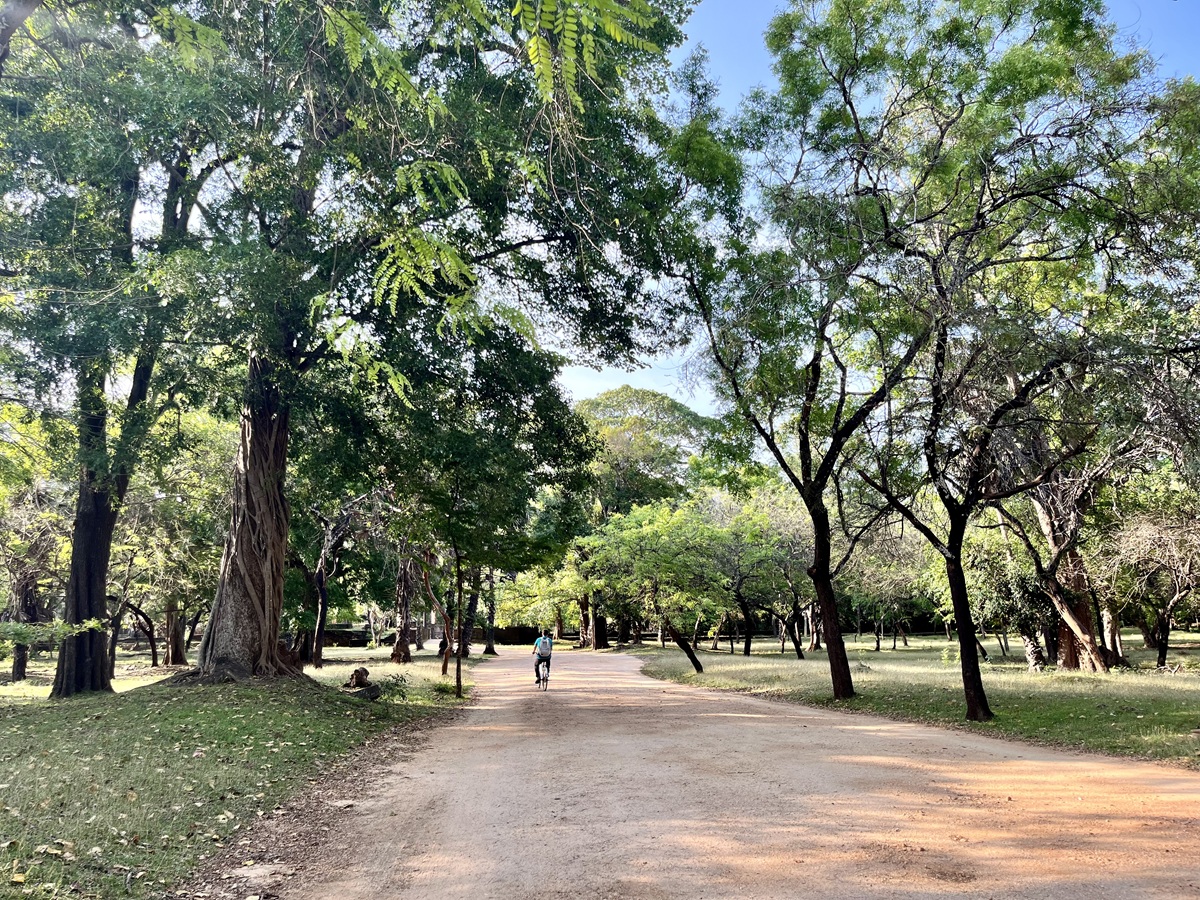
After our trip, I realized that I really enjoyed exploring Polonnaruwa by bicycle. It gave us the flexibility and freedom to experience the ancient city at our own pace. We could stop whenever something caught our attention, take photos, rest under the shade, or simply move on whenever we felt ready.
If you prefer visiting with a guide, instead of relying on signboards and information panels, this is the place for you. It would be interesting to hear stories and additional historical context that could make the ruins feel more alive.
However, since I already work in a busy office environment with constant noise, conversations, and distractions, I personally don't want to listen to someone talk non-stop for hours. Especially during a vacation. But that's just me.
Also, Polonnaruwa is huge. Even just reading all the information boards and trying to understand the history behind each monument felt a little overwhelming at times. By the end of the day, I couldn't even retain more than 5% of what I read. That part of my brain was out of the office too, lol!
But despite that, I still loved the experience.
There was something special about seeing these centuries-old structures standing in front of me and imagining what life might have been like during the kingdom's peak. Sometimes travel doesn't have to be about remembering every historical fact. Sometimes it's simply about being there, walking among the ruins, and appreciating that these places have stood the test of time.
Would I still recommend it? Absolutely.
In a bicycle too? Yes please.
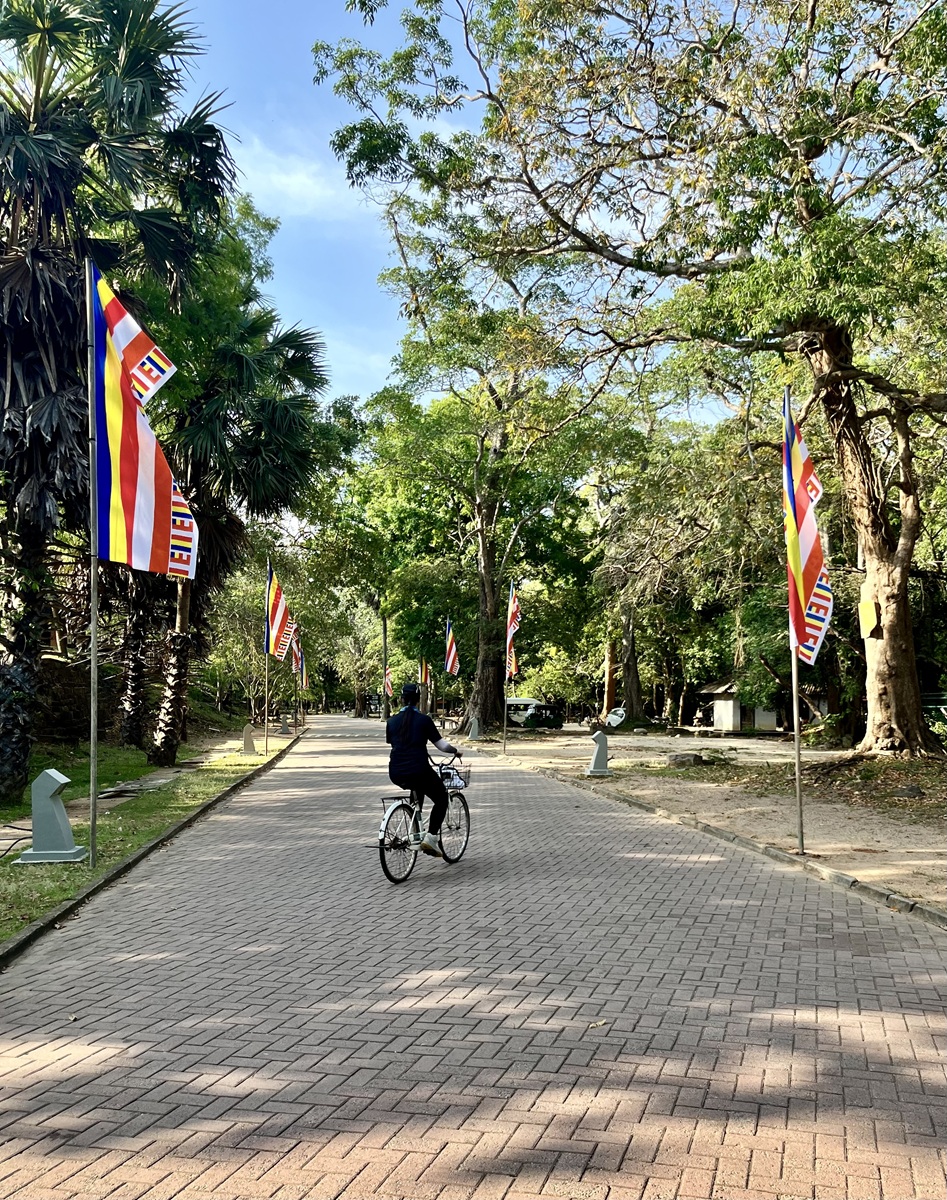
If you're comfortable riding a bicycle and interested in being a little active while exploring Polonnaruwa, I think cycling is one of the best ways to explore the ancient city. It's affordable, beginner-friendly, and adds a little adventure to an already fascinating historical site.