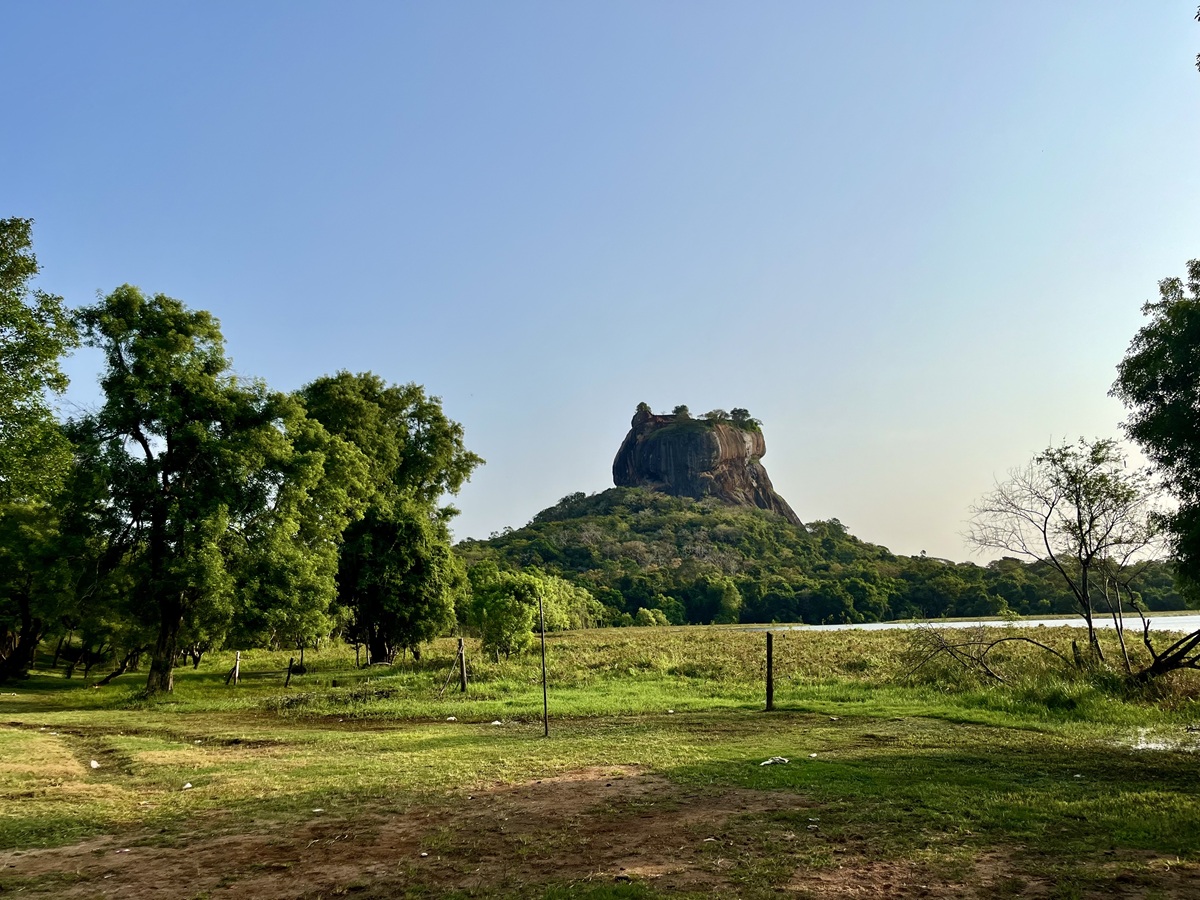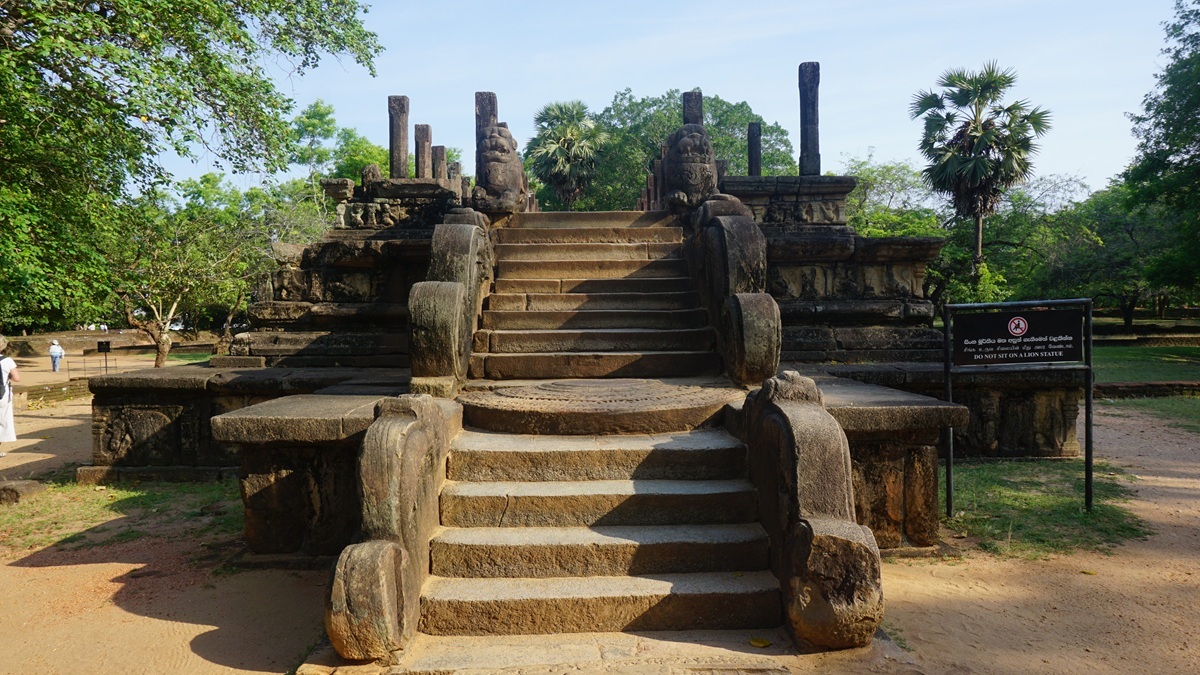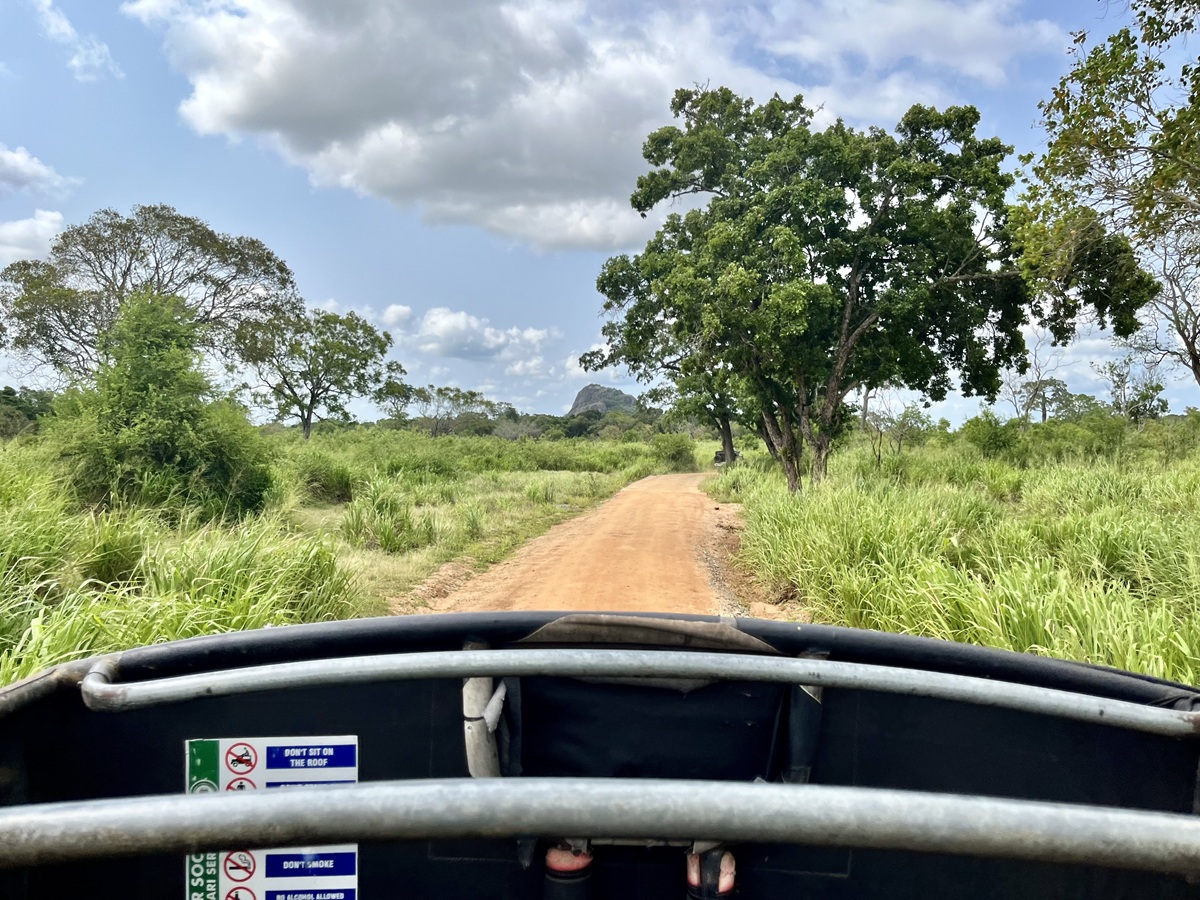
After our fair share of (short) hiking adventures in Sigiriya Rock and Pidurangala Rock, of course, we had to squeeze in at least one safari experience.
Since Yala National Park was completely out of our way, we decided to try an Elephant Safari instead. Recommended by both locals and our hotel, we ended up booking a safari in Hurulu Eco Park.
But were we lucky enough to see any elephants? And more importantly, was it worth it? You'd better keep reading to find out!
💡 Exploring Sigiriya and beyond? Read these guides!
- Sri Lanka Travel for 8 Days in May 2026
- Sri Lanka ETA Application Guide: How to Apply Online for a Tourist Visa (Step-by-Step)
- Pidurangala Rock Hiking Guide: Sunrise Hike for the Best Sigiriya Rock View
- Sigiriya Rock Hiking Guide: Hike Sri Lanka's Ancient Rock Fortress
- How to Travel from Sigiriya to Trincomalee by Public Bus (Sri Lanka)
Elephant Safari in Hurulu Eco Park (Quick Guide)
- Location: Hurulu Eco Park, Sri Lanka
- Safari Duration: 3–5 hours
- Cost: ~USD 25-35 per person (or at least USD 50 per jeep), depending on operator and inclusions
- Difficulty of Activity: Easy
- Best Time to Visit: Dry season for higher chances of elephant sightings
- Highlights: Sri Lankan elephants, jeep safari adventure, birdwatching, and an experience of Sri Lanka's natural landscapes
What's in Hurulu Eco Park & When is the best time to visit?
Located within Sri Lanka's Cultural Triangle near Habarana, Hurulu Eco Park sits on the edge of the Hurulu Forest Reserve. Quieter, smaller, and generally more affordable than neighboring Minneriya National Park, it has become one of the most popular places to spot wild Sri Lankan elephants without spending a fortune.
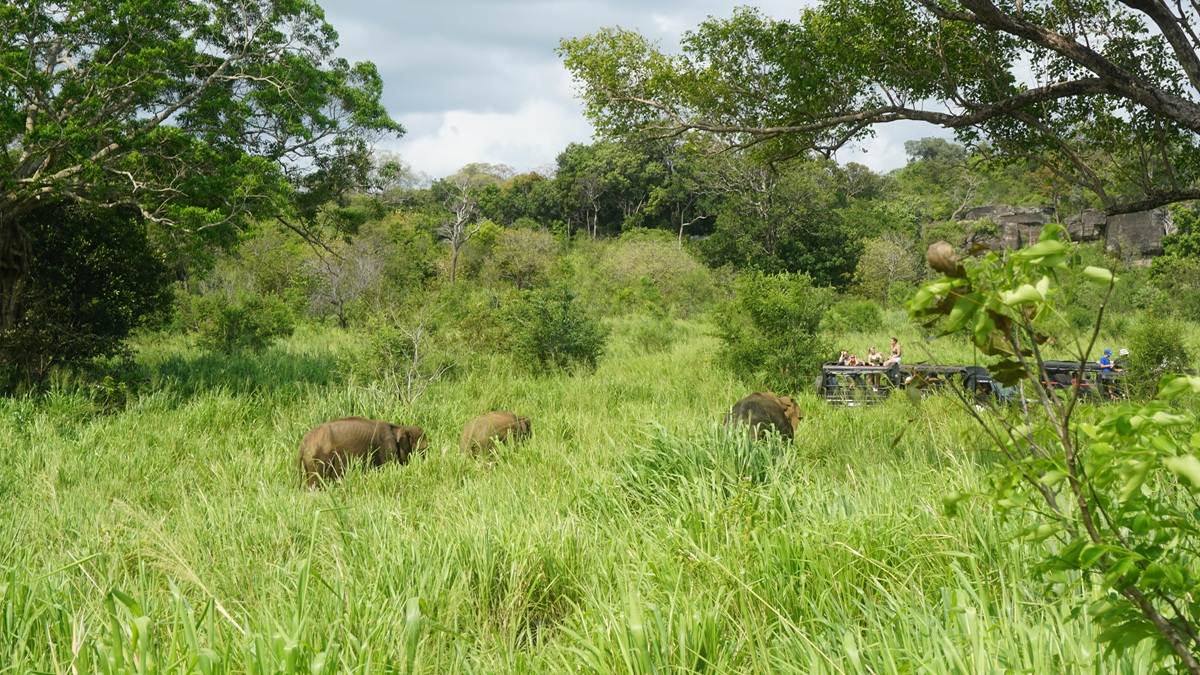
Hurulu Eco Park is made up of dry-zone evergreen forests and open savanna grasslands (terms I only learned shortly before this trip). In simple words, expect a mix of woodland, shrubs, grasslands, and seasonal water sources that create an ideal habitat for wildlife.
The park also forms part of the Minneriya–Kaudulla–Hurulu Elephant Corridor, a connected landscape that allows wild elephant herds to move freely among the three protected areas year-round.
The main attraction, of course, is the Sri Lankan elephant, a subspecies of the Asian elephant. Depending on the season (and a little bit of luck!), you may also spot deer, water buffalo, tortoises, peacocks, and a variety of bird species.
To see a more comprehensive list of wildlife found in the park, check the detailed guide from Ceylon Transit.
While Hurulu Eco Park is open year-round, the best time to visit for elephant sightings is generally between December and June, when many herds move into the area. We visited in May and were lucky enough to see plenty of Sri Lankan elephants roaming freely in their natural habitat.
How to visit Hurulu Eco Park from Sigiriya?
While it is technically possible to drive to the park entrance yourself, exploring Hurulu Eco Park independently is not permitted. Visitors must enter the park with an authorized safari jeep.
Some travelers choose to head directly to the entrance and arrange a safari on the spot with available jeep drivers. We didn't try this ourselves, but I've seen it recommended multiple times in travel groups and forums.
Easiest & Most Practical: Elephant Safari by Jeep
The easiest and most practical way to visit Hurulu Eco Park from Sigiriya (or nearby areas such as Habarana, Dambulla, and Polonnaruwa) is to book a safari in advance.
Most safari operators include hotel pickup and drop-off, making the entire experience hassle-free.
A typical jeep can accommodate around 4–6 passengers, and the price is usually charged per jeep rather than per person. If you're traveling as a group, you can split the cost among yourselves. Otherwise, you'll essentially be paying for a private safari experience.
Looking for a budget-friendly safari? Check out these options below:
Our Safari Experience Highlights & What To Expect:
Despite the locals assuring us that elephants were actively roaming around Hurulu Eco Park during our visit, I tried not to set my expectations too high. I'd rather be pleasantly surprised than disappointed. So, aboard our jeep, let's go!
Hotel Pickup & Journey to the Park
The jeep that picked us up didn't have a roof from the start, so the driver warned us to prepare for the heat. We booked the afternoon safari, and our pickup was at 1:30 PM. Thankfully, we were wearing light clothing to protect ourselves from the sun.
One thing though: don't wear a light-colored shirt. In case you get splashed with sand or mud, the stains don't really go away. Trust me, I had to say goodbye to my shirt!
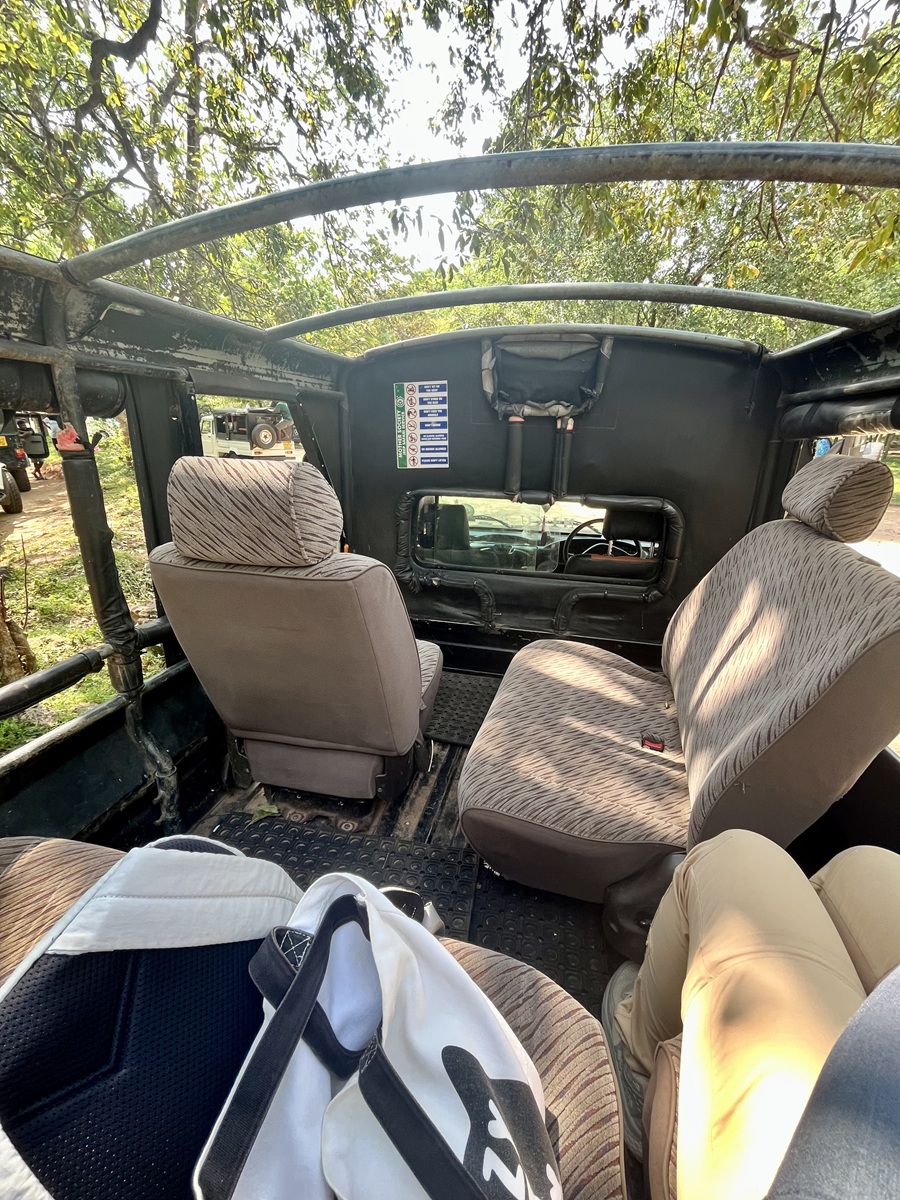
Our jeep wasn't as shiny or as new as some of the others we saw along the way, but honestly, I didn't mind. Some of the newer jeeps looked quite fancy, but at the end of the day, we were all there for the same experience.
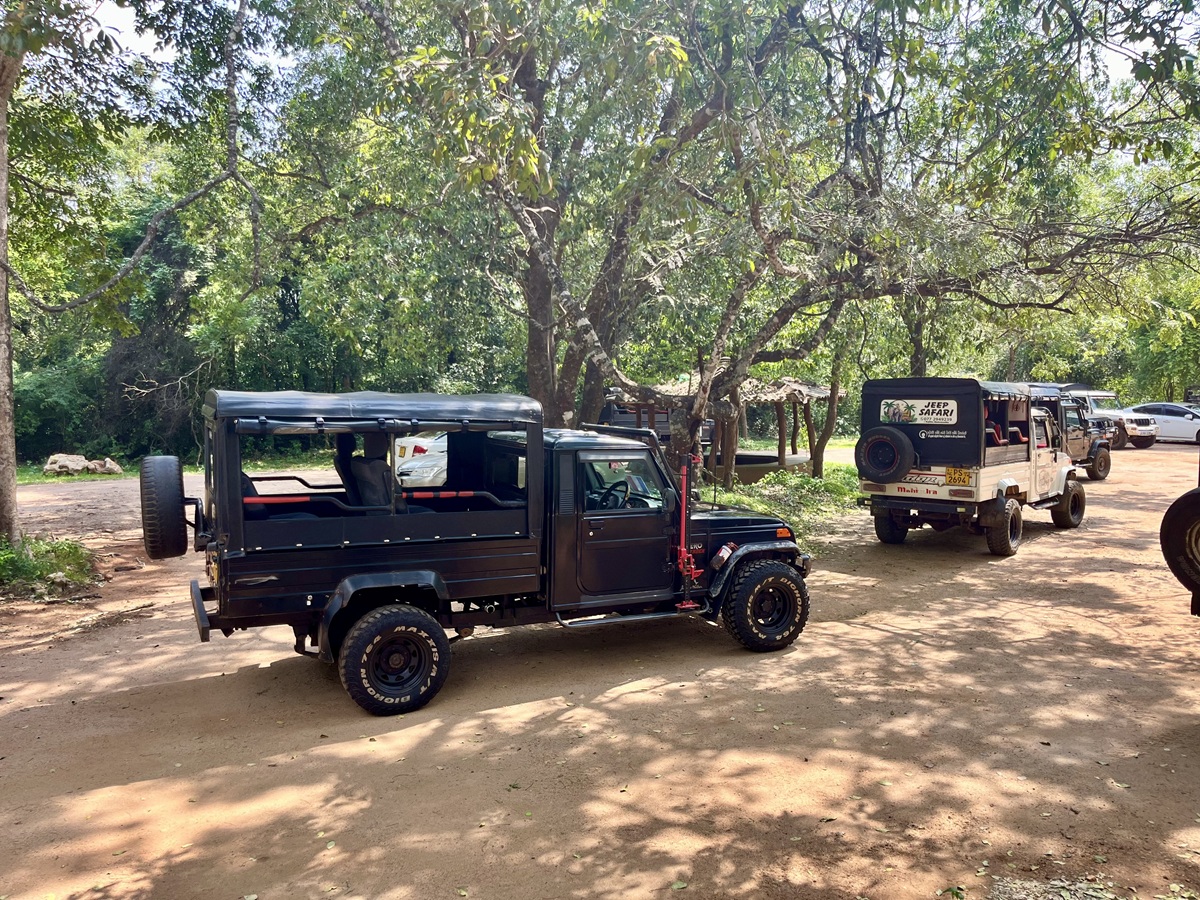
Upon reaching the entrance, several jeeps stopped to remove their roof coverings before entering the park. This is also your last opportunity to use the restroom, as there are no toilet facilities once you're inside.
Entering Hurulu Eco Park
The park is managed by the Sri Lankan Department of Wildlife Conservation, and various signs throughout the entrance remind visitors of the rules and responsible behavior expected inside the park.
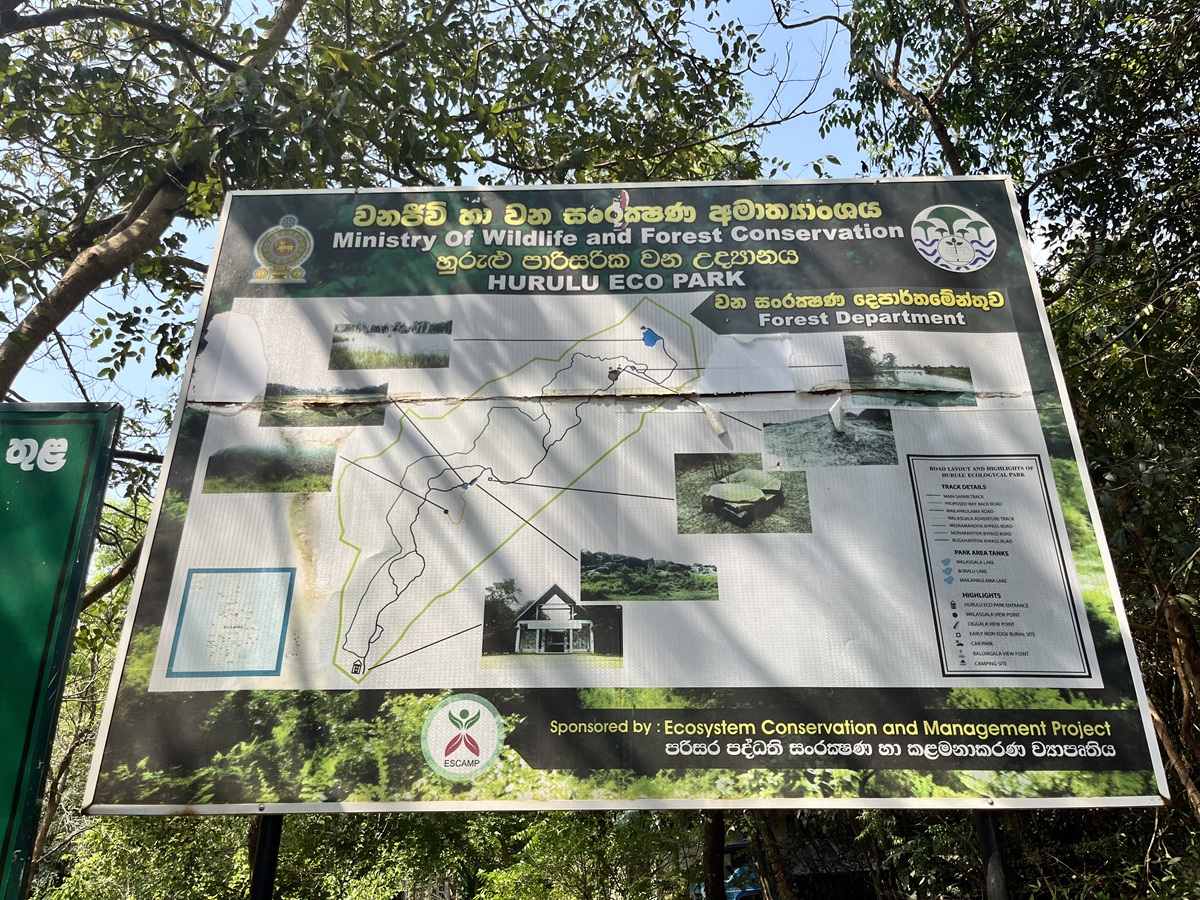
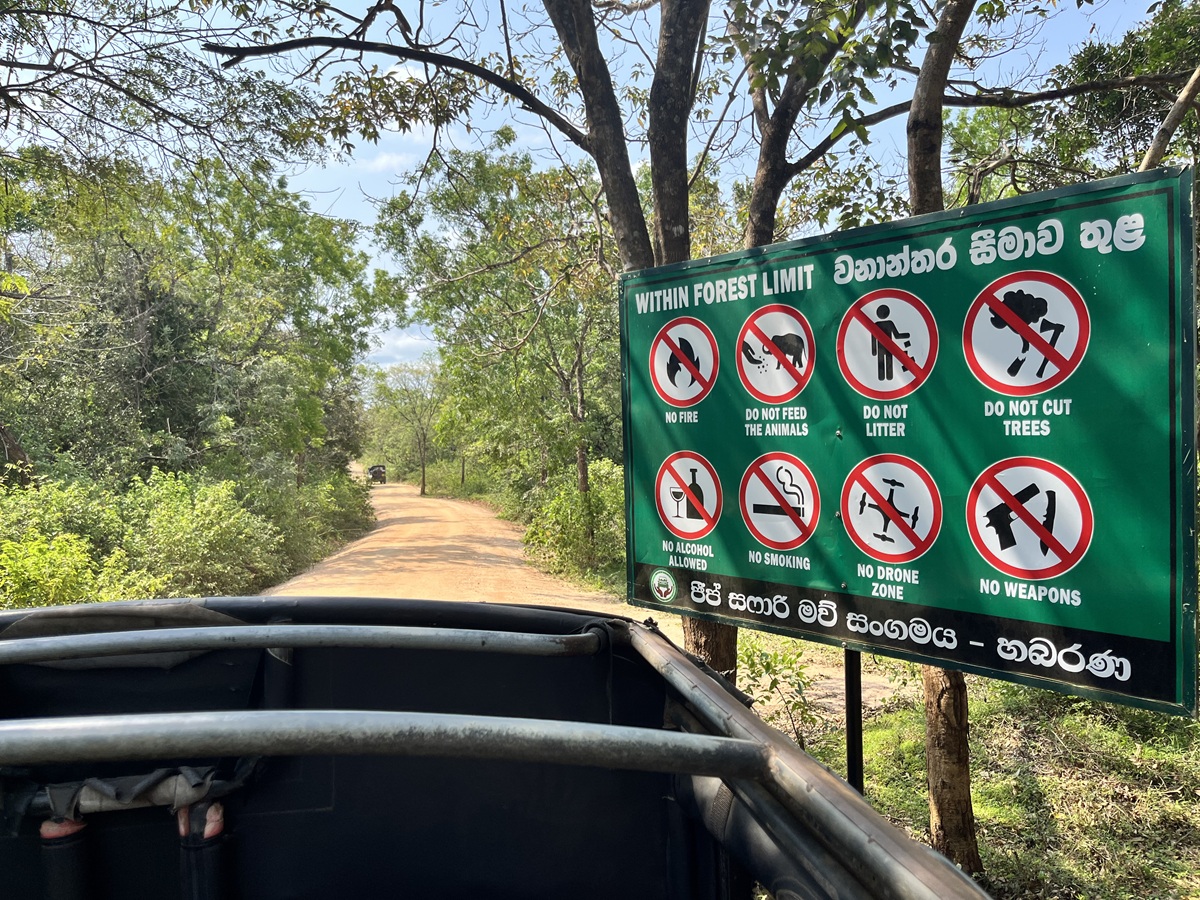
Once inside, the safari officially began. Our jeep roamed through different tracks while searching for elephants, occasionally stopping whenever drivers exchanged information about recent sightings.
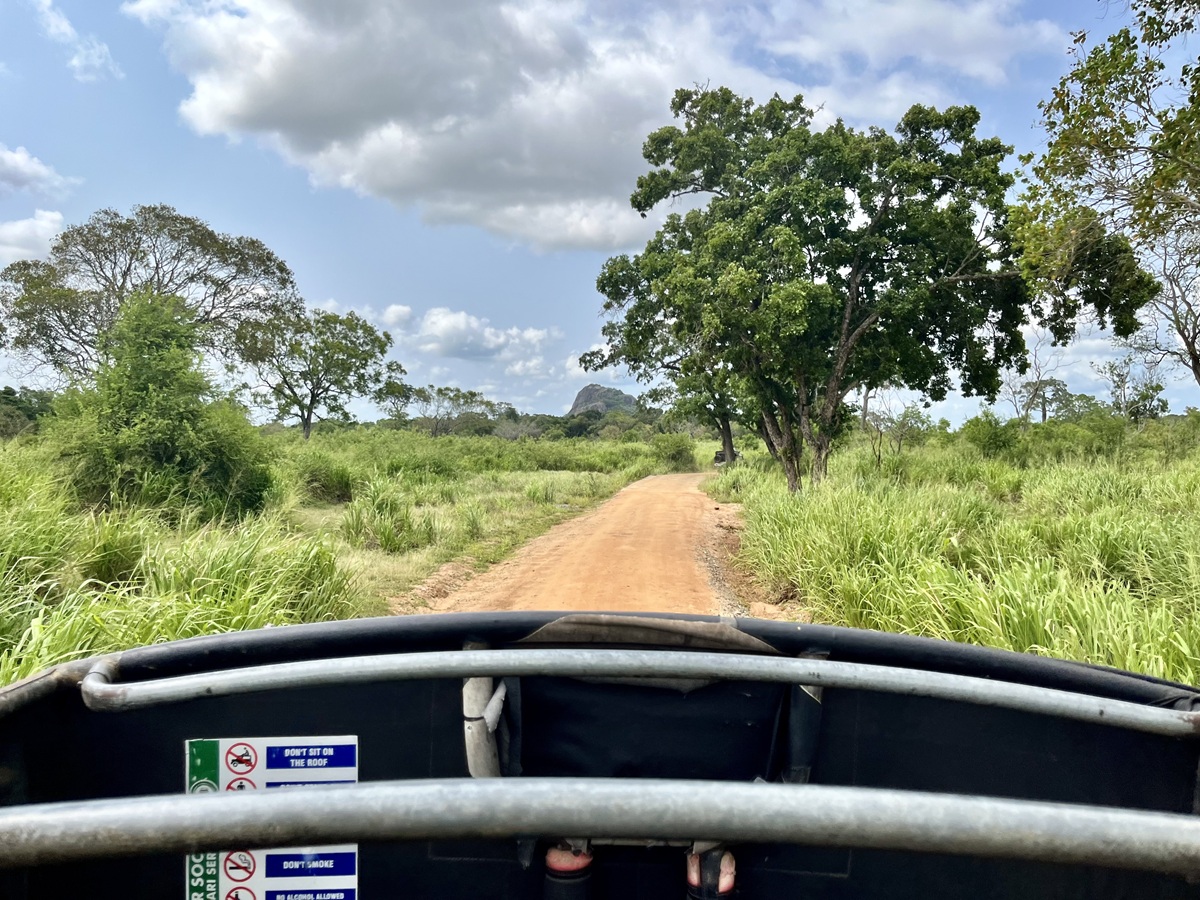
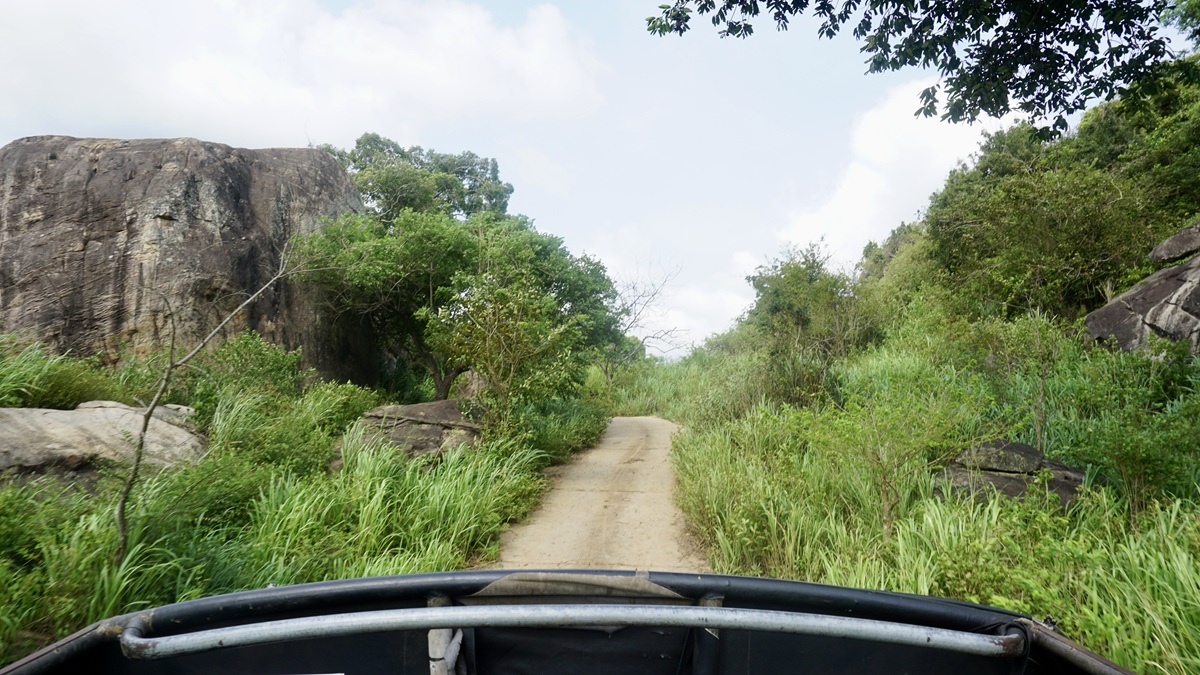
I also noticed that the drivers communicate with one another regularly. Whenever someone spotted elephants, the information was passed on to one another.
Sri Lankan Elephant Sightings — Finally!
While I don't believe in love at first sight, that wasn't the case here.
The moment we spotted our first elephant, I couldn't stop staring. There was something special about seeing these magnificent animals roaming freely in their natural habitat rather than behind fences or inside an enclosure.
Our driver repositioned the jeep a few times to give us different viewing angles while still maintaining what I felt was a respectful distance. Unfortunately, not every driver seemed to share the same approach.
At one point, several jeeps gathered around a single elephant and positioned themselves much closer than I was comfortable with. The elephant ended up surrounded on multiple sides, and honestly, even I felt a little suffocated just watching it (see photo on the right).
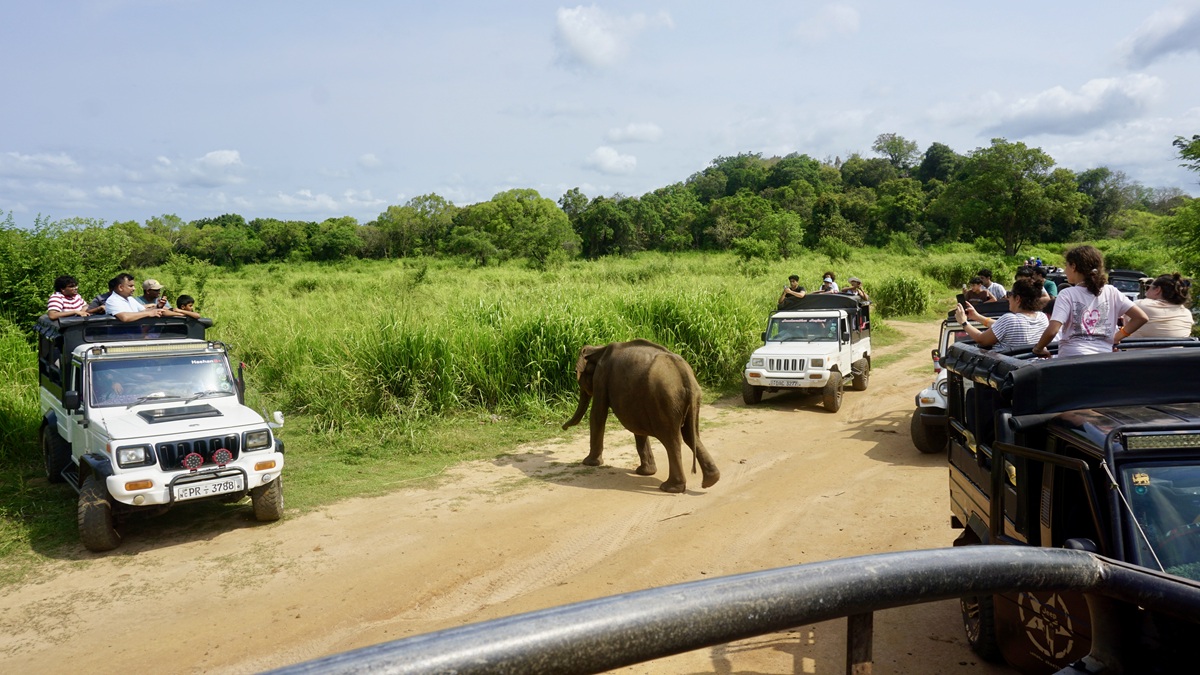
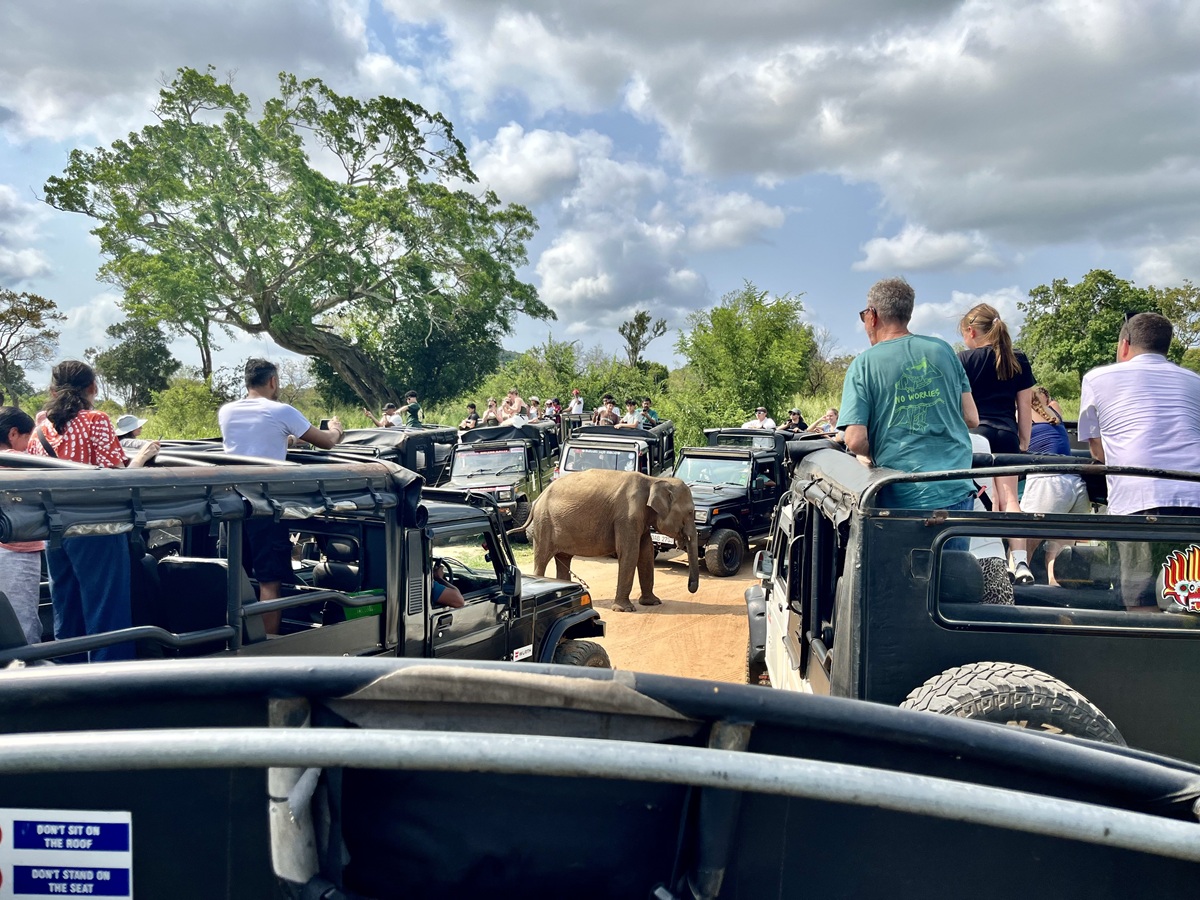
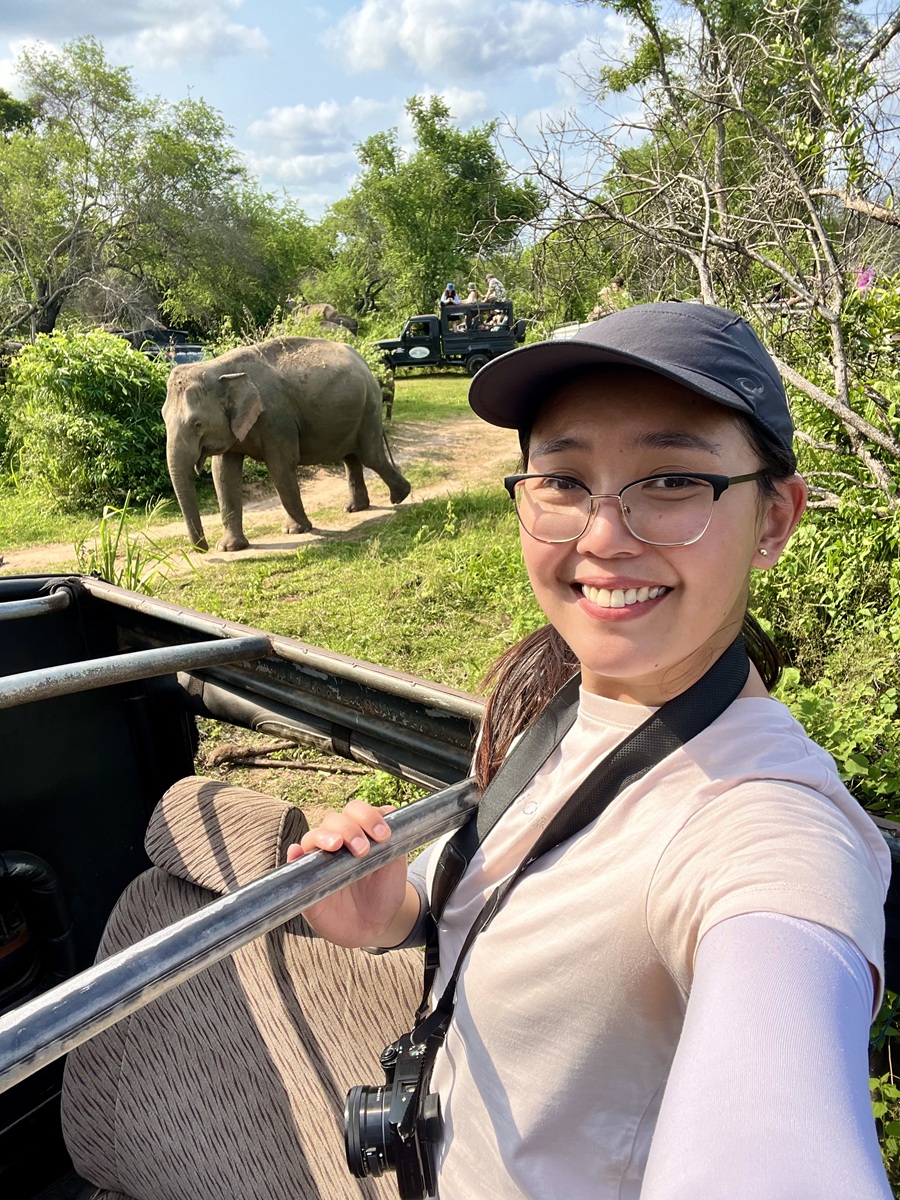
Thankfully, most of our later sightings were far more enjoyable. Some elephants remained in the distance, either too shy or too busy to pay attention to us. Others appeared completely unbothered and casually wandered through the landscape, and sometimes even came our way.
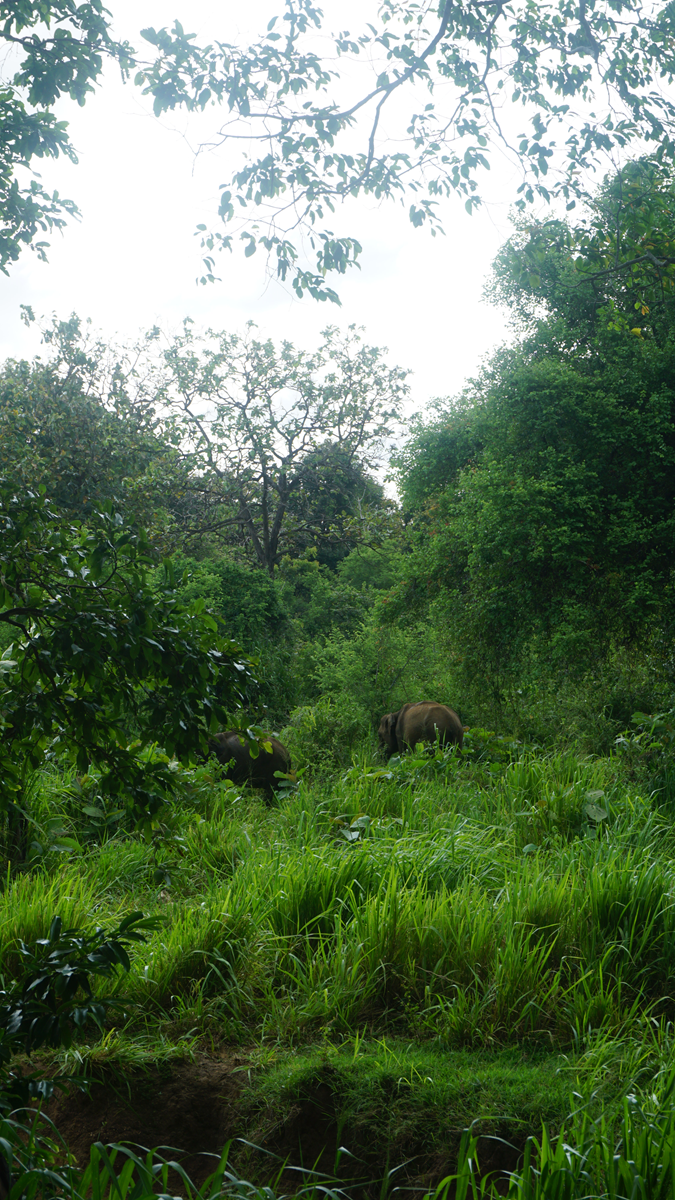
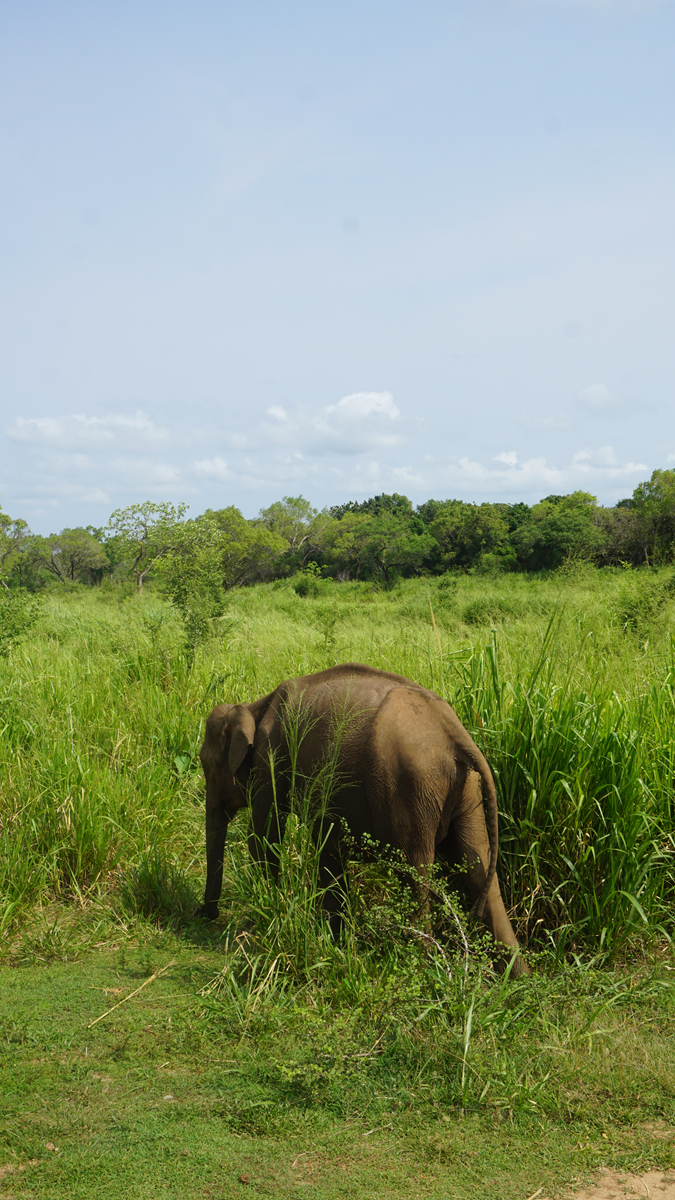
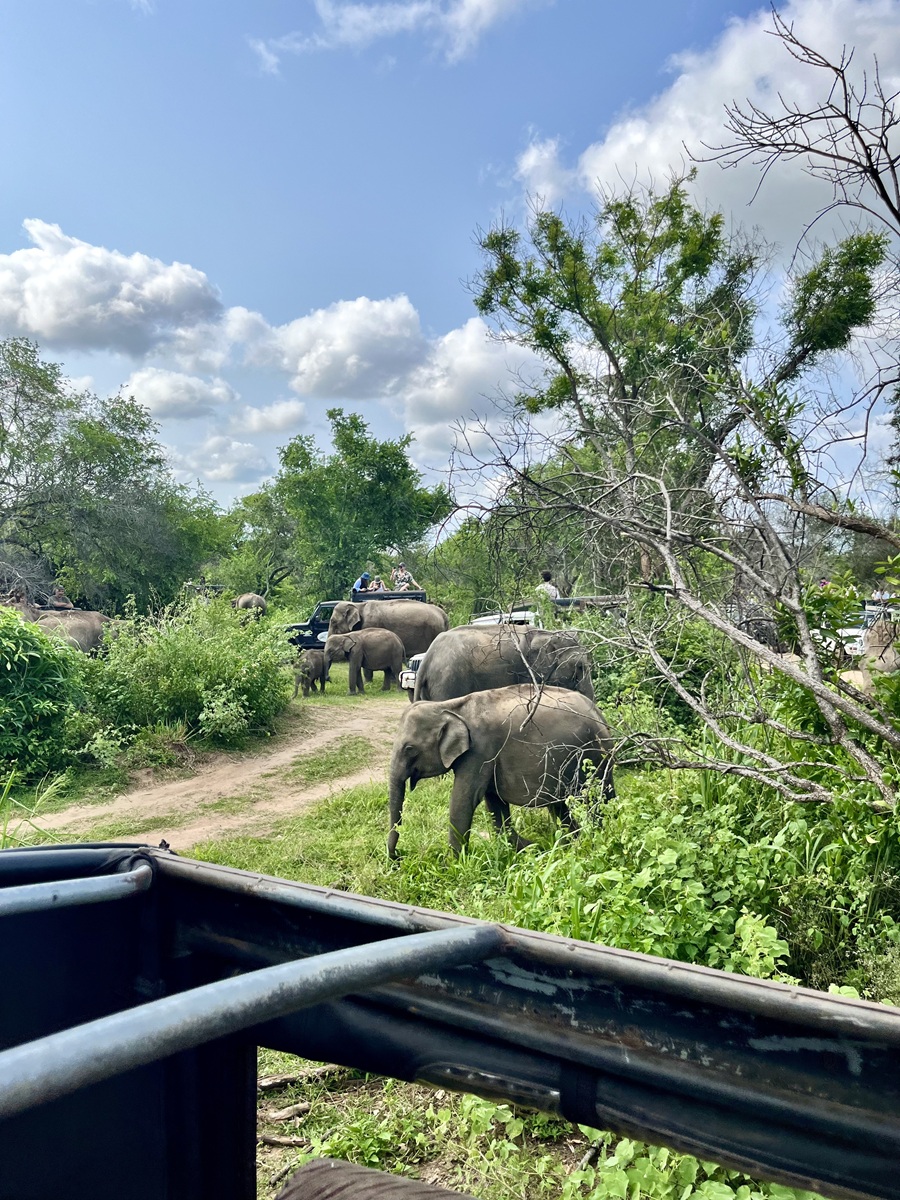
Our final sighting was probably my favorite. A large herd, including several baby elephants, slowly made their way. Even though we stayed at a distance, they walked right through the middle where everyone could watch them.
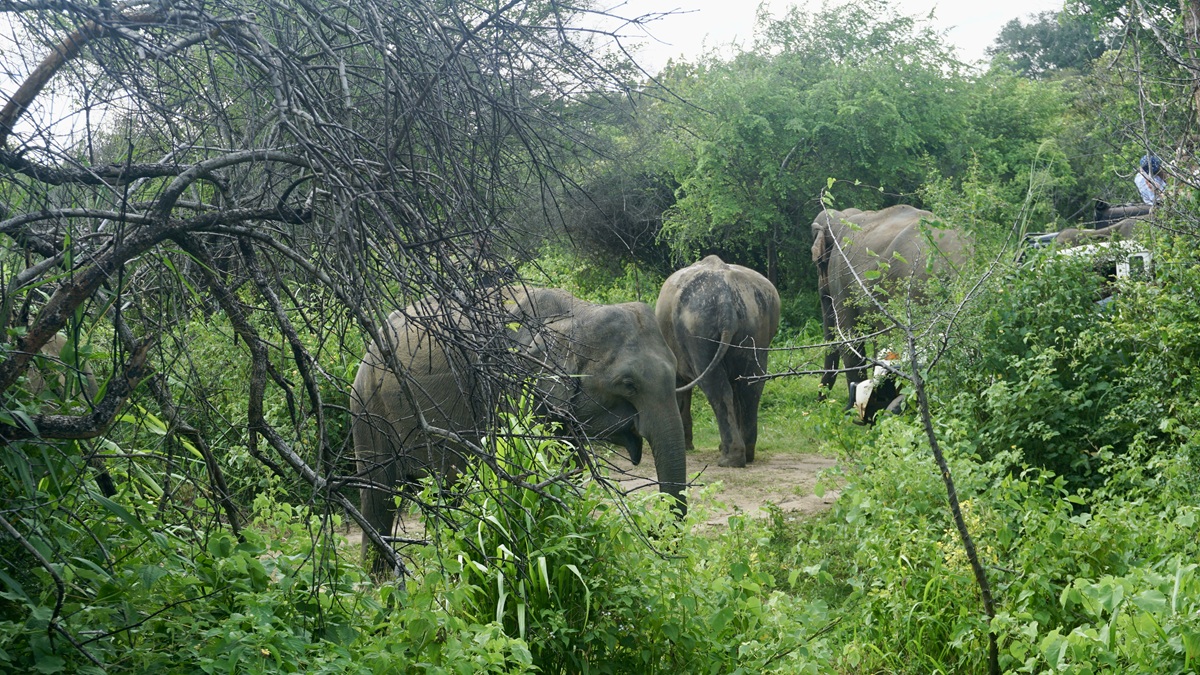
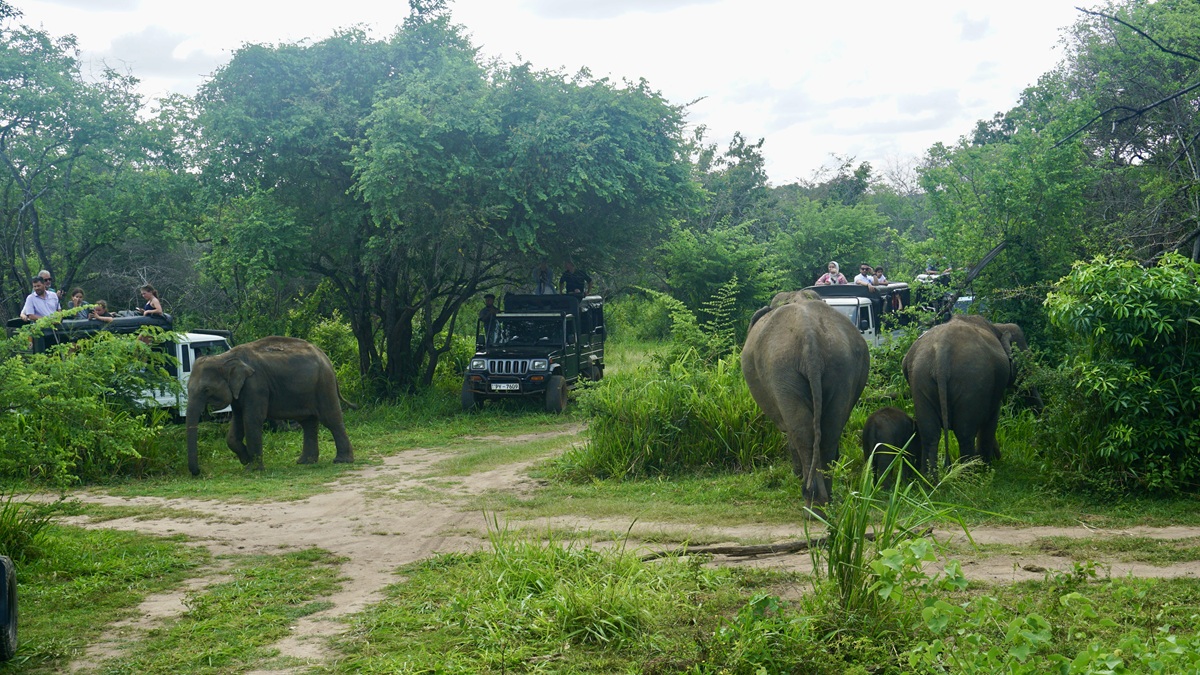
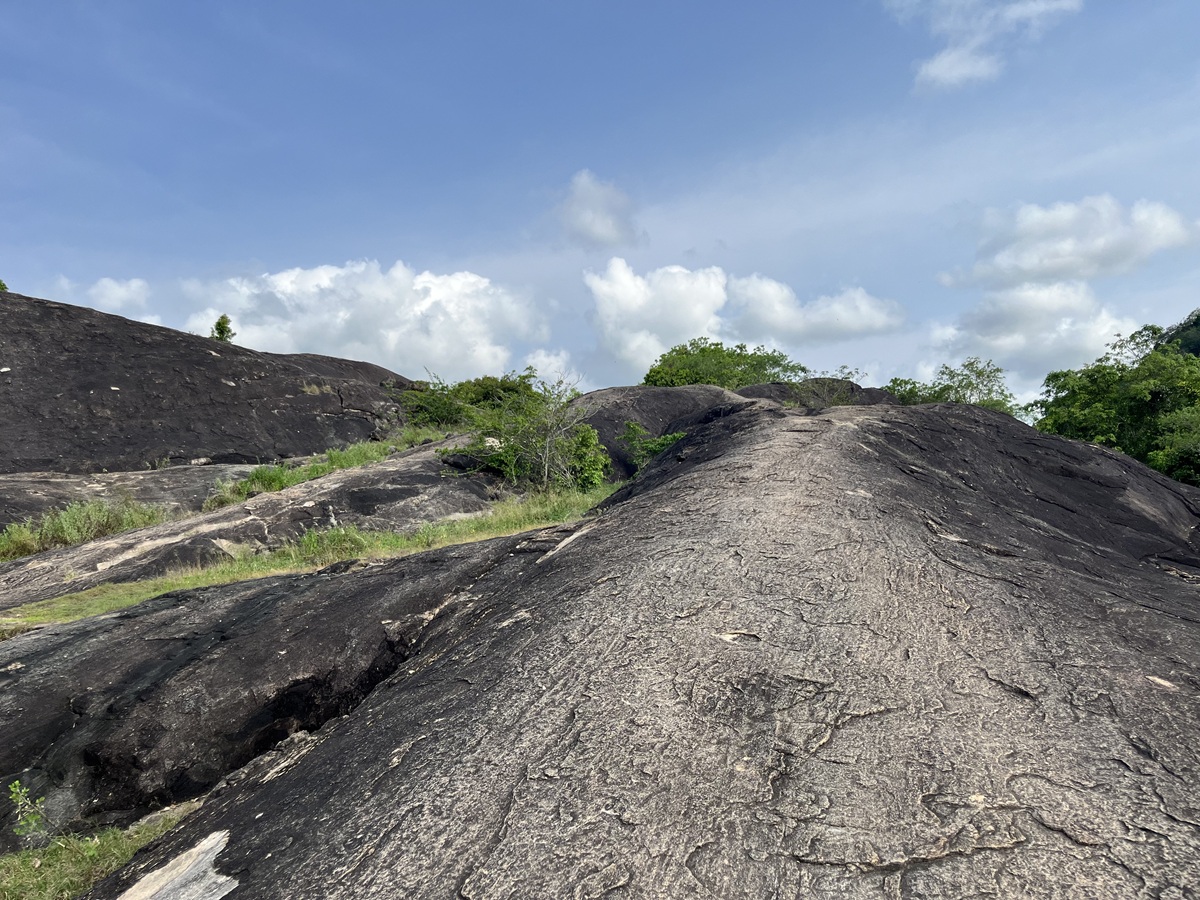
Towards the end of the safari, we stopped for a very short hike to a nearby viewpoint (barely five minutes!). From there, we could see jeeps arriving one after another to watch the elephants in one spot (see photo on the right).
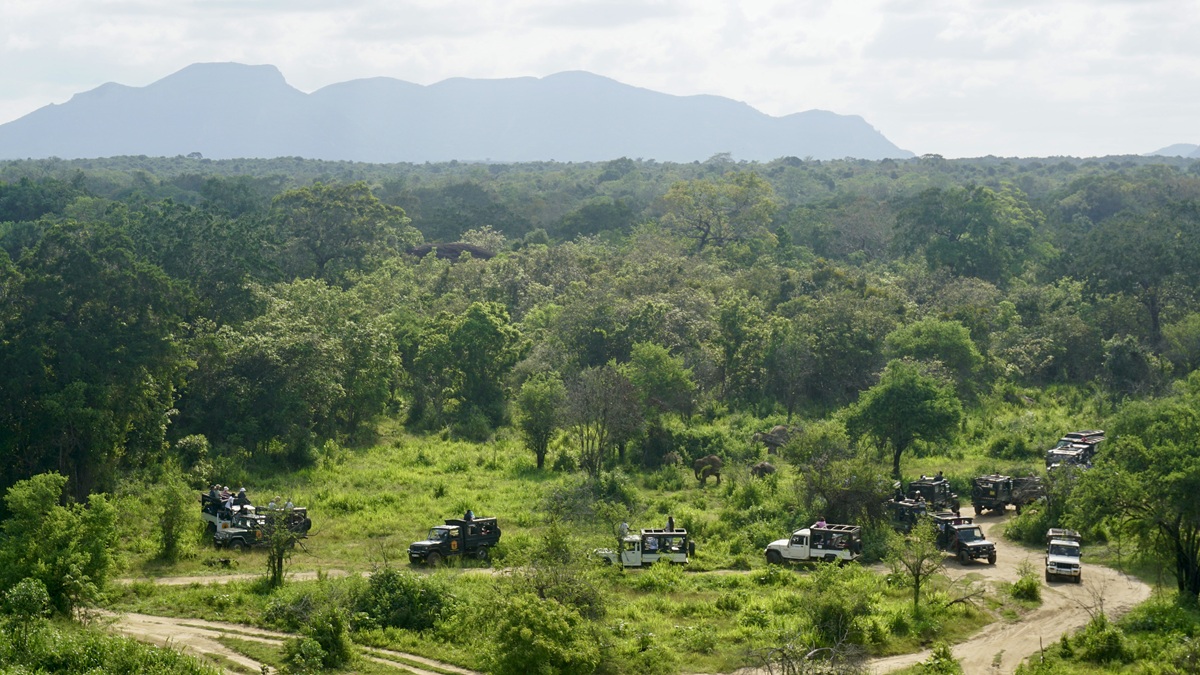
Unfortunately, a few visitors were playing loud music from their vehicles, which didn't feel particularly respectful to either the wildlife or the overall experience. Shortly afterwards, our safari came to an end, and we made our way back to Sigiriya.
Other Wildlife Spotted in Hurulu Eco Park
While we didn't spot any deer or water buffalo during our safari, we did come across what appeared to be one of Sri Lanka's native freshwater turtles basking on a rock beside a pond.
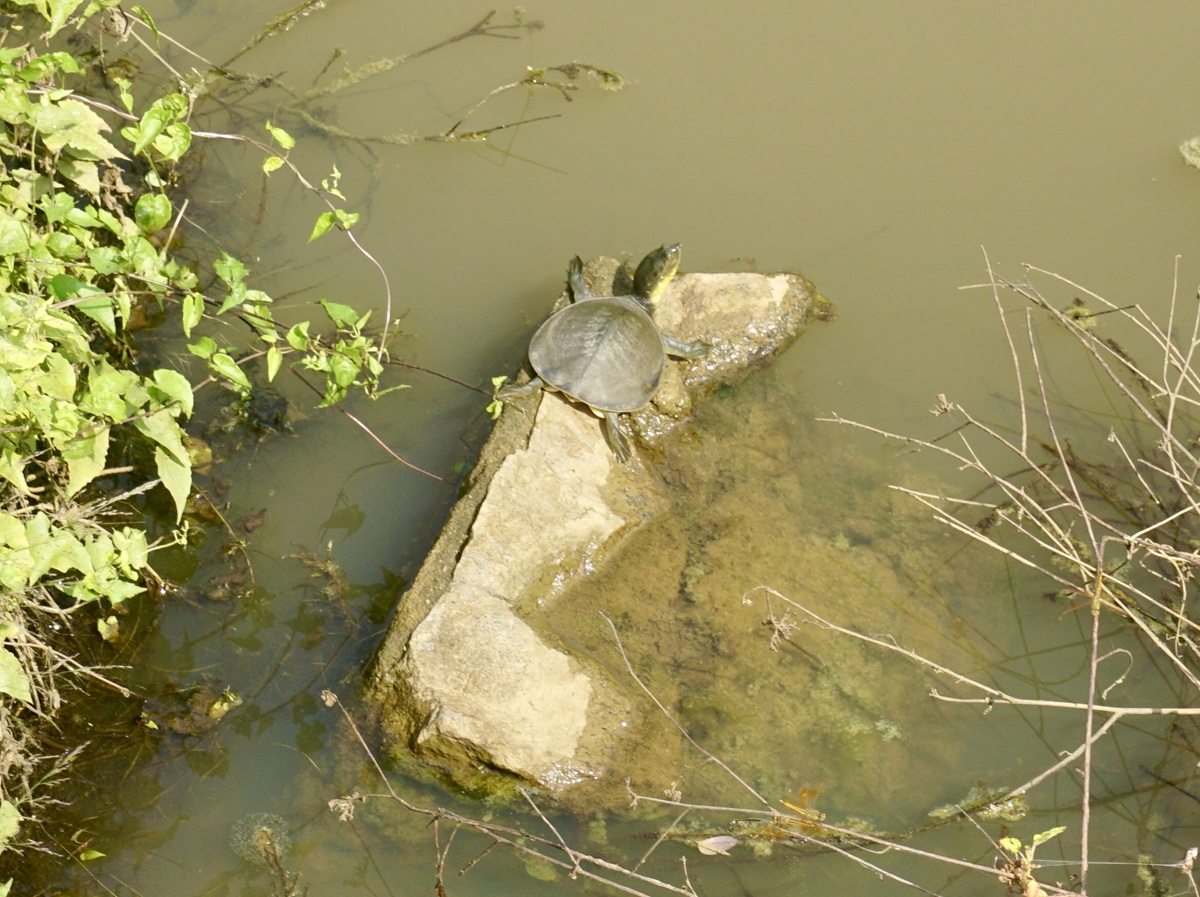
The jeep in front of us noticed it first and passed the information along to the other drivers. A few moments later, our jeep stopped as well, so we could take a closer look. It may not have been the main attraction of the day, but it was still a pleasant little wildlife encounter during the safari.
Was It Ethical?
Unfortunately, I forgot the name of the driver and his wife who picked us up. However, similar to our Dolphin Watching experience in Trincomalee, I was quite happy with how they handled the safari. They consistently maintained what I felt was a respectful distance from the animals and never attempted to get unnecessarily close just for photos.
That said, it was also evident that not all drivers shared the same approach. During several sightings, I noticed some jeeps positioning themselves much closer to the elephants than I was comfortable with. In one instance, an elephant ended up surrounded by multiple vehicles, which felt quite stressful even from a visitor's perspective.
For this reason, it may be worth asking your tour operator about their wildlife viewing practices before booking, especially if ethical tourism is important to you.
Overall, I still consider the elephant safari experience in Hurulu Eco Park ethical because the elephants are completely wild and free-roaming in their natural habitat. Unlike captive animal attractions, the animals are not confined or forced to interact with visitors.
However, that does not mean every behavior inside the park is automatically ethical. As travelers, we may not be able to control how every driver operates, but we can certainly choose operators that align with our values and do our part to be responsible visitors during the safari.
Elephant Safari Costs & Logistics:
We paid LKR 16,500 (approximately USD 49 / AED 180) for two people and arranged the safari through a local operator whose number I had saved as "Glowhaven Safari."
To be completely honest, I'm not entirely sure if that was the official company name. We found the contact number from one of the advertisement stands we saw along the road around Sigiriya. They are offering jeep safaris and other tours. Unfortunately, I forgot to take a photo of the sign, so I can no longer verify the exact business name.
The package included:
- Entrance fee to Hurulu Eco Park
- Safari jeep and driver
If you're interested, the WhatsApp number we used was: +94 77 234 0016.
You can also find similar safari packages within the same price range through GetYourGuide below:
Just make sure to read the fine print before booking your Elephant Safari. Some tours are done in other parks where the elephants are, and some only include the jeep safari and do not cover the park entrance fee, which you'll need to pay separately upon arrival.
Personal Thoughts on our Elephant Safari in Hurulu Eco Park:
To be honest, I didn't expect much before this safari. I thought that keeping my expectations low would save me from disappointment if we ended up seeing nothing at all. Thankfully, the elephants had other plans.
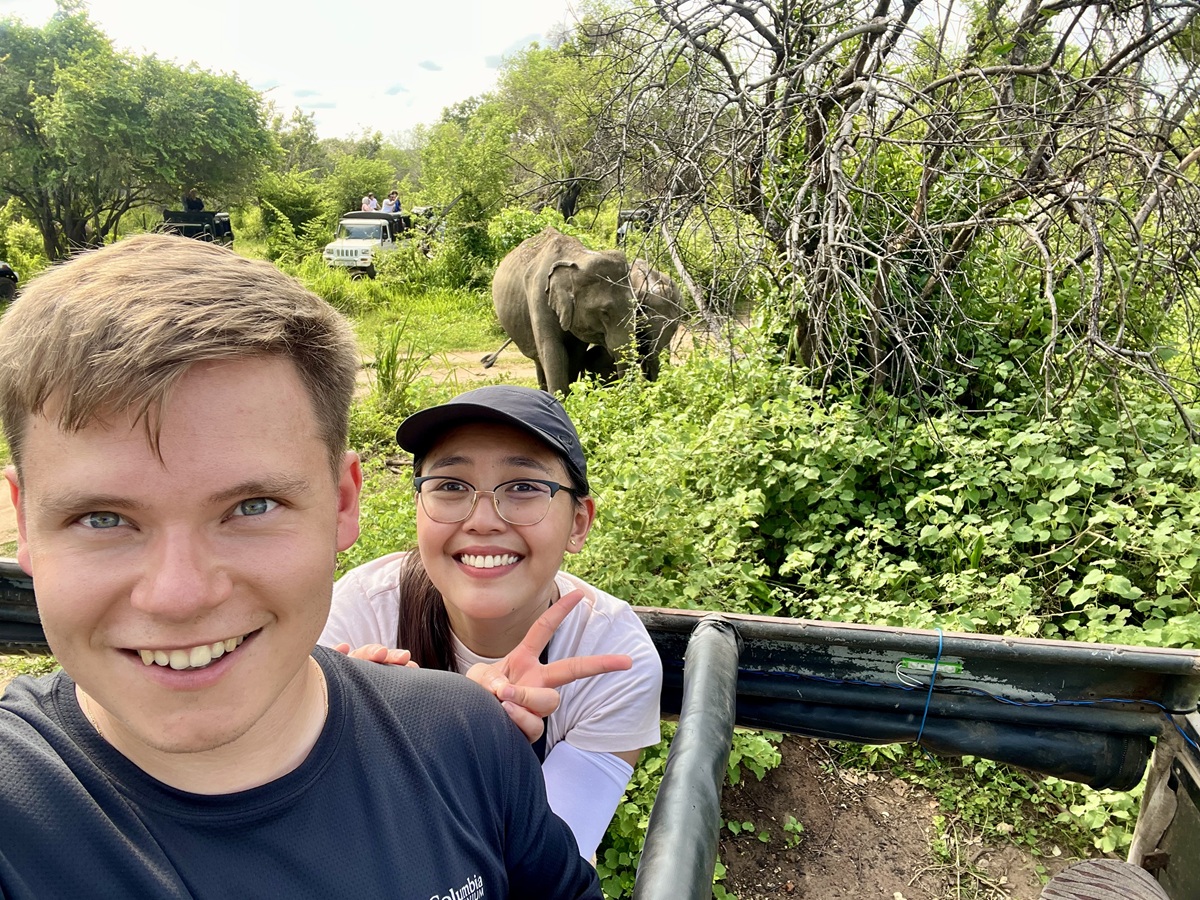
Seeing wild Sri Lankan elephants roaming freely in their natural habitat was easily one of the highlights of our stay in Sigiriya. Sure, there were moments when I questioned the behavior of some drivers and visitors, but overall, I left with a deeper appreciation for the country's wildlife and the importance of protecting it.
Would I do it again? Definitely. Between hiking Sigiriya Rock, watching the sunrise from Pidurangala Rock, and spending an afternoon on an elephant safari in Hurulu Eco Park, our time in Sigiriya turned out to be far more memorable than I originally expected!
💡 Continuing your Sri Lanka adventure?
After spending several days exploring Sigiriya's ancient rock fortress, sunrise hikes, and elephant safari, we continued our journey to Trincomalee for a much slower pace. Check these guides!